
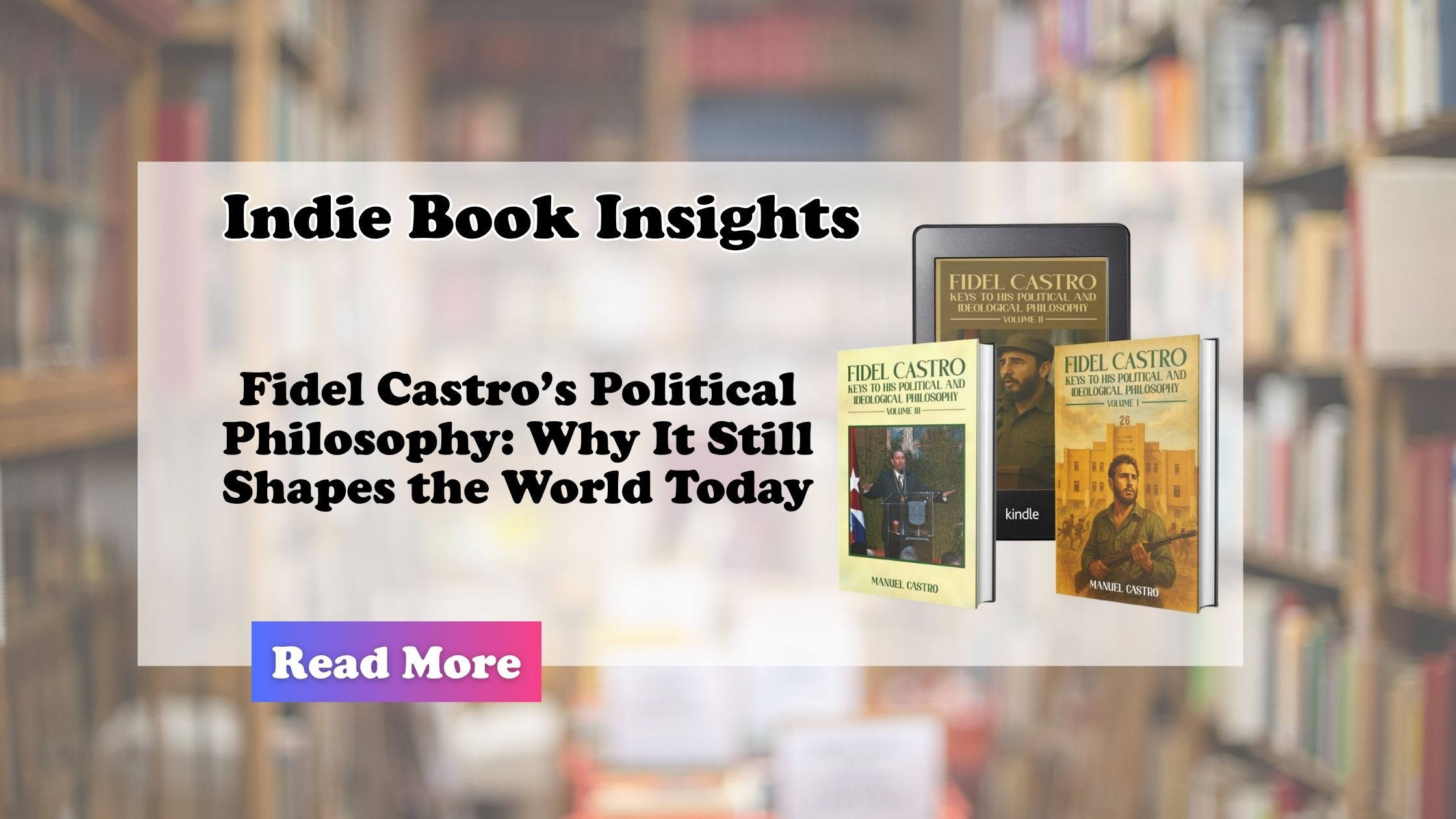
In a world marked by shifting alliances, economic uncertainty and ongoing debates about power and inequality, certain political ideas continue to stand the test of time. The philosophy of Fidel Castro is one such example of an intellectual framework that not only defined a revolution but also continues to influence global conversations today. For readers seeking to understand this enduring impact, Fidel Castro: Keys to His Political and Ideological Philosophy by Manuel A. Castro offers a comprehensive and insightful guide.
At its core, Castro’s political philosophy centers on the idea of transformation. He did not view revolution as a temporary disruption or a simple change in leadership. Instead, he saw it as a continuous process aimed at restructuring society in ways that promote equality, dignity and collective progress. This approach remains relevant in modern discussions about social justice, economic reform and national development, where the need for systemic change is often emphasized.
One of the key reasons Castro’s philosophy still resonates today is its focus on sovereignty. In an increasingly globalized world, many nations continue to grapple with external pressures, economic dependency and political influence from more powerful states. Castro’s insistence on national independence and self-determination provides a framework for understanding these challenges. His critique of imperialism and unequal global systems remains particularly relevant for developing countries seeking to assert control over their own futures.
Another enduring aspect of his thought is the emphasis on the role of people in shaping history. Castro believed that true change comes from collective participation, not just from leadership at the top. This idea aligns closely with contemporary movements that prioritize grassroots activism, civic engagement and public awareness. By highlighting the importance of education and political consciousness, his philosophy underscores the idea that informed citizens are essential for building resilient societies.
Communication also played a crucial role in the lasting influence of his ideas. Fidel Castro was known for his ability to articulate complex concepts in a way that resonated with diverse audiences. His speeches were not merely political statements; they were tools for education and mobilization. In today’s digital age, where messaging and narrative play a central role in shaping public opinion, this aspect of his leadership remains highly relevant.
The global dimension of Castro’s philosophy further explains its continued significance. His ideas extended beyond national borders, addressing issues such as economic inequality, international solidarity and the challenges faced by underdeveloped nations. These themes are still central to global discourse, particularly in conversations about sustainable development, fair trade and the balance of power in international relations.
Fidel Castro: Keys to His Political and Ideological Philosophy captures these ideas in a structured and accessible format, making them easier to understand and apply. The three-volume series organizes more than 300 key concepts derived from decades of speeches and historical developments. By presenting these ideas as part of a cohesive framework, the books allow readers to see how different elements of political thought connect and influence one another.
What makes this series especially valuable is its ability to bridge the gap between past and present. It does not simply document historical events; it provides a lens through which readers can analyze current global issues. For students, researchers and anyone interested in political science or history, this makes the books a practical and relevant resource.
In a time when the world is searching for solutions to complex challenges, revisiting influential political philosophies can offer valuable insights. The ideas explored in Fidel Castro: Keys to His Political and Ideological Philosophy continue to shape discussions about power, governance and social change.
Ultimately, the lasting relevance of Fidel Castro’s philosophy lies in its ability to address fundamental questions about society and progress. For readers looking to understand why these ideas still matter and how they continue to shape the world, this series is an essential and thought-provoking read.