For centuries, people have asked questions about God.
Why are we here? Why does suffering exist? Does God control everything? Does He know what will happen before it happens? And if He is all-powerful, why does the world so often seem beyond anyone’s control?
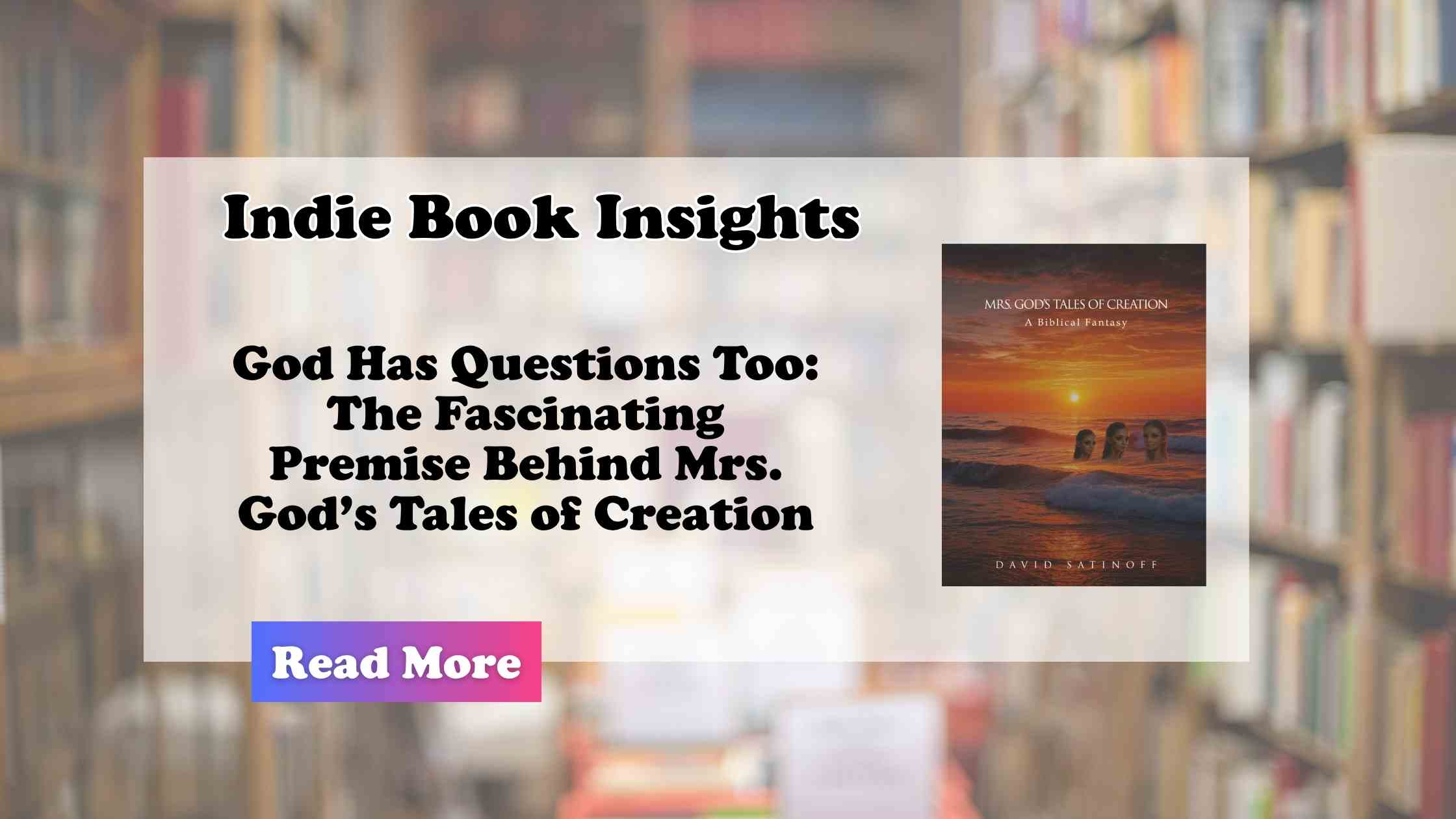
The author’s Mrs. God’s Tales of Creation: A Biblical Fantasy approaches those familiar questions from an unexpectedly playful direction.
What if God has questions, too?
That idea helps define this unconventional biblical fantasy, narrated by Rachel, Mrs. God herself. Rachel is not presented as a passive companion who accepts divine explanations without hesitation. She is curious, skeptical, outspoken and fascinated by the contradictions surrounding God, Creation, humanity and the universe.
Even more surprising, the God she comes to know does not always claim to possess every answer.
A Creator Who Can Wonder
Satinoff’s version of God is deliberately more human than the distant, infallible figure many readers may expect.
He is powerful, certainly, but He is also capable of uncertainty, loneliness, self-doubt, emotional vulnerability and reflection. The book repeatedly raises questions about whether His powers are truly unlimited and whether even God fully understands His own existence and responsibilities.
Rachel explains that God does not necessarily know all the answers. Instead, He has questions and plenty of theories.
That simple reversal gives the novel much of its philosophical energy.
Instead of treating every mystery as something God can immediately solve, Mrs. God’s Tales of Creation imagines a Creator who is also trying to understand the extraordinary reality in which He exists.
Where did His powers come from?
Can there be forces beyond God?
Why was He alone?
What are the limits of His ability to intervene in human affairs?
And what happens when the expectations placed upon God become almost impossible to fulfill?
Enter Mrs. God
Rachel becomes more than God’s wife. She becomes His conversational partner, critic, supporter and occasional challenger.
The relationship allows Satinoff to transform enormous theological questions into surprisingly intimate conversations. One moment, Rachel and God may be discussing the nature of the mind or His responsibilities toward humanity. The next, they may be teasing each other like an eccentric married couple.
The manuscript presents God as someone burdened by expectations, including the assumption that He can watch over every person, hear every prayer and determine every individual destiny. Yet Rachel learns that He may not be capable of managing everything humanity traditionally attributes to Him.
That vulnerability makes their exchanges both humorous and thought-provoking.
Questions Instead of Easy Answers
Perhaps the most distinctive quality of Satinoff’s biblical fantasy is its willingness to remain curious.
Rachel began life as a nonbeliever, so meeting God does not suddenly eliminate her skepticism. She continues questioning Him, examining contradictions and wondering whether accepted ideas about divinity are actually correct.
And God, rather than demanding unquestioning obedience, often joins the discussion.
The result is a story in which faith and doubt can occupy the same conversation.
Mrs. God’s Tales of Creation blends fantasy, humor, philosophy, romance, satire and speculative theology into something difficult to categorize and that is part of its charm.
For readers who enjoy stories that challenge familiar assumptions, the author offers a wonderfully provocative possibility:
Maybe the most interesting conversations with God would not begin with His answers.
Maybe they would begin with His questions.