Most people remember film history through famous directors, celebrated actors and groundbreaking movies. Far less attention is given to the technicians, editors, engineers and problem-solvers who transformed how moving images were recorded, edited and delivered to audiences.
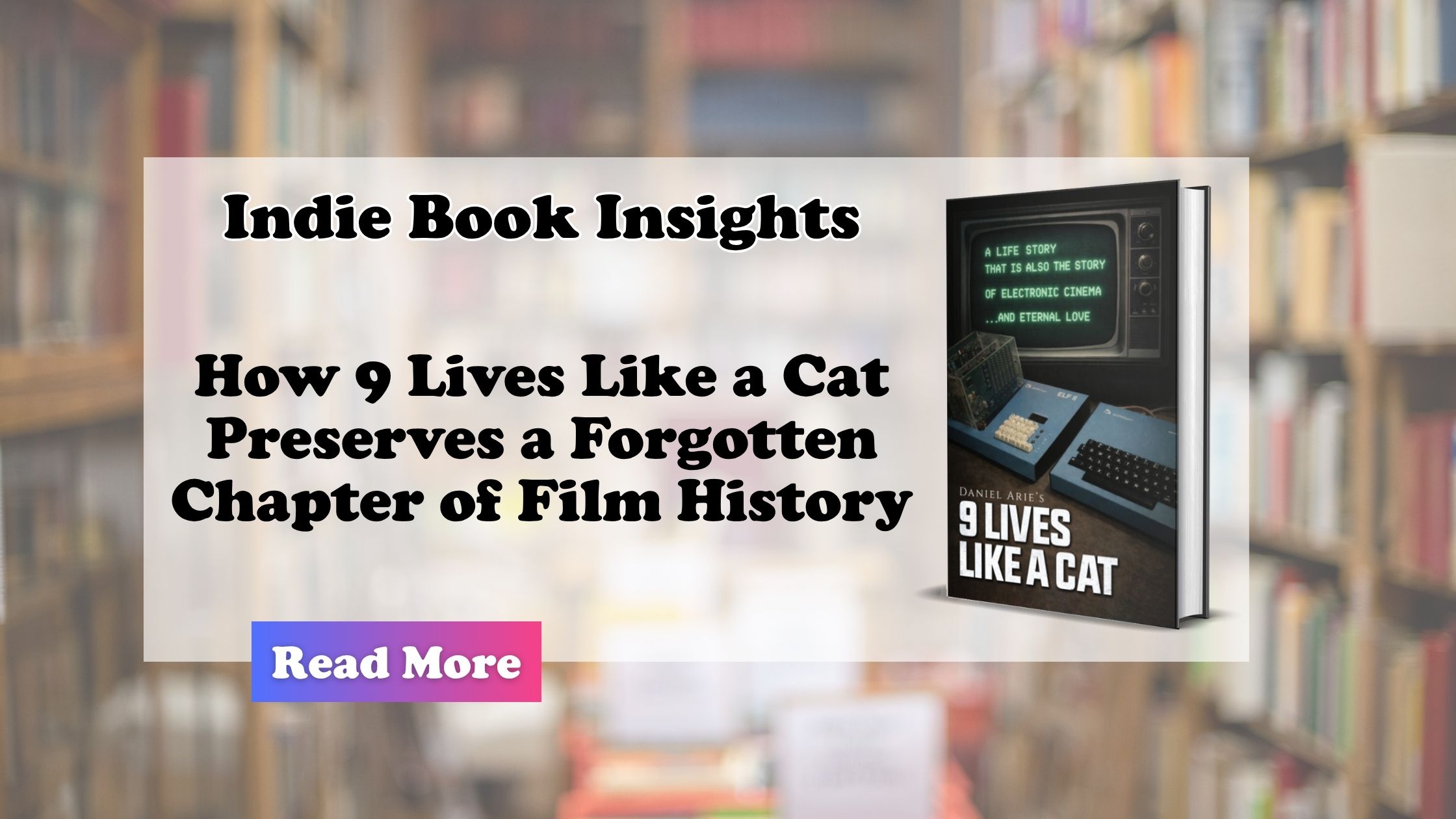
Daniel Arie brings that overlooked history to life in 9 Lives Like a Cat: A Life Story That Is Also the Story of Electronic Cinema … and Eternal Love. Part memoir and part firsthand account of technological change, the book offers readers a rare view of the transition from traditional celluloid filmmaking to electronic and computer-assisted post-production.
Arie did not observe this revolution from a distance. He worked on its front lines.
His relationship with cinema began in Romania, where he attended the Technical School for Cinematography and later worked in the sound department at the Buftea film studios. There, he encountered the physical world of filmmaking: cameras, laboratories, magnetic recording, perforated tape, sound booths, film projectors and synchronization equipment. These tools demanded patience, precision and highly specialized knowledge.
After leaving Communist Romania, Arie lived in Argentina before immigrating to Canada in 1968. In Montreal, he worked his way back into the film industry through dubbing, sound recording, equipment maintenance, editing and post-production. Each position allowed him to understand another part of the filmmaking process.
The world Arie describes feels almost unimaginable today. Editors worked with physical reels and sound or picture quality could deteriorate each time material was copied. Television commercials approved in a screening room could look noticeably different when broadcast because film prints and transfer systems did not always reproduce colors consistently.
Instead of accepting those limitations, Arie searched for technological solutions. He began supervising the transfer of film onto videotape so that producers could create a reliable master rather than depend on inconsistent film copies. His visits to Motion Picture Video in Toronto introduced him to the Rank Flying Spot Scanner, which electronically scanned film frames to produce a video master.
Arie later experimented with microcomputers at a time when personal computing remained unfamiliar to most people. Using an ELF II home computer and the BASIC programming language, he developed a system for connecting video time code with the feet-and-frames measurements used in film. This allowed edited video decisions to guide the precise cutting and assembly of the original film negative.
At Telepoint, the electronic editing facility established in 1981, Arie combined touch-screen editing equipment, digital sound workflows, computerized lists and film-to-video transfers. Productions such as Lance et compte benefited from his methods, which helped reduce costs while maintaining the accuracy needed for professional filmmaking.
The memoir also records the resistance that accompanied this transformation. Traditional editors feared losing the tactile experience of handling film, as well as the skills and rituals associated with physical cutting. Arie understood their concerns, but he also recognized that cinema could not remain unchanged. Electronic editing offered speed, flexibility and new creative possibilities.
This is what makes 9 Lives Like a Cat such a valuable historical record. It preserves the story of the transitional years, the uncertain period between mechanical film editing and the digital systems modern creators now take for granted.
At the same time, Arie connects that professional evolution to an equally dramatic personal journey involving migration, reinvention, friendship, loss and lifelong love. His memoir reminds readers that technological revolutions are not created by machines alone. They are shaped by curious people willing to experiment, fail, adapt and keep searching for a better way.
For filmmakers, students, technology enthusiasts and memoir readers, 9 Lives Like a Cat opens a window into a chapter of cinema history that deserves to be remembered.