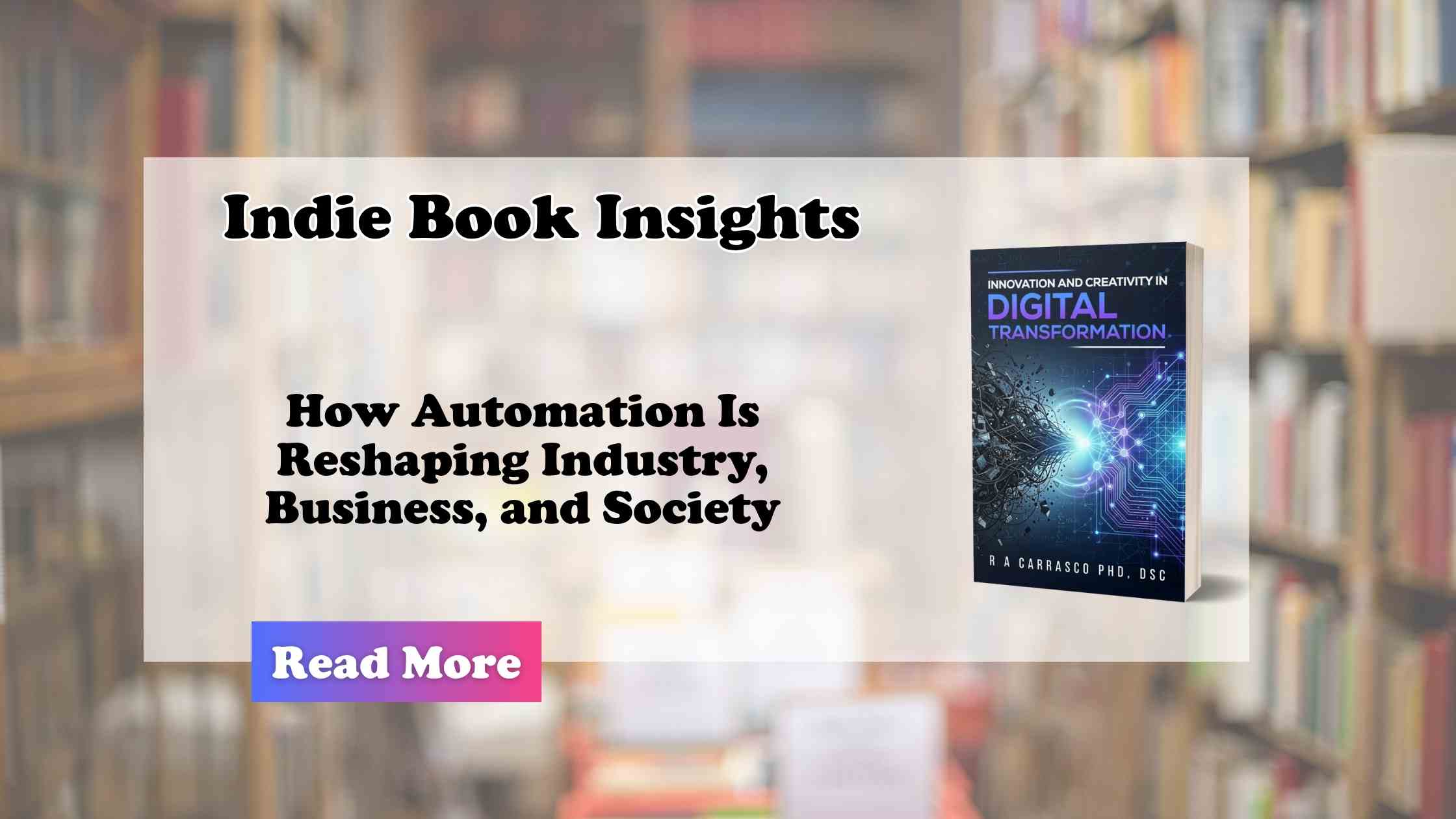
Automation has become one of the strongest forces behind modern digital transformation. It is no longer limited to large factories or advanced laboratories. It now reaches offices, hospitals, farms, classrooms, transport systems, and everyday services. In Innovation and Creativity in Digital Transformation, R. A. Carrasco explains how automation, robotics, artificial intelligence, machine learning, and data driven systems are changing the way organisations work and how society responds to technological progress.
For industry, automation has changed production from a mainly manual process into a smarter and more connected system. Machines can now perform repetitive tasks with speed, accuracy, and consistency. In manufacturing, robotics can support production lines, reduce human error, improve safety, and increase output. This allows workers to move away from routine physical tasks and focus more on supervision, programming, planning, maintenance, and problem solving. The result is not simply faster production, but a new relationship between human skill and machine capability.
In business, automation is reshaping how organisations manage information, serve customers, and make decisions. Digital systems can process large volumes of data, recognise patterns, support predictions, and improve workflow. Tasks that once required many hours of manual effort can now be handled more efficiently through automated tools. This gives businesses the chance to reduce delays, improve service quality, and respond more quickly to customer needs. However, Carrasco makes it clear that technology alone is not enough. True transformation requires leaders and workers to understand the value of these tools and adapt their thinking, strategies, and practices.
Automation is also changing society in deeper ways. It raises important questions about employment, training, ethics, and responsibility. Some people fear that machines will replace human workers, and this concern is understandable. Yet the book shows that technological change has often created new roles while removing older ones. As automation expands, people will need new skills and stronger digital literacy. Education, training, and creative thinking will become essential for helping workers adjust to a changing economy.
The social impact of automation also reaches healthcare, education, agriculture, forestry, fisheries, and public services. In healthcare, automated systems and intelligent tools can support diagnosis, treatment, rehabilitation, sanitation, and medical data management. In education, technology can support personalised learning and help educators rethink their roles. In agriculture and fisheries, robotics and artificial intelligence can help improve productivity, monitor conditions, and support more sustainable practices.
What makes Innovation and Creativity in Digital Transformation valuable is its balanced view of technology. Carrasco does not present automation as a simple solution to every problem. Instead, he shows it as a powerful tool that must be guided by knowledge, creativity, ethics, and practical understanding. The future of industry, business, and society will depend not only on smarter machines, but also on smarter decisions about how those machines are used. For readers who want to understand the real meaning of digital transformation, this book offers a timely and thoughtful guide.