

Adolf Hitler built his political image around the claim that Germany had been humiliated, betrayed, and weakened after the First World War. He then presented himself as the leader chosen to reverse that decline. Through speeches, public appearances, propaganda, and carefully staged victories, he encouraged Germans to see his personal rise as the nation’s recovery.
Hitler repeatedly referred to the Treaty of Versailles as an attack on German dignity. He promised to restore lost territory, rebuild the armed forces, reduce unemployment, and return Germany to the position of a major European power. Every political or territorial success was used as proof that his leadership was rescuing the country.
The Nazi regime strengthened this image by connecting loyalty to Germany with loyalty to Hitler. Public rallies displayed enormous crowds, military discipline, national symbols, music, and repeated slogans. These events presented him not simply as the head of a government, but as the embodiment of the German people and their future.
Economic recovery also supported this public image. Falling unemployment, public works, rearmament, and promises of improved living standards allowed the regime to claim that Hitler had restored order after years of instability. The repression behind these changes was hidden, justified, or directed against groups labelled as enemies of the nation.
Hitler’s early territorial gains made the claim of national salvation appear even more convincing. The remilitarisation of the Rhineland, the annexation of Austria, and the acquisition of the Sudetenland were achieved without an immediate European war. Each success strengthened the belief that he possessed exceptional political judgment.
He carefully described aggressive actions as necessary responses to injustice. Expansion was called reunification. Military preparation was presented as defence. The persecution of political opponents, Jews, and other targeted communities was portrayed as protection against supposed threats.
Hitler also claimed that Germany’s future depended on his survival and authority. He treated his personal decisions as expressions of the national will and encouraged the belief that no other leader possessed the determination required to guide the country.
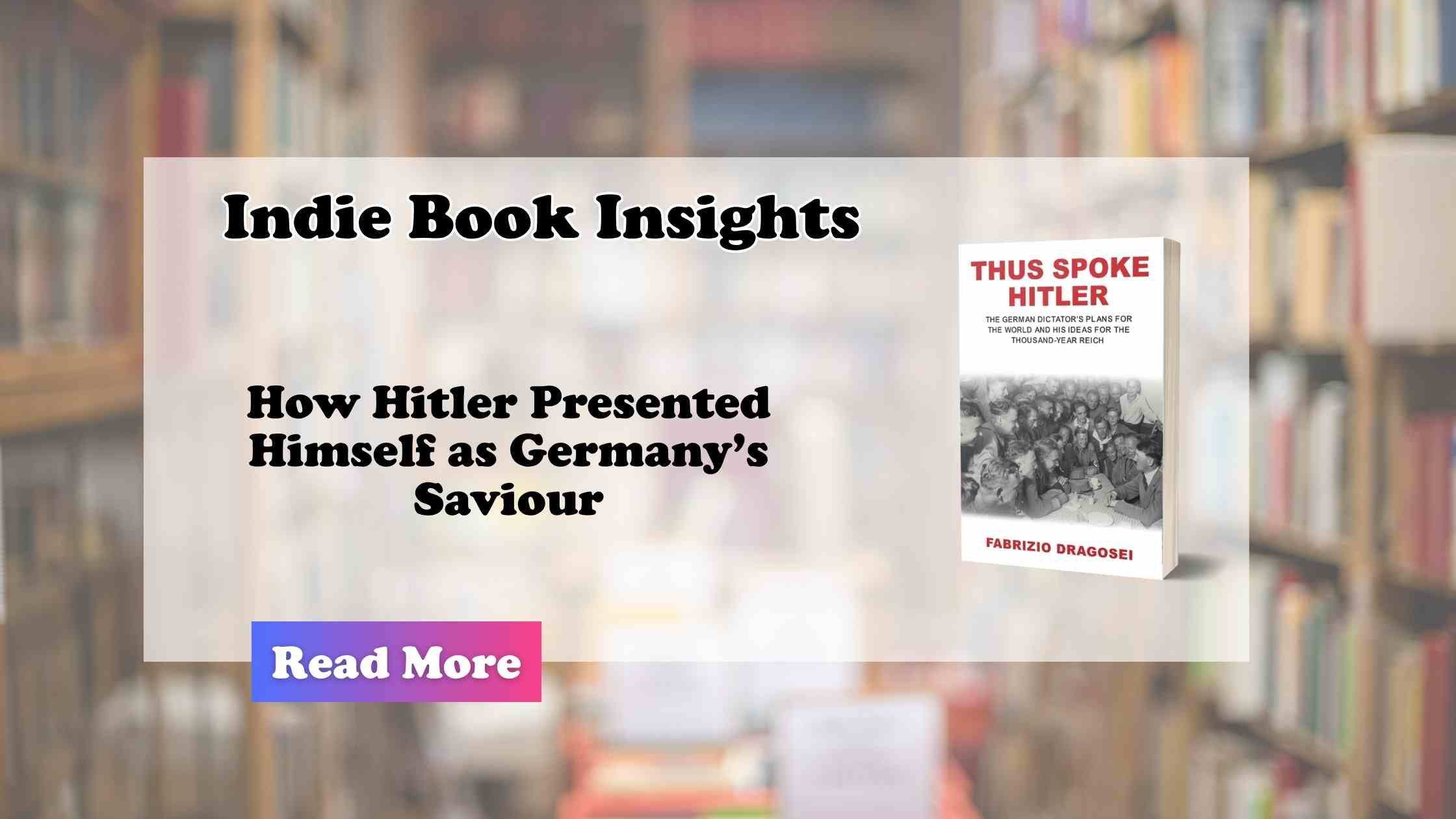
Thus Spoke Hitler by Fabrizio Dragosei examines this constructed image through Hitler’s speeches, private conversations, military conferences, and recorded declarations. By placing his words beside the events they influenced, the book reveals how ambition, propaganda, and political success helped create the myth of a national saviour.
This revealing historical study shows how a leader can exploit fear, resentment, and hope to gain obedience. It also exposes the destructive reality concealed beneath Hitler’s promises of unity, security, and national rebirth.
Read the book and discover history through authentic sources. https://www.amazon.com/dp/B0FT68K2C2/