
Many people are unsure about how to interact with artificial intelligence in their daily lives. Some worry it will replace human thinking. Others rely on it too quickly and stop reflecting for themselves. The healthiest approach sits in the middle. AI works best when it acts as a mentor that supports thinking rather than a shortcut that replaces it. When used intentionally, AI can help people reflect, plan, and learn more effectively without compromising their autonomy or control over their choices.
- Start With Your Own Thinking First
Before asking AI for help, it is essential to pause and identify the actual issue. What decision are you facing? What feels unclear? What outcome are you hoping for? This short moment of reflection keeps the human in charge.
For example, if someone feels stuck in their routine, they might first ask themselves what feels off. Only then should AI be used to explore ideas or options. It keeps AI in a supporting role rather than letting it lead the process.
- Use AI To Ask Better Questions
One of the most valuable roles AI can play is helping people ask better questions. Instead of looking for answers immediately, AI can help expand one’s perspective.
A student planning next steps after graduation might ask AI to list possible paths based on interests. From there, the student can reflect on which options feel aligned. It is a practical blog that explains AI as a companion for reflection, planning, and learning, rather than a decision-maker.
- Let AI Help Organize Thoughts And Plans
Life feels overwhelming when thoughts stay scattered. AI is useful for organizing ideas into simple lists, outlines, or steps. It reduces mental clutter and makes action easier.
For instance, someone planning a career shift can ask AI to help break the process into small steps. The person still decides timing, effort, and priorities. AI simply provides structure.
- Learn From AI Without Copying It
AI can explain concepts, summarize information, and provide examples. It makes it a useful learning tool. The key is to read actively rather than accept everything at face value.
After receiving information, it helps to ask yourself if it makes sense and how it applies to your life. Learning stays meaningful when reflection follows information.
- Keep Feelings And Values in the Process
AI does not feel stress, excitement, or doubt. Humans do. That is why feelings matter in decision-making. If a suggestion feels wrong or draining, it deserves attention.
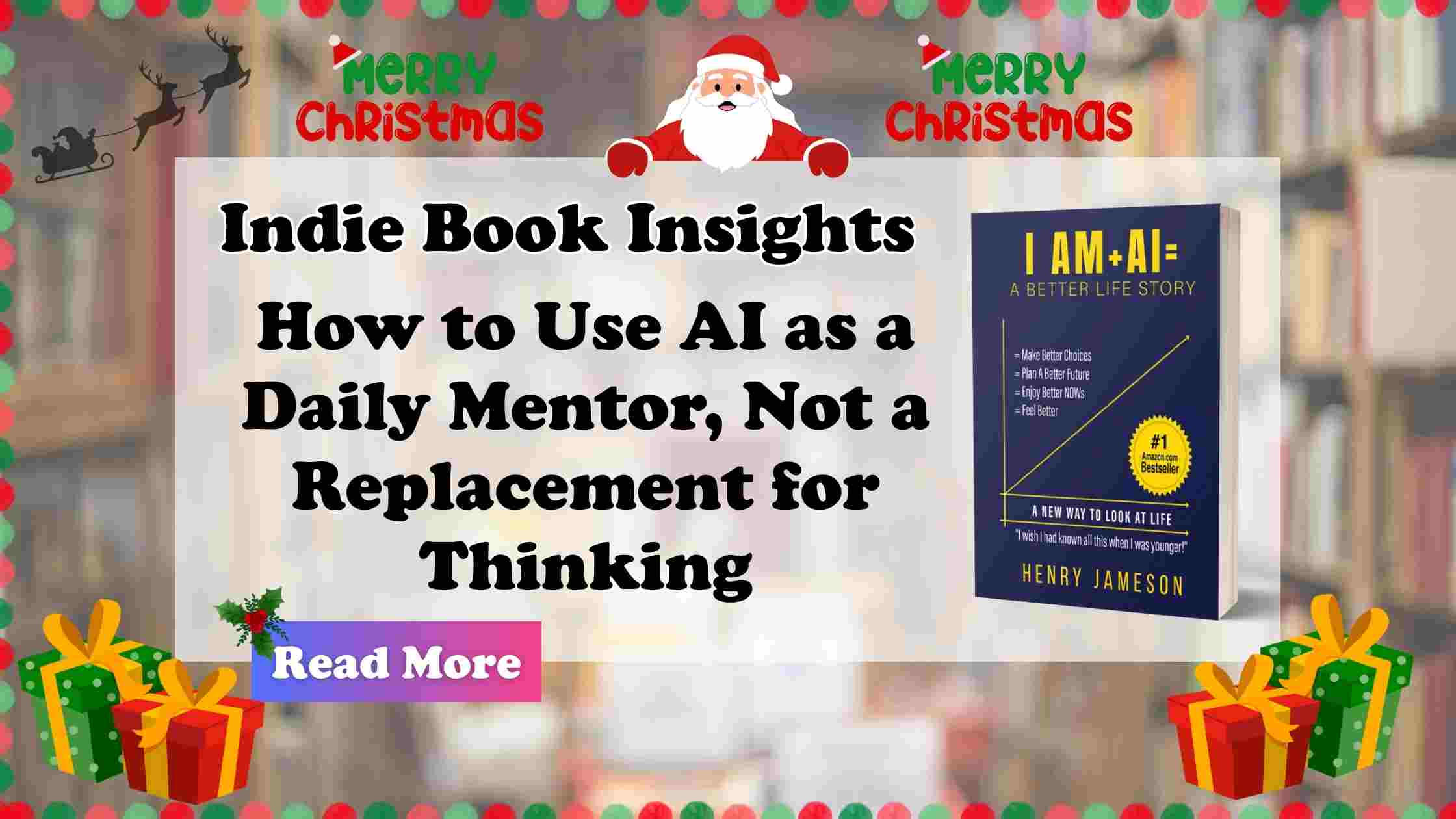
In I AM + AI = A Better Life Story by Henry Jameson, the human experience remains central. AI supports thinking, but the person remains responsible for choices, values, and direction. This balance helps people feel more confident instead of dependent.
Build a Daily Habit of Guided Use
Using AI well is not about constant use. It is about intentional use. A few minutes a day for reflection, planning, or learning is enough. Over time, this builds clarity rather than confusion.
AI becomes a mentor when it helps you think better, not when it thinks for you.
For readers seeking a grounded approach to integrating human judgment with technology, Henry Jameson’s I AM + AI = A Better Life Story is a helpful guide. It is like a life operations manual, especially useful to young adults for helping them make better choices.
Available at Amazon and other fine book sellers: https://www.amazon.com/dp/B0DR3QF24N/.