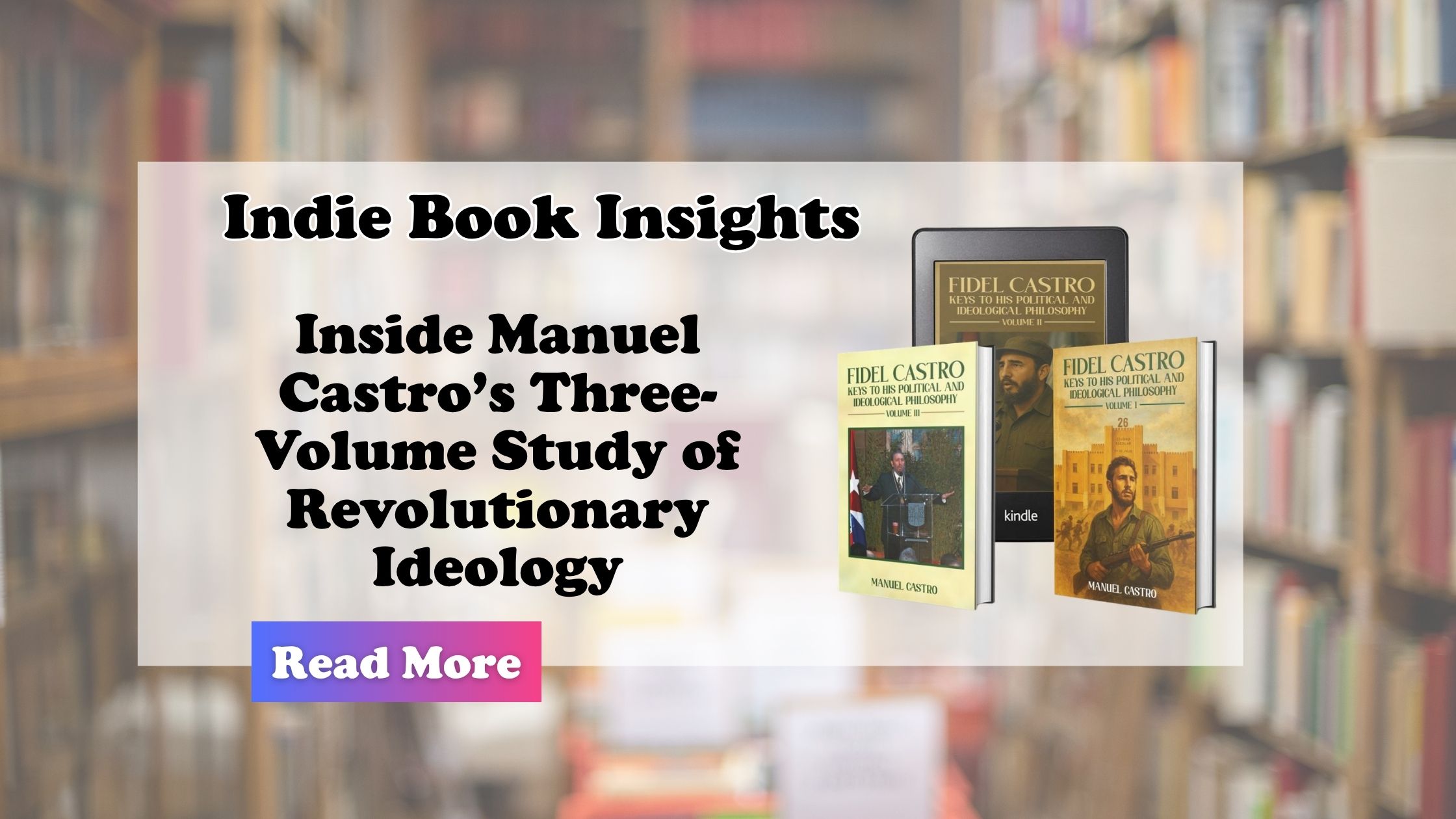
Revolutionary movements have shaped the course of global history, but few have generated as much enduring political and intellectual debate as the Cuban revolution. At the center of that revolution stood Fidel Castro, a leader whose speeches, strategies and ideological vision continue to influence political discussions across generations.
For readers seeking to understand the deeper philosophy behind Fidel Castro’s leadership, Fidel Castro: Keys to His Political and Ideological Philosophy (Volume I), Fidel Castro: Keys to His Political and Ideological Philosophy (Volume II) and Fidel Castro: Keys to His Political and Ideological Philosophy (Volume III) by Manuel A. Castro provide a comprehensive and intellectually ambitious study of revolutionary ideology in practice.
This remarkable trilogy goes far beyond biography or historical narrative. Manuel Castro approaches Fidel Castro’s legacy through the lens of political philosophy, ideological development and revolutionary communication. Across thousands of pages, the books examine how Fidel used speeches, education, historical memory and political organization to shape public consciousness and sustain revolutionary identity over decades of social and geopolitical change.
One of the trilogy’s greatest strengths is its thematic structure. Rather than presenting Fidel Castro’s life chronologically alone, Manuel Castro organizes his ideas into major conceptual categories. Readers encounter extensive discussions on revolution, nationalism, socialism, sovereignty, education, ethics, globalization, democracy, media, internationalism, political leadership and anti-imperialism.
This approach allows readers to explore revolutionary ideology not as a collection of isolated events, but as an interconnected system of political thought. The books reveal how Fidel Castro consistently linked moral principles, national independence and social transformation into a unified political philosophy.
Another compelling feature of the trilogy is its focus on speeches as instruments of power. Fidel Castro was one of the twentieth century’s most influential political communicators and Manuel Castro carefully analyzes how his rhetoric evolved across different historical periods. The books show how Fidel used language not simply to defend policies, but to educate, persuade, mobilize and maintain ideological unity.
Readers gain insight into how revolutionary leadership depends not only on military or political control, but also on the ability to shape narratives and inspire collective purpose. In today’s era of rapid media cycles and fragmented political messaging, this exploration of long-form political communication feels especially relevant.
The trilogy also highlights Fidel Castro’s international influence. Manuel Castro examines how Fidel’s ideas resonated far beyond Cuba, influencing political movements and debates throughout Latin America, Africa and the developing world. Themes such as colonialism, economic inequality, sovereignty, globalization and resistance to foreign domination appear repeatedly throughout the books, demonstrating why Fidel became one of the defining political voices of his era.
Importantly, the trilogy does not reduce Fidel Castro to simplistic labels or ideological stereotypes. Instead, it invites readers to engage critically with the complexity of his political philosophy and the historical conditions that shaped it. This makes the books especially valuable for students of political science, historians, researchers, educators and readers interested in revolutionary movements and global political thought.
What truly sets Manuel Castro’s work apart is its scope. The trilogy functions simultaneously as historical documentation, ideological analysis, political commentary and intellectual archive. By organizing Fidel Castro’s speeches and ideas into a structured philosophical framework, Manuel Castro creates a unique resource for understanding how revolutionary ideology operates over time.
At a moment when political polarization, economic inequality and debates about sovereignty continue to dominate international discourse, the themes explored in these books remain deeply relevant. Readers are encouraged to move beyond headlines and engage directly with the political ideas that shaped one of the most influential revolutions of the modern era.
For anyone interested in leadership, ideology, revolution or twentieth-century political history, Fidel Castro: Keys to His Political and Ideological Philosophy offers an engaging and thought-provoking journey into the intellectual foundations of revolutionary thought and the enduring legacy of Fidel Castro’s political vision.