
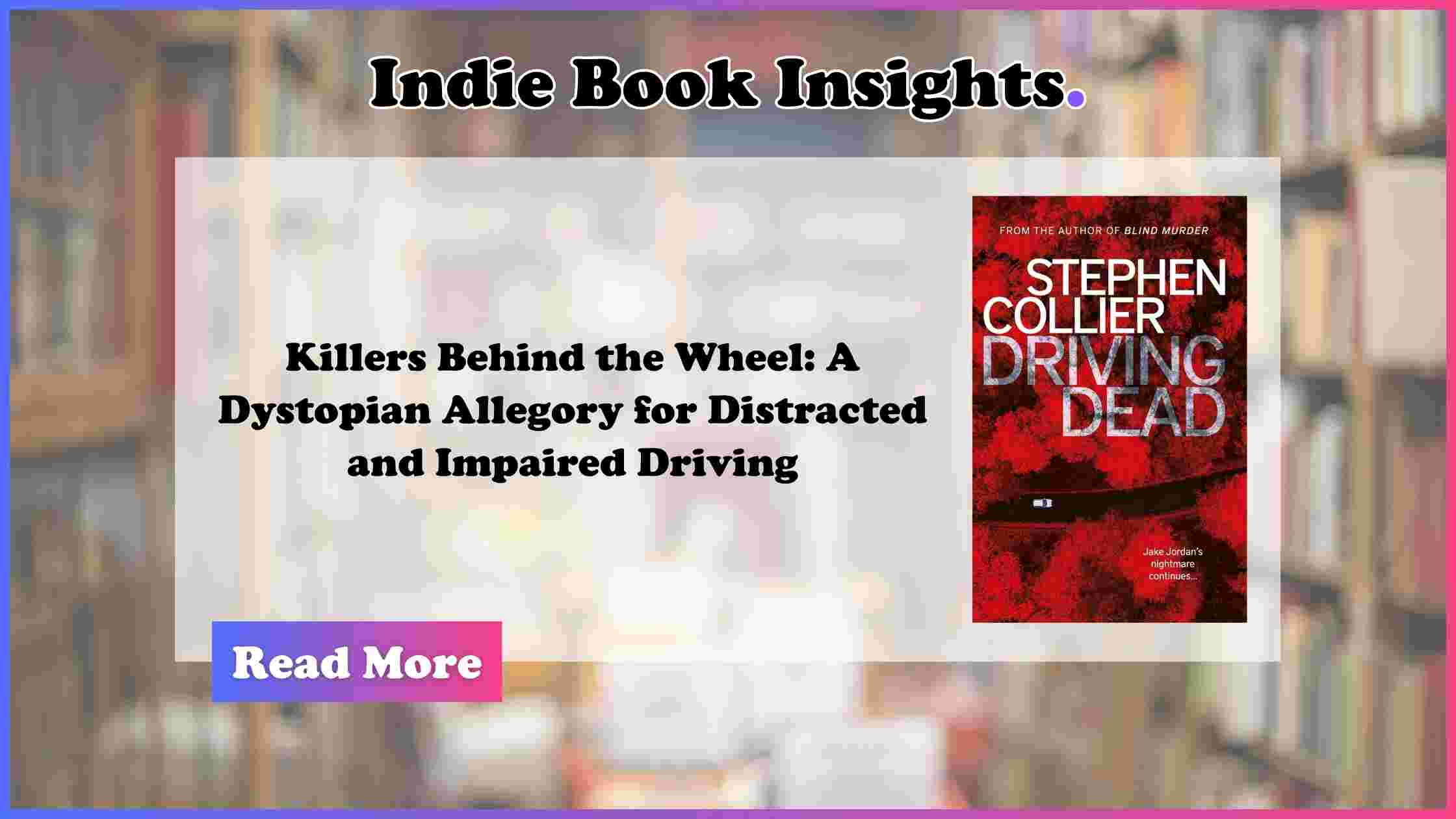
Inspired by DRIVING DEAD by Stephen Collier
In DRIVING DEAD, author Stephen Collier doesn’t just tell a gritty, tension-filled crime story—he throws readers into a terrifyingly plausible dystopia. At the heart of this gripping thriller lies an unsettling concept: what if a drug could turn people into emotionally numb, physically functioning shells of themselves—and then send them out onto the roads?
The novel follows Jake Jordan, a haunted ex-cop, as he investigates a series of horrific vehicle collisions. But these aren’t ordinary crashes caused by human error. These are cold, calculated tragedies linked to a mysterious drug that renders users detached and robotic—able to drive, but incapable of human empathy or rational decision-making.
Sound far-fetched? That’s what makes DRIVING DEAD so chilling. It reads as an eerie allegory for the dangers we already face on today’s roads. Collier’s fictional drug could easily stand in for real-world distractions—smartphones, fatigue, intoxication—anything that turns a driver from a thoughtful human into a passive machine. In that way, the “zombie drivers” in DRIVING DEAD are all around us, right now.
As a former national police lead on drugs and driving, many studies have shown that driving under the influence is as dangerous as texting while driving. We live in a world of constant digital stimulation, where a driver’s attention is divided between the steering wheel and screens. The eerie calm of the drugged drivers in the novel echoes the real-life trance of the modern commuter who’s only half-present behind the wheel.
It is pushed further when the story raises the question: What happens when society stops caring? When will we no longer grieve lives lost in accidents because we’ve become numb to them? The drug in DRIVING DEAD doesn’t just strip users of control; it erases their emotional accountability. It’s not only dangerous—it’s dehumanising.
The book depicts a grim vision of a future in which collision victims are regarded as mere data points, their personal tragedies lost within the bureaucratic process. It is no coincidence that the protagonist is a man weighed down by grief, bureaucracy, and moral fatigue. Through Jake Jordan, we experience the emotional repercussions of a system that can no longer distinguish between accidents and calculated murder.
Stephen Collier’s writing is cinematic, methodical, and deeply emotional. While the thriller unfolds with the pace of a procedural, it never loses sight of the human cost. Every crash, every revelation, is a reminder that behind the statistics are lives—real people, real families—impacted forever.
DRIVING DEAD asks us to question how close we already are to this dystopia. Are we already driving dead, numb, distracted, and dangerously disconnected?
If you’re a fan of crime fiction with a conscience, DRIVING DEAD isn’t just a page-turner. It’s a warning shot.
Get the book. Buckle up. And pay attention, on the page, and on the road.