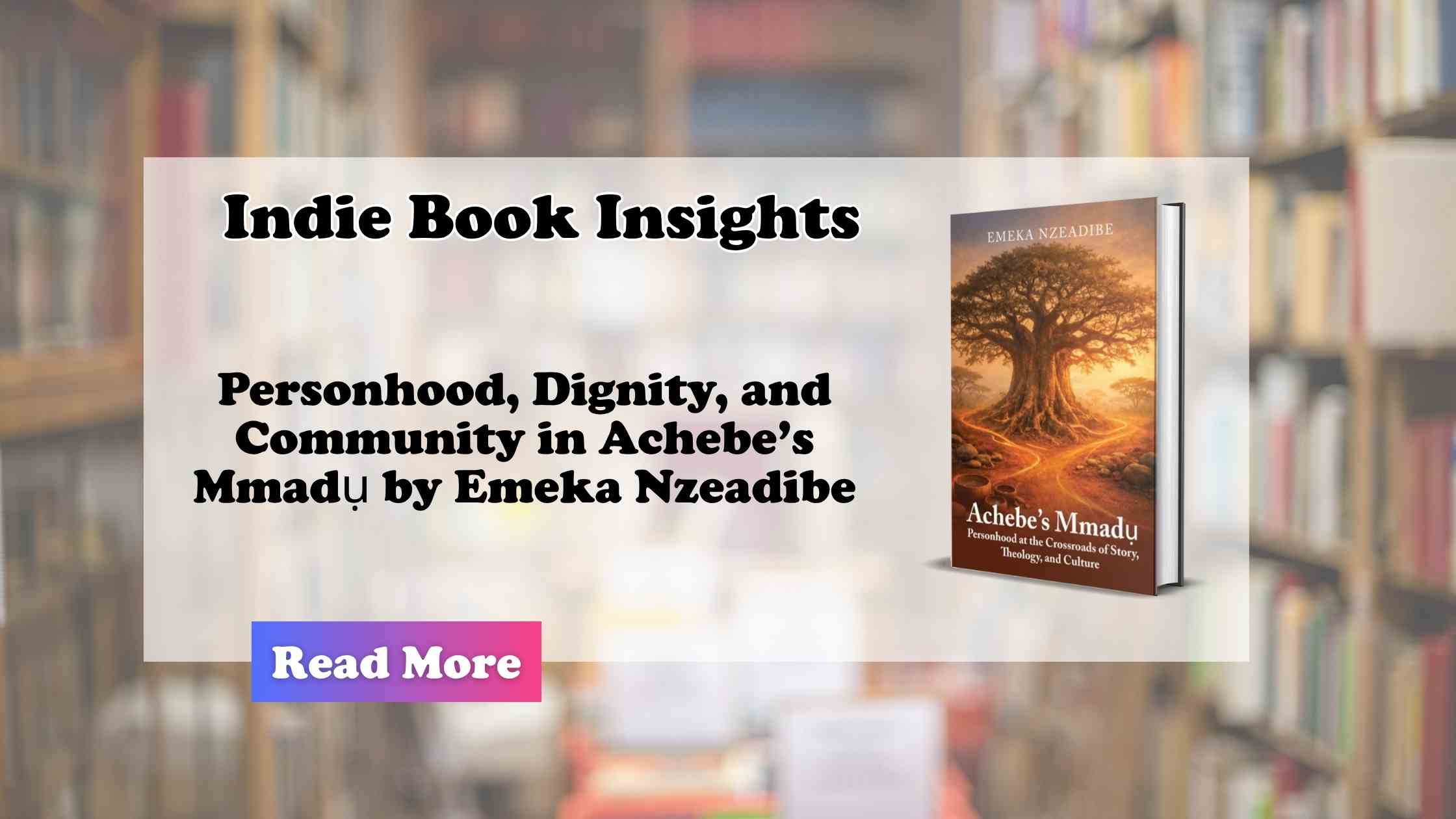
In Achebe’s Mmadụ: Personhood at the Crossroads of Story, Theology, and Culture, Emeka Nzeadibe presents a powerful study of the human person through Chinua Achebe’s Igbo world. The book examines how identity, dignity, and belonging are shaped not in isolation, but within the living bonds of family, culture, faith, memory, and community.
At the centre of Nzeadibe’s work is the Igbo concept of Mmadụ, which speaks to the meaning of being human. Mmadụ is not treated as a flat label for a person. It becomes a deep way of understanding human worth, moral responsibility, and spiritual presence. Through this concept, Nzeadibe invites readers to see personhood as something rooted in dignity and expressed through relationships.
One of the book’s strongest insights is that human dignity is never detached from community. In Achebe’s fictional world, the person is formed through shared life. The village, the family, the ancestors, the gods, and the moral expectations of society all shape how one lives and how one is recognised. A person’s actions matter because they affect not only the individual, but the whole community.
This is why Achebe’s Mmadụ is so relevant for readers today. Modern life often celebrates independence while weakening the ties that give identity its depth. Nzeadibe’s reading of Achebe reminds us that dignity is not only about personal rights. It is also about responsibility, recognition, mutual care, and the ability to honour the humanity of others.
Through characters such as Okonkwo and Ezeulu, Nzeadibe explores the tension between strength and pride, leadership and isolation, honour and failure. Their stories show that a person may gain status and power, yet still struggle with the deeper demands of personhood. True dignity requires more than achievement. It requires balance, moral awareness, and the ability to live meaningfully with others.
The book also places Igbo thought in conversation with Christian theology, especially the idea that the human person bears divine worth. Nzeadibe does not simply compare cultures. He shows how Achebe’s literary imagination opens a wider path for thinking about humanity, one that respects African wisdom while speaking to universal questions of identity, faith, and human value.
Achebe’s Mmadụ is a compelling work for readers interested in Chinua Achebe, African literature, Igbo culture, theology, philosophy, and the enduring question of what it means to be human. Emeka Nzeadibe offers a thoughtful and necessary contribution to the study of personhood, showing that human dignity is best understood when the individual and the community are held together.
For anyone seeking a book that brings literature, culture, and theology into meaningful conversation, Achebe’s Mmadụ deserves close attention. It reminds us that to be Mmadụ is to be a person of worth, relation, memory, and responsibility.
Get your copy today! https://www.amazon.com/dp/B0GZFB5P25/