
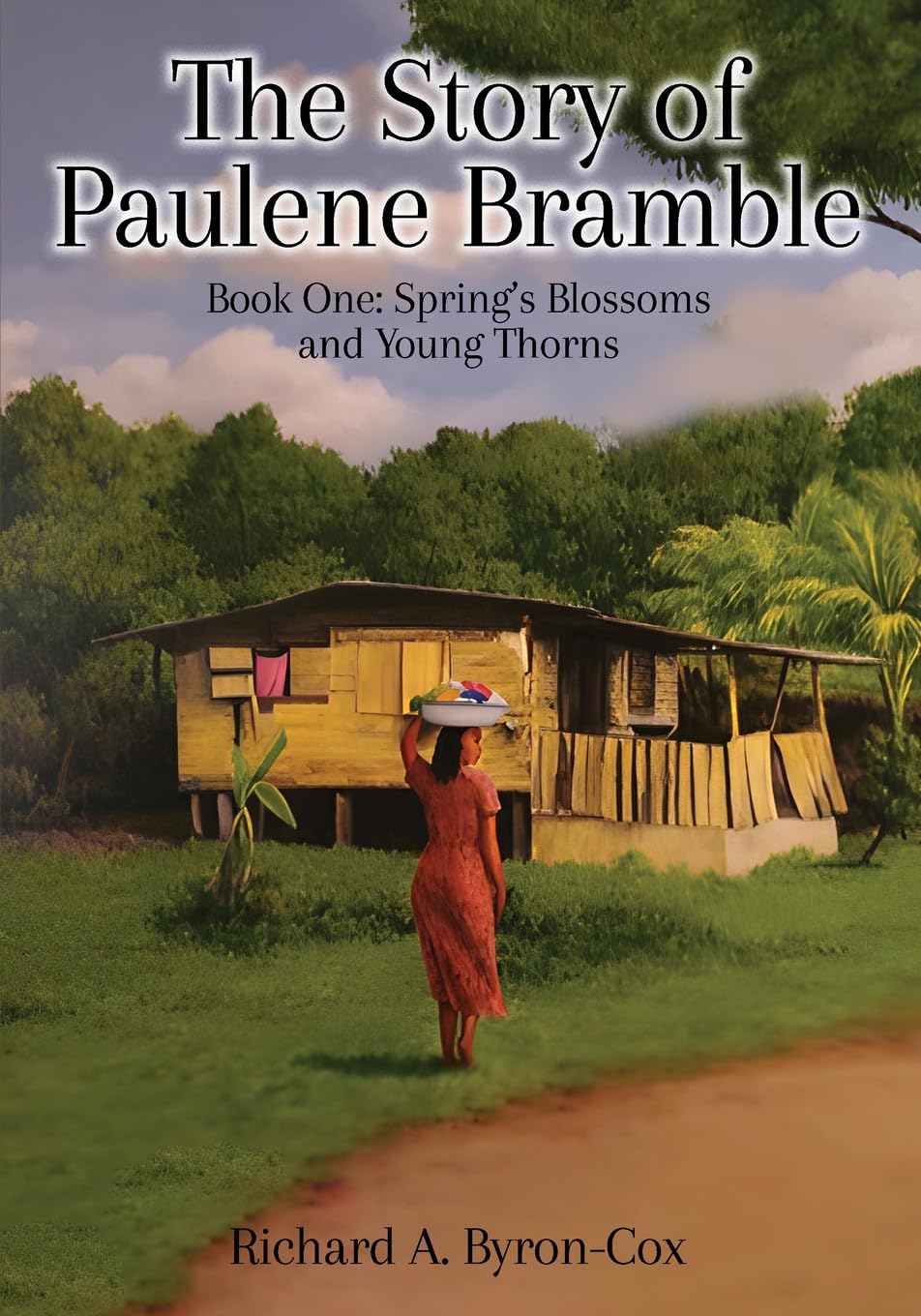
“The Story of Paulene Bramble: Spring‘s Blossoms, and Young Thorns,” by Dr. Richard A. Byron-Cox, crafts a powerful narrative that transports us from our contemporary world into the harsh realities of early 20th-century Caribbean life.
Despite being historical fiction, this book is rooted in the rich historical context of the Caribbean. It provides a candid commentary on the struggles of marginalized communities during a time of significant social and political upheaval.
Following the lives of Paulene Bramble, Inez, Ma Clarice, and other characters—this work of fiction illuminates their experiences with vivid detail and emotional depth. Based on the backdrop of colonial exploitation, where themes of misogyny, violence, and racism are starkly portrayed, these people navigate a world where religion and societal norms often perpetuate injustice and where the legacy of slavery continues to shape their daily lives.
Byron-Cox’s storytelling is bold and intimate, drawing readers into the visceral realities these individuals face. The author deftly intertwines the physical and spiritual realms, offering a narrative grounded in historical authenticity and rich with symbolic meaning. Through Paulene Bramble’s journey, we encounter a world where hope and faith are vital, often seeming out of reach, yet serving as lifelines for those grappling with systemic oppression and personal hardship.
The narrative is distinguished by its use of Caribbean “English,” which not only lends authenticity to the dialogue but also deepens readers’ immersion in the cultural and social milieu of the time. Byron-Cox’s skillful use of language and storytelling techniques brings to life the complexities of Caribbean society. He clearly portrays the nuances of colonial rule and its impact on individual lives, showcasing the tension between tradition and progress.
One of the novel’s notable achievements is its exploration of generational suffering and the myth of divine retribution. Byron-Cox challenges the notion that the struggles faced by these communities are a form of divine punishment for past wrongs. He argues that the true source of their suffering lies in the systemic evils of British imperialism, which perpetuates exploitation and inequality for its gain—to reflect on the broader implications of colonialism and its enduring legacy.
Moreover, community and home depict a fresh perspective on Caribbean life. Unlike earlier works that romanticize or nostalgically reflect these concepts, Spring’s Blossoms, and Young Thorns present a more nuanced view. Be it the contrast between town and country life that is vividly illustrated or highlighting the struggles of those who migrate from rural areas to urban centers in search of better opportunities—Paulene’s journey from her country home to the city, driven by a need to escape an abusive relationship, underscores the harsh realities of this transition.
To emphasize the complexity of interpersonal relationships and the ubiquitous nature of social dynamics, Byron-Cox uses the narrative technique of “sou sou” to give depth to the storytelling and serve as a channel for information exchange within the community—reflecting the dualities present in Caribbean society.
The omniscient narrative point of view allows readers to experience the full range of human emotions and experiences depicted in the novel. From the innocence of young girls like Inez to the remorse and justifications of perpetrators like John V., Byron-Cox offers a comprehensive view of each character’s life. The novel’s exploration of religion as both a refuge and a façade for corruption challenges readers to consider their own societies’ moral and ethical dimensions.
Spring’s Blossoms, and Young Thorns significantly contribute to Caribbean literature, offering a meticulous and empathetic portrayal of a complex and often overlooked historical period. Dr. Byron-Cox’s work stands alongside the literary achievements of Chinua Achebe, Toni Morrison, and James Baldwin, providing a voice to the marginalized and a critical examination of the forces that shape their lives.
If you want to relive history, this novel not only enriches your understanding of Caribbean heritage but also invites contemplation on broader issues of power, justice, misogyny, and human dignity. IT IS A MUST READ1