
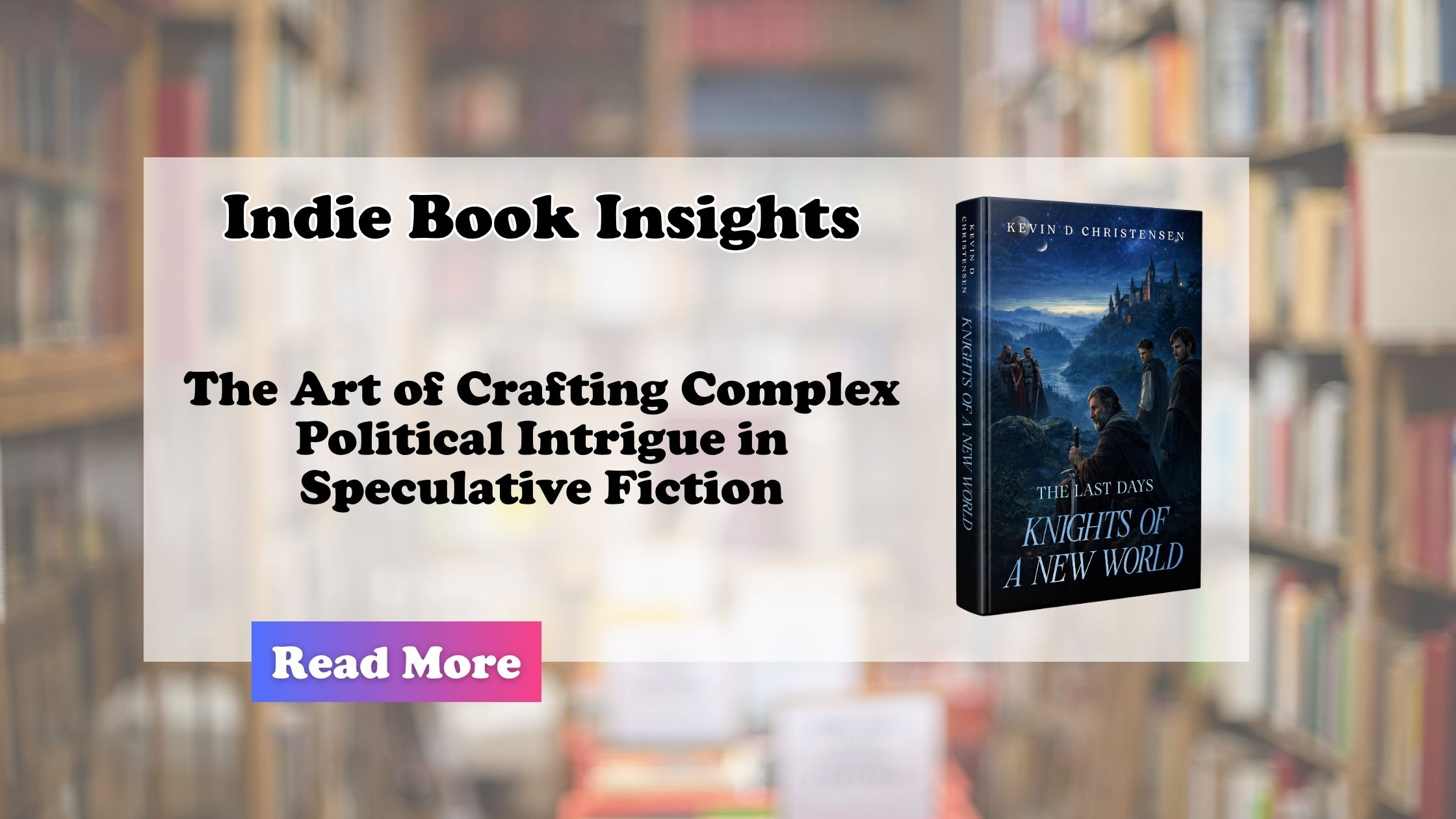
Crafting complex political intrigue in a novel requires a special kind of talent that shouldn’t be expected equally from every author or book, to be honest. The fact that treating power not as a static backdrop, but as a living, breathing ecosystem driven by conflicting motives, scarce resources, and deeply flawed individuals has so much in it that some authors struggle to find the perfect match of words, even when they have a clear outline in mind. Effective political world-building in speculative fiction avoids simple good-versus-evil binaries. In fact, if you read good fiction such as Kevin Christensen’s Knights of A New World, you can conclude that writing it demands clarity, creativity, and structure.
If you are new to this writing, this post breaks down key components and offers practical advice. So, take these into account and sharpen your storytelling skills to captivate readers.
Establish Competing Power Structures: The foundation of any compelling political plot rests on clearly defined institutional friction. It could discuss balancing the fading authority of an established empire against the rapid ascent of a technological powerhouse or pitting regional magistrates against traditionalist underground networks. Your factions must have distinct philosophies and survival needs, and the story should present conflicting economic pressures, legal traditions, and military doctrines so diplomacy always feels like war carried out by other means.
Weave Personal Stakes with Macro Stakes. Grand geopolitical maneuvers can feel sterile if readers don’t see how high-level decisions affect individual lives on the ground. So, try to anchor your political conflicts through multi-dimensional characters. This could include covert operatives, young journalists, local villagers caught in the crossfire, or even a science-fiction crossover such as the “Off Landers,” as we see in Knights of A New World. When a treaty failure threatens an entire nation, it should simultaneously threaten the safety and loyalties of the characters your audience cares about.
Embrace Ambiguity and Unintended Consequences. Real political change is rarely clean or straightforward. Introduce plots where characters make strategic compromises that backfire generations later, or where underground movements accidentally empower worse tyrants than the ones they overthrew. Keep motivations opaque and build layers of espionage, secret prophecies, and hidden agendas to keep readers guessing until the final page.
Map Out Information Asymmetry: Political thrillers thrive on characters operating with incomplete or deliberately falsified intelligence. Map out what each faction knows when they find out about it and how they weaponize secrets against their rivals. Information should act as a volatile currency; when a hidden truth leaks, it should radically alter the balance of power overnight and force sudden, desperate realignments.
Incorporate Economic and Logistical Realities: Empires and rebellions do not run on ideals alone; they require supply lines, taxation, trade routes, and resource management. Show how economic squeezes, control over key borders, or scarcity of vital commodities drive leaders to make ruthless political choices. Grounding your political web in tangible logistics gives weight and realism to every treaty, embargo, and declaration of war.
Draw Inspiration from History and Masterpieces: Look to real-world imperial transitions, border disputes, and ideological shifts to add texture to your fictional governments, books that blend high-tech political upheaval with ancient imperial friction, such as Christensen’s Knights of A New World, an inspiring read that expertly navigates the complexities of shifting world orders.
If you are tired of predictable tropes and want a story that boldly defies genre boundaries, this book is a masterpiece that demands your undivided attention. Set against the atmospheric, mud-and-blood landscape of a fractured, sub-Roman Britain, the story initially feels like classic Arthurian lore. Tribal kings rule by the edge of iron swords, and native populations navigate a small, superstitious world near Hadrian’s Wall.
But then, the sky opens up, and Atlantis appears as a hyper-advanced, industrialized, spacefaring superpower. When these “Off-Landers” descend upon Britain, they bring atmospheric aircraft, data files, and corporate banking clans demanding resource rights. What follows is an incredible clash of civilizations where ancient prophecies are weaponized as political propaganda. Blending the sweeping tension of a space opera with the gritty reality of ancient warfare and modern political issues, Knights of A New World is an absolute must-read that redefines speculative fiction and will provide you with a great time.
Visit the author’s website, https://authorkevinchristensen.com/ to learn more.