

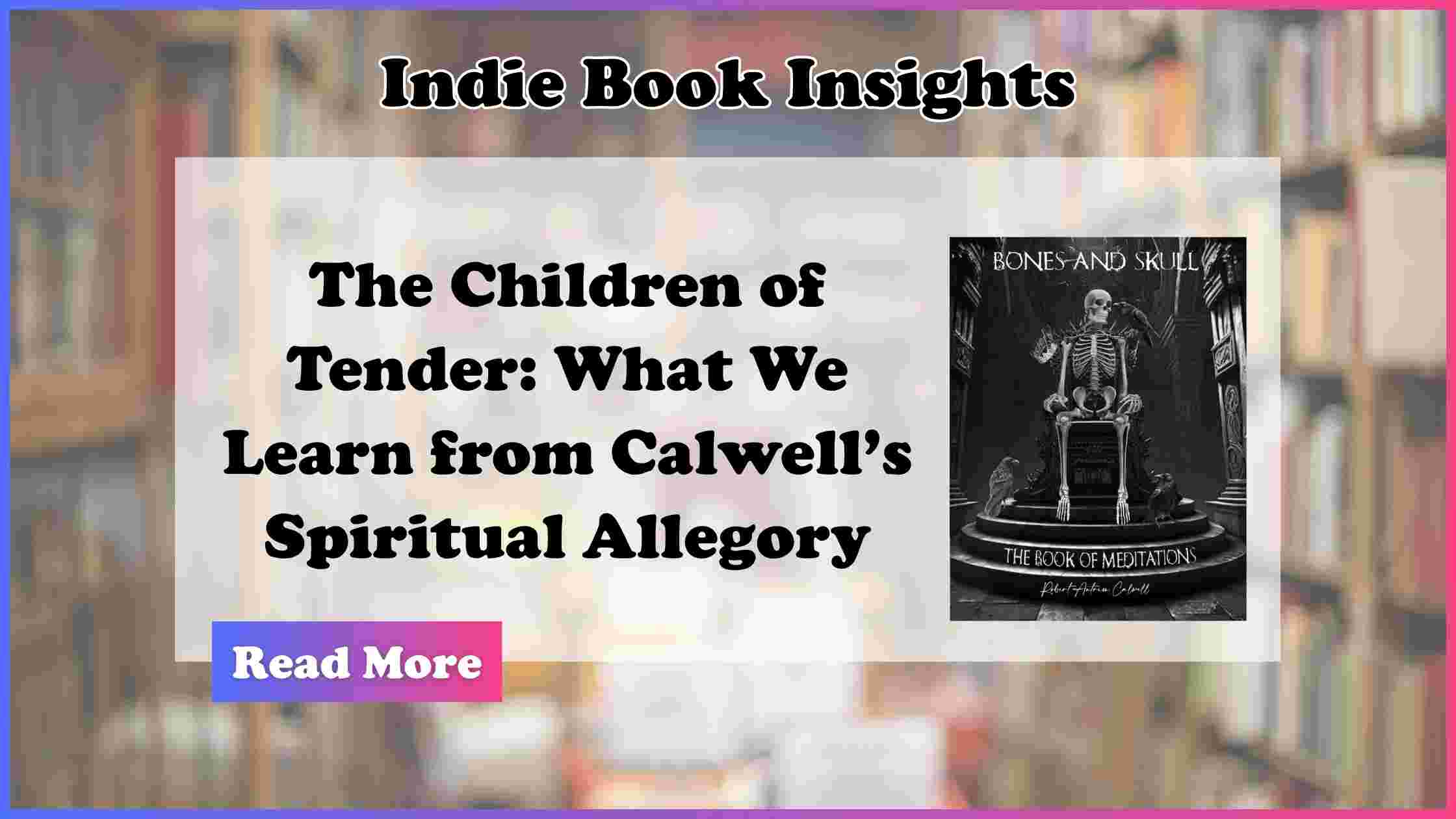
In Bones and Skull: The Book of Meditations, Robert Antrim Calwell crafts a haunting and tender allegory that centers on a group of children living at the foot of Weaver’s Mountain. These children, inhabitants of the village called Tender, represent more than just innocence—they are embodiments of spiritual resilience, communal truth, and generational memory. The journey they undertake is both literal and metaphorical, navigating a world filled with monsters, myth, and redemption.
At the heart of the allegory is The Weaver, a deranged figure who haunts the mountain and transforms lost children into “hanging dwarf crocus,” a chilling metaphor for lost potential and spiritual captivity. The children of Tender—Tiara, Edgar, Sophia, Samuel, and Anastasia—respond not with fear, but with strategy, hope, and unity. They seek not only to protect each other but to confront and overcome the evil that threatens them.
What sets Calwell’s approach apart is the refusal to frame the children as helpless victims. They are aware, intentional, and determined. Edgar’s sacrifice to lure The Weaver is a pivotal moment of bravery, and Tiara’s leadership is maternal, protective, and ultimately redemptive. The act of binding The Weaver with his own hair, choking him with the very fibers he used to harm others, becomes a powerful inversion of inherited trauma. Here, children symbolically reclaim the tools of oppression to forge liberation.
Calwell’s use of spiritual language and poetic cadence deepens the allegory. The children chant, hold hands, wash blood from their white outfits in Teardrop Falls, and carry with them a book called Every Heart to Pass. These rituals represent the importance of community storytelling, memory-keeping, and collective healing. The children are portrayed not simply as figures of purity, but as agents of sacred resistance.
The narrative recognizes the weight of generational pain. The Weaver is not portrayed as pure evil but as a once-pure soul corrupted by madness. This nuanced portrayal allows for a meditation on forgiveness, transformation, and the cyclical nature of harm. When Bones and Skull later finds The Weaver’s remains and winds up his rope, he does so in mourning, with an understanding that even monsters were once children.
In the end, Bones and Skull does more than tell a story of good versus evil. It invites readers to consider how spiritual innocence—when allied with courage and solidarity—can confront even the deepest shadows. The children’s triumph is not one of brute force, but of intention, memory, and love. It is a victory that reminds us all that healing often begins where pain was first born.
For those seeking a work of poetry and myth that blends innocence with wisdom, Bones and Skull offers a deeply resonant journey through the forests of fear and toward the light of remembrance.