
Long before hospitals stood within easy reach of mountain communities, women carried medicine in baskets, jars, notebooks, and memory. Across the Blue Ridge Mountains, many families depended on women who knew how to deliver babies, dress wounds, ease fevers, prepare herbs, and sit beside the sick through long nights.
These women were often called granny women, though age had little to do with the work itself. Their knowledge usually passed from one woman to another. A grandmother might teach a daughter which roots to gather, how to prepare a salve, when to send for help, and what signs meant a patient was in danger. In remote communities, such knowledge could mean the difference between life and death.
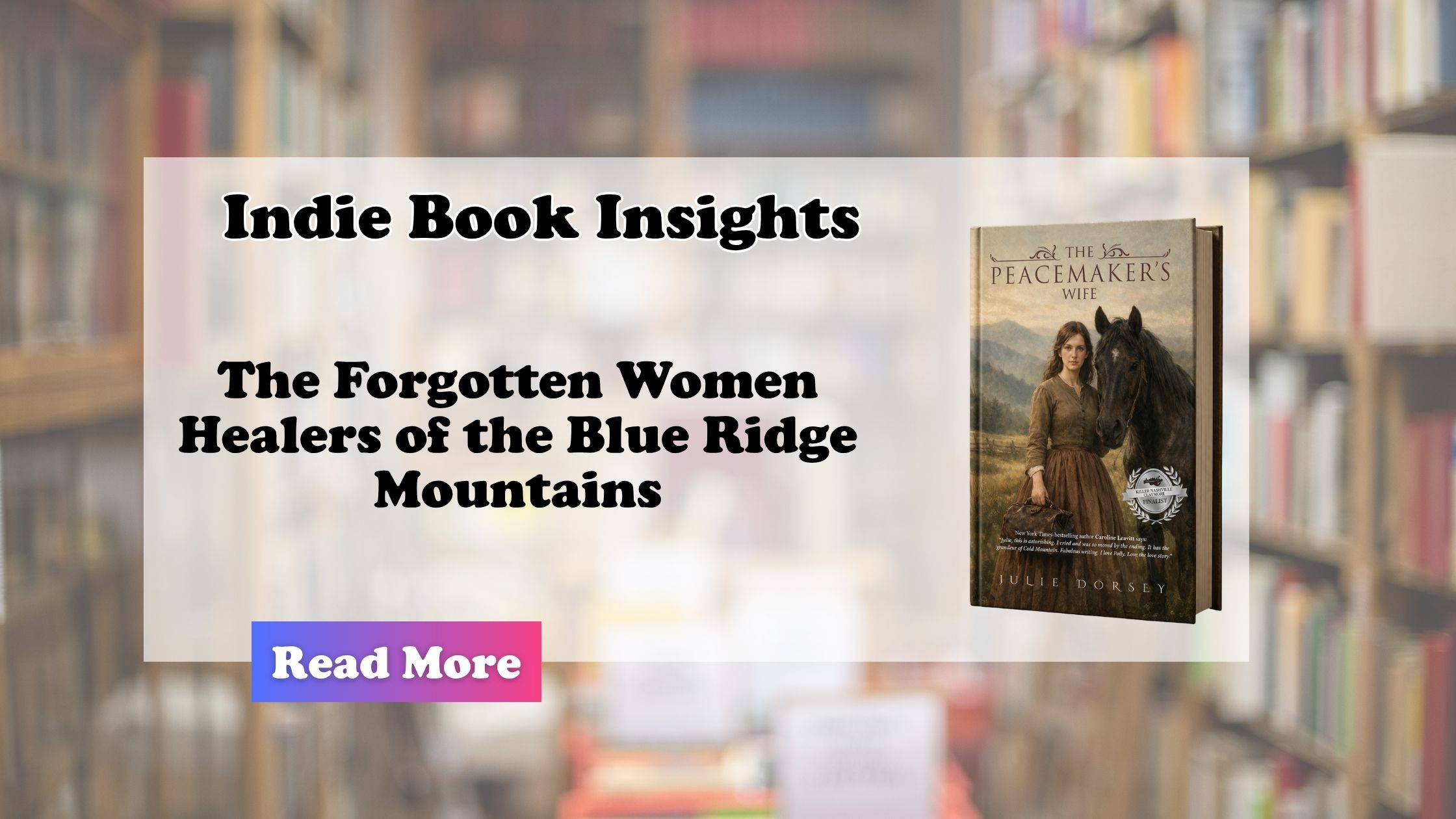
That world forms the heart of Julie Dorsey’s historical novel, The Peacemaker’s Wife.
Set in the Blue Ridge Mountains beginning in 1857, the novel follows Polly Justice, a young woman determined to become a healer despite the restrictions surrounding her. Polly studies medicine, learns from Nan Clark, the local granny woman, and gradually assumes greater responsibility for the people around her.
Her calling is deeply personal. As a child, Polly helped during the difficult birth of her twin sisters. One baby, Lucindy, died, leaving Polly burdened by guilt and determined never to lose another child because she did not know what to do. That promise drives her toward medicine even when marriage, motherhood, violence, and war threaten to pull her away from it.
Nan becomes one of Polly’s most important teachers. She knows the mountain plants, inherited remedies, and practical skills required to care for people who may have no other medical help nearby. Polly gathers herbs with her, accompanies her on calls, studies her notebooks, and learns that healing requires far more than knowing which medicine to give. It requires courage, judgment, patience, and the willingness to act when no one else can.
When Nan dies, Polly faces the frightening realization that Blue Ridge may now look to her.
Her journey unfolds alongside murder, family conflict, forbidden love, the Civil War, and an increasingly dangerous marriage. Yet medicine remains one of the strongest threads running through her life.
The Peacemaker’s Wife brings attention to women whose work rarely entered official histories. Their names may not appear in medical textbooks, but their hands delivered children, tended families, preserved knowledge, and kept isolated communities alive.
Through Polly Justice, Julie Dorsey gives one of those women a voice.