

Taste often feels immediate. You see something and know, almost instantly, whether it resonates with you. There is no calculation, no deliberate reasoning. It is a response that seems to come from somewhere deeper than thought. Yet behind that instinct lies a complex interplay of experience, memory, identity, and emotion.
What we are drawn to is rarely random. Every preference is shaped over time, influenced by the environments we have lived in, the people we have known, and the moments that have stayed with us. A certain style of painting may appeal because it echoes a place once visited. A particular object may feel meaningful because it carries a sense of familiarity, even if its origin is unknown. Taste is not formed in isolation. It is built layer by layer, often without conscious awareness.
Memory plays a powerful role in this process. The mind associates visual forms, colors, and textures with past experiences. A simple object can evoke a feeling that cannot be easily explained. It may remind us of comfort, curiosity, or even longing. These associations guide preference in subtle but persistent ways. We are not just responding to what we see. We are responding to what we have lived.
Emotion also shapes taste in significant ways. People are drawn to what reflects their inner state or what they aspire to feel. Someone seeking calm may gravitate toward soft tones and balanced compositions. Another, driven by energy and movement, may prefer bold forms and dramatic contrasts. In this sense, preference becomes a form of emotional alignment. It allows individuals to surround themselves with what supports or expresses their state of mind.
Identity is equally central. The choices people make in art and objects often mirror how they see themselves or how they wish to be seen. A collection can signal refinement, curiosity, independence, or even rebellion. These signals are not always intentional, but they are rarely absent. Taste becomes a quiet declaration of self, communicated through objects rather than words.
There is also an element of discovery in developing preference. Taste is not fixed. It evolves with exposure and understanding. What once seemed unfamiliar or unappealing can become meaningful over time. This shift occurs as individuals learn to see more clearly, to recognize nuance, and to appreciate context. The act of looking becomes more informed, and with that, preference becomes more refined.
Social influence cannot be ignored. Culture, trends, and collective opinion all shape what is considered desirable. Yet the most compelling sense of taste emerges when individuals move beyond imitation. True preference is not about aligning with what is popular but about recognizing what holds lasting meaning on a personal level. This requires confidence, as well as a willingness to stand apart.
In many ways, taste is a form of perception. It determines not only what we choose but how we interpret what we see. Two people can look at the same object and experience it differently. One may see beauty, another indifference. These differences reveal that preference is not inherent in the object itself but in the relationship between the object and the observer.
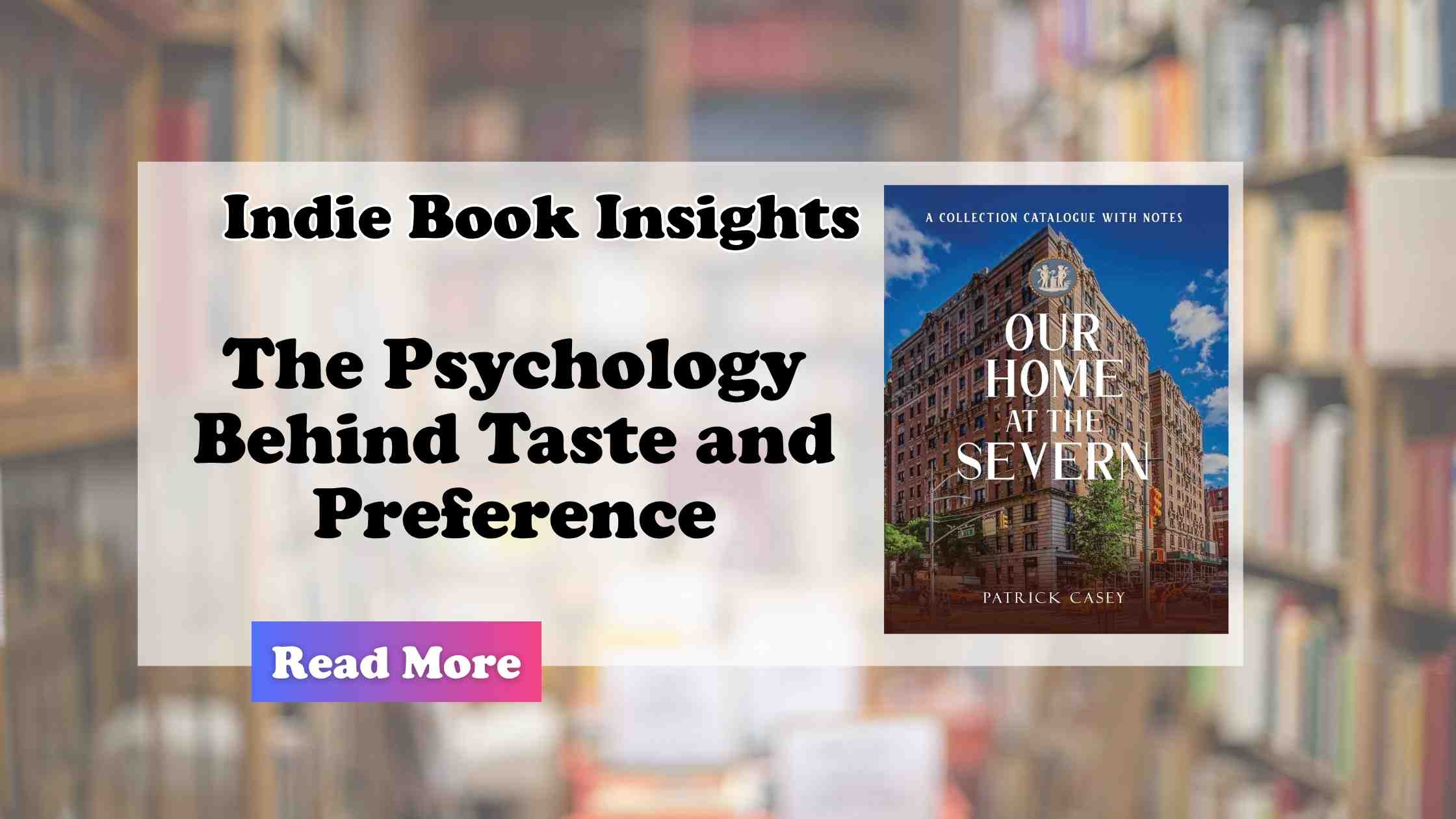
Our Home at the Severn by Joel Patrick Casey offers a compelling exploration of this relationship. The book reveals how taste is not about correctness but about connection. It shows how objects, art, and spaces reflect a deeply personal way of seeing the world. Through its reflections, readers are encouraged to trust their responses and to understand the origins of their preferences.
Head to Amazon to purchase your copy: https://www.amazon.com/dp/B0GR7HMWW3/