
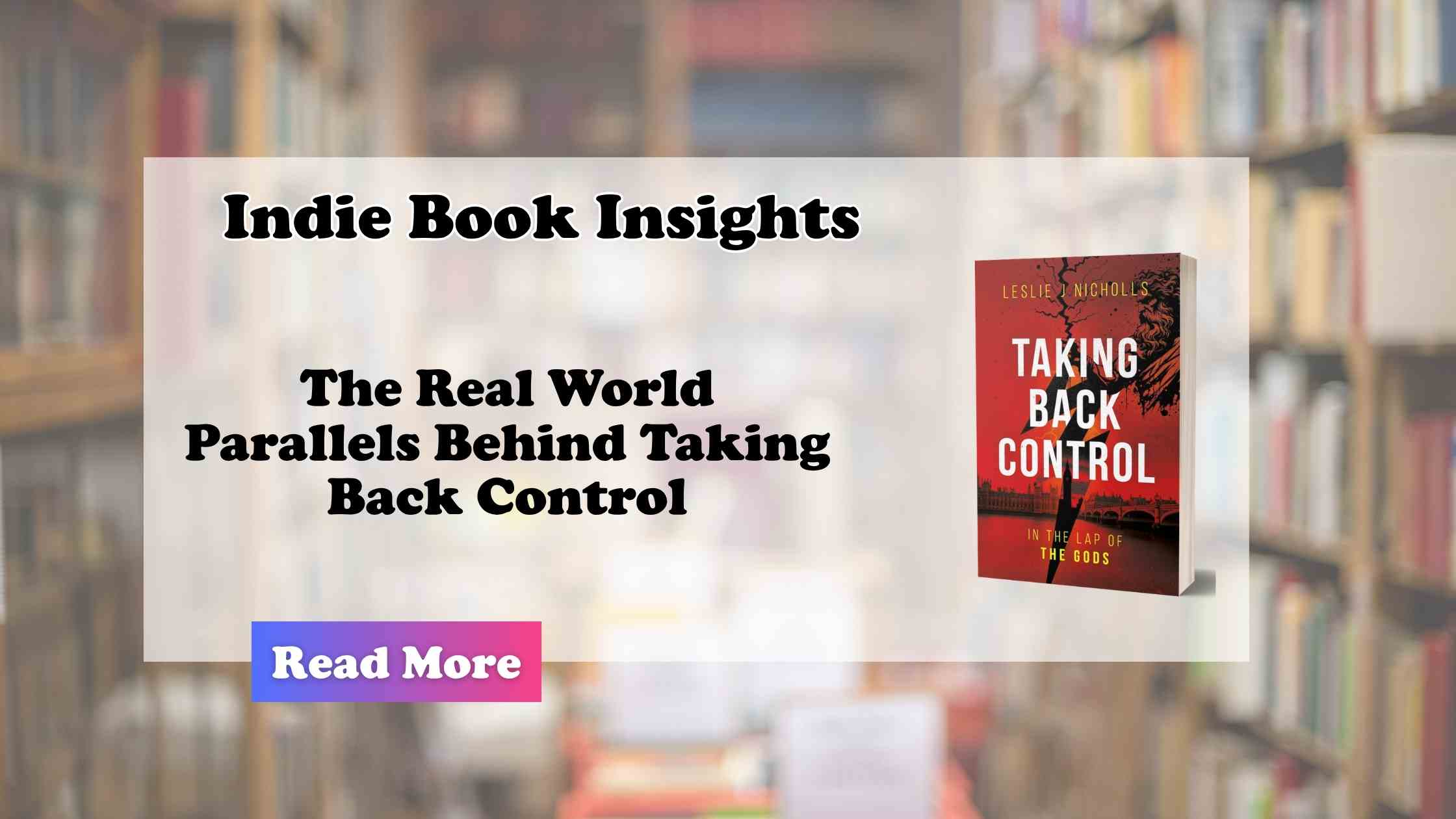
Fiction becomes powerful when it feels close enough to reality to make readers pause. Taking Back Control by Leslie J Nicholls does exactly that. It presents a tense, unsettling world shaped by political failure, public anger, crime, media pressure, surveillance, and the dangerous desire for order. Although the story is fictional, its themes echo many concerns that modern readers will recognise.
Across society, trust in institutions is weakening. People question whether governments listen, whether justice systems deliver fair outcomes, and whether the media reports truth or simply feeds public reaction. These concerns sit at the centre of the book. Nicholls builds a story around the fear that when official systems fail, other forces may step forward to fill the gap.
The book also reflects growing anxiety around crime and punishment. Many communities feel that laws are not always enforced strongly enough, while others fear that harsher responses could destroy civil rights. Taking Back Control explores this tension through a gripping narrative where the line between justice and revenge becomes dangerously thin.
Immigration, public safety, and political accountability also play a major role. These are not simple issues, and the book does not treat them as simple. Instead, it shows how human suffering, policy failure, and public frustration can collide in ways that create chaos. Readers are asked to look beyond headlines and consider the deeper pressures shaping society.
Another striking parallel is the role of media. In the modern world, news can shape public opinion within minutes. A story can create fear, outrage, sympathy, or division before facts are fully understood. Nicholls captures this power with sharp awareness, showing how information can become a tool of influence.
Taking Back Control is also deeply concerned with surveillance and hidden power. In a world where technology allows governments and agencies to monitor more than ever before, the question becomes not only who is being watched, but who is watching the watchers.
This is what makes the novel timely. It is not just a political thriller. It is a story about pressure, control, and consequence. It asks what happens when citizens stop believing in the systems around them, and what price society pays when people decide to take matters into their own hands.
For readers who enjoy bold, provocative fiction rooted in social tension, Taking Back Control offers a gripping and thought provoking experience. It does not simply tell a story. It holds up a mirror.
Explore the full story here: https://www.amazon.com/dp/B0G4F2KTJC.