It is no secret that the London we see today is far different from what it used to be. For instance, life in the 20th century is nothing like what we see and experience today. And for the gay men of that time, it was no different from a nightmare. After the Second World War, when the world went into a period of radical change and had some of the most bizarre and dangerous events, such as the Cold War threat, which formed a backdrop to the rapid rise in birth rates and drastic socio-political shifts, gay men still lived at risk of being imprisoned or blackmailed.
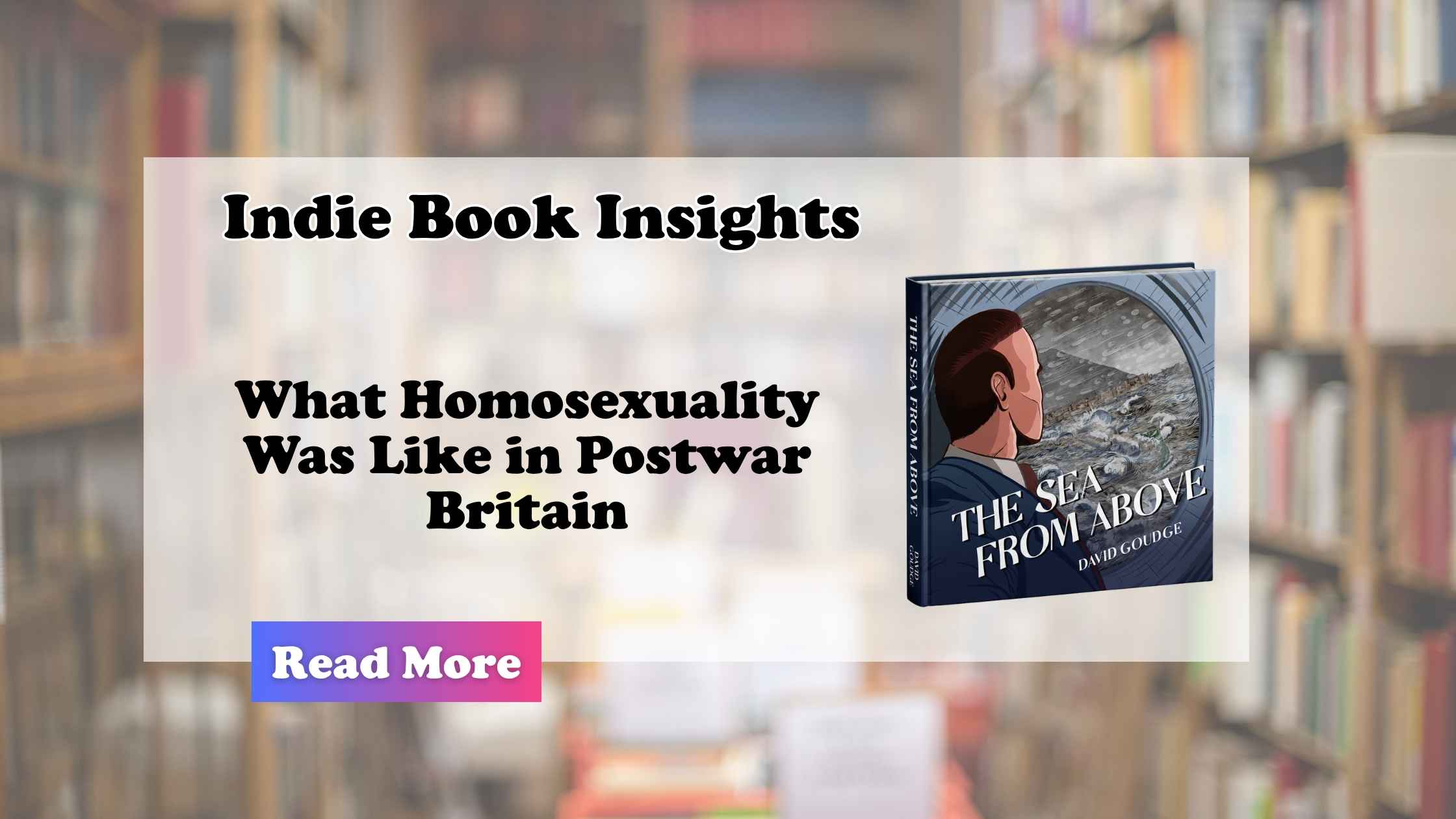
If you are looking for an immersive and emotionally resonant read, you should pick up David Goudge’s novel The Sea From Above. The book connects directly to the realities of mid-century Britain by following a young, naive wardrobe assistant who must navigate his emerging sexuality alongside the threat of homophobic violence in 1950s London. Through interwoven perspectives, including an older veteran stuntman heading to Italy for a film production, the magnificent novel centers on this sensitive topic and captures themes of personal transformation, memory, and vulnerability, contrasting the entertainment industry’s glamorous facade with harsh human realities.’
Get Your Copy on Amazon: https://www.amazon.com/dp/B0GSX31TT1/
The Landscape of Postwar Britain
When the Second World War ended in 1945, Britain was left reeling from exhaustion. It was rebuilding its cities, its economy, and its social fabric. Yet, beneath the surface of national recovery lay a deeply conservative social climate, where the shared trauma and mobilization of wartime had temporarily loosened certain social boundaries; peacetime brought a swift and fierce moral backlash.
For gay men and women, postwar Britain was an environment of profound legal danger and social surveillance. Homosexuality was entirely illegal under British criminal law. It was governed by strict statutes like the Labouchere Amendment and older sodomy laws, which meant that simply expressing affection or desiring intimacy could lead to public exposure, immediate social ruin, police entrapment, or lengthy prison sentences.
Living in a Whisper Culture
Because the law treated same-sex relationships as criminal acts, the queer community had to construct an entirely hidden world. This was a “whisper culture” built on survival mechanisms:
- Coded Language: Individuals relied on subtle gestures, specialized slang (such as Polari), and veiled phrasing to identify one another without risking exposure.
- Clandestine Spaces: Meeting places were fleeting and fraught with danger—discreet corners of public parks, private apartments behind locked doors, or underground clubs where whispers of police raids were constant.
- The Constant Threat of Blackmail: Because a conviction meant the destruction of a career and reputation, gay individuals were uniquely vulnerable to extortion by blackmailers who knew their secrets.
The Psychological Toll
The true cruelty of postwar Britain wasn’t just the threat of the law. Instead, it was the psychological internalization of fear, and those who were living under the constant gaze of a hostile society meant that individuals often learned to police their own thoughts, movements, and expressions. Trust was a rare and terrifying commodity, and emotional vulnerability carried heavy stakes.
Yet, despite these oppressive constraints, human connection persisted and people found ways to love, to carve out pockets of honesty, and to seek out communities against all odds. It is this exact tension between the cold severity of the law and the fierce, burning need for human warmth that makes exploring this era so vital for understanding how far society has come and how much resilience it took to pave the way.