
We are living in a mess of ecological anxiety. Day after day, we are bombarded by alarming headlines detailing melting ice caps, raging wildfires, rising sea levels, and the increasing crisis in biodiversity. In response, what have we done? As modern society has mobilized an arsenal of technological fixes, including carbon capture innovations, electric vehicles, geoengineering proposals, and complex international policy summits, we are unable to stabilize the environmental crisis… Why? We are trying to solve a crisis of relationship with tools of mere management, fixing a broken world with the same mechanistic, utilitarian mindset that broke it in the first place.
We need to look beyond Western technical fixes and interrogate our foundational assumptions about nature itself. We need a radical shift in how we perceive the environment. For this, we can turn to the wisdom of indigenous African cosmology that views the natural world not as a silent, inert warehouse of resources to be exploited, but as an “enchanted,” sacred space that fosters deep, unbreakable environmental accountability.
For centuries, Western modernity has operated under a disenchanted paradigm. Rooted in the Scientific Revolution and accelerated by industrial capitalism, nature came to be understood as res extensa, extended matter, a giant clockwork mechanism devoid of intrinsic spirit, soul, or sacredness. Trees became timber, rivers became hydroelectric channels, and mountains became quarries. When the natural world is reduced to a passive object, exploitation becomes frictionless. After all, you cannot feel moral remorse or deep responsibility toward a machine; you simply manage its utility.
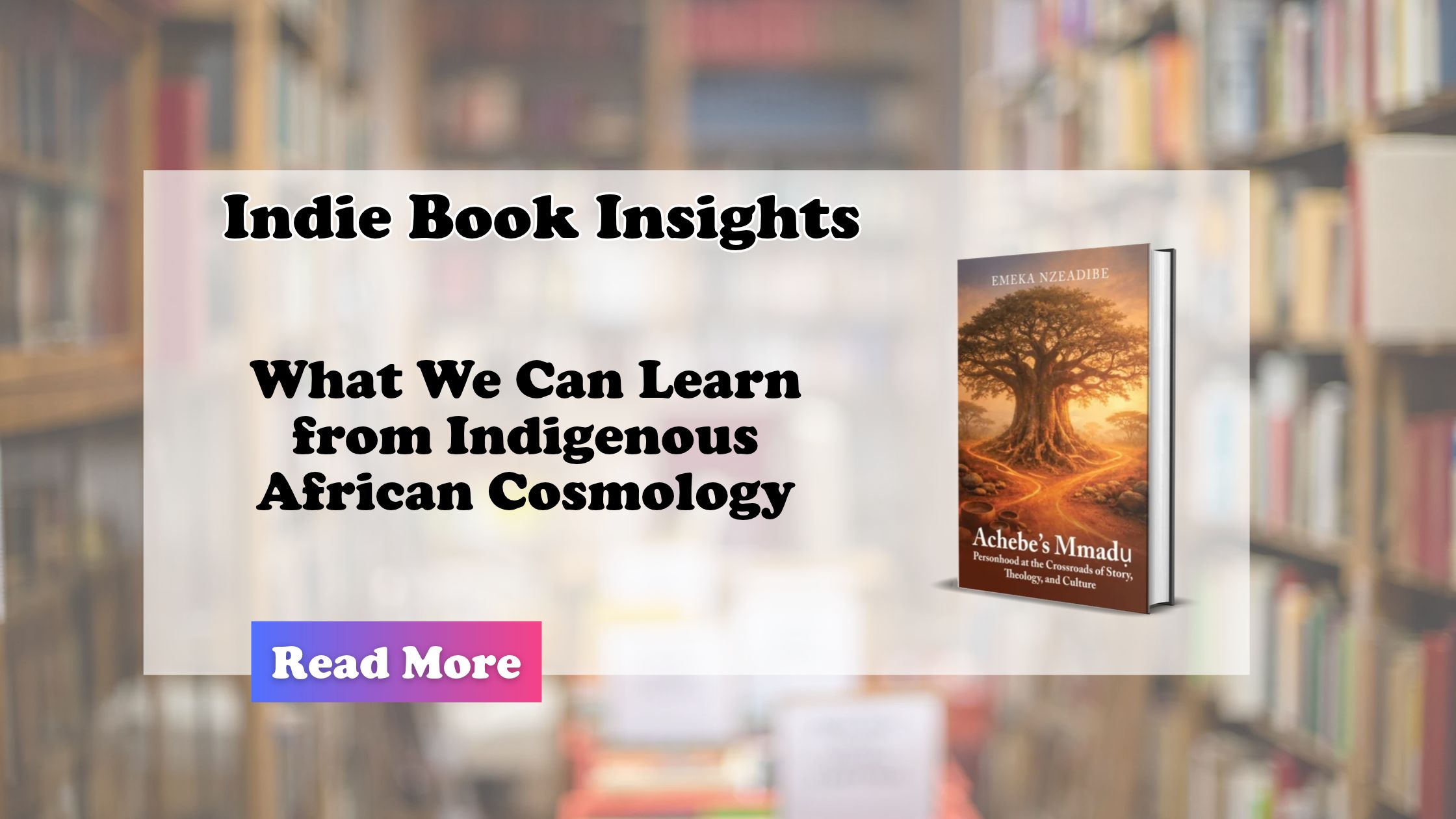
Indigenous African cosmology, particularly the traditional worldview of the Igbo people, as brilliantly explored in scholarly frameworks like Emeka Nzeadibe’s monograph Achebe’s Mmadụ: Personhood at the Crossroads of Story, Theology, and Culture, operates within an “enchanted” universe. Here, creation teems with life, agency, and spiritual resonance, and nothing stands in total isolation, not even you. Here, the land is sacred where rivers, forests, animals, and earth formations are intimately linked to the divine and the ancestral. When you walk through a forest, you are walking among living presences. When you till the soil, you enter into a sacred compact with the forces that sustain life. This enchanted perspective completely transforms human accountability and teaches you to sustain the world and the environment. You do not pollute a sacred river, because to do so is to desecrate a living entity and rupture the cosmic order. You do not recklessly strip a landscape, because ancestral roots and moral duty bind you to it.
The Earth Deity as the Ultimate Guardian of Ecology
To understand how indigenous African thought enforces environmental stewardship, one must examine the profound role of the Earth goddess, known in Igbo cosmology as Ani (or Ala). Ani is the supreme arbiter of morality, human conduct, and social justice, and the literal owner of all land. Every human being lives, walks, and rests upon the body of Ani, because human communities are built upon her surface, from birth, marriage, agriculture, and burial. This requires a direct, respectful relationship with the Earth, where Ani is the ultimate guardian of human rights and environmental ethics. This theological and ecological alignment creates a powerful deterrent against environmental degradation. When the Earth is recognized as divine and maternal, human beings are immediately decentered from the role of absolute masters and elevated to caretakers. Stewardship is no longer an optional corporate sustainability goal or a political policy; it is a sacred, non-negotiable spiritual obligation.
As captured by the foundational Igbo maxim Ife kwụlụ, ife akwụdebe ya (“Where something stands, something else stands beside it”), nothing in the universe exists in absolute isolation. Human beings (Mmadụ) are inextricably bound not only to their fellow humans in community, but to the entire ecological and spiritual ecosystem. You are defined by your relationships—not just with your family and neighbors, but with the animals, trees, rivers, and winds that surround you.
When we adopt this relational lens, climate stewardship stops being an external chore and becomes an expression of self-preservation and love. If your neighbor is hurting, you hurt. If your local ecosystem is poisoned, your own ontological wholeness (Ụbandụ) is compromised. You realize that destroying the environment is quite literally an act of self-mutilation.
We have all the facts, figures, and warnings we could ever need, yet political inertia and consumerist greed persist. What we lack is a moral imagination or a sacred vision of why the Earth matters. When we open our minds to non-Western intellectual traditions and indigenous cosmologies, we can re-enchant our relationship with the natural world. We can move away from a cold, utilitarian management of carbon emissions and step toward a sacred partnership with creation.
Read the book on Amazon: https://a.co/d/0363OG8A
Visit the Author’s Official Website: https://achebesmmadu.com/