
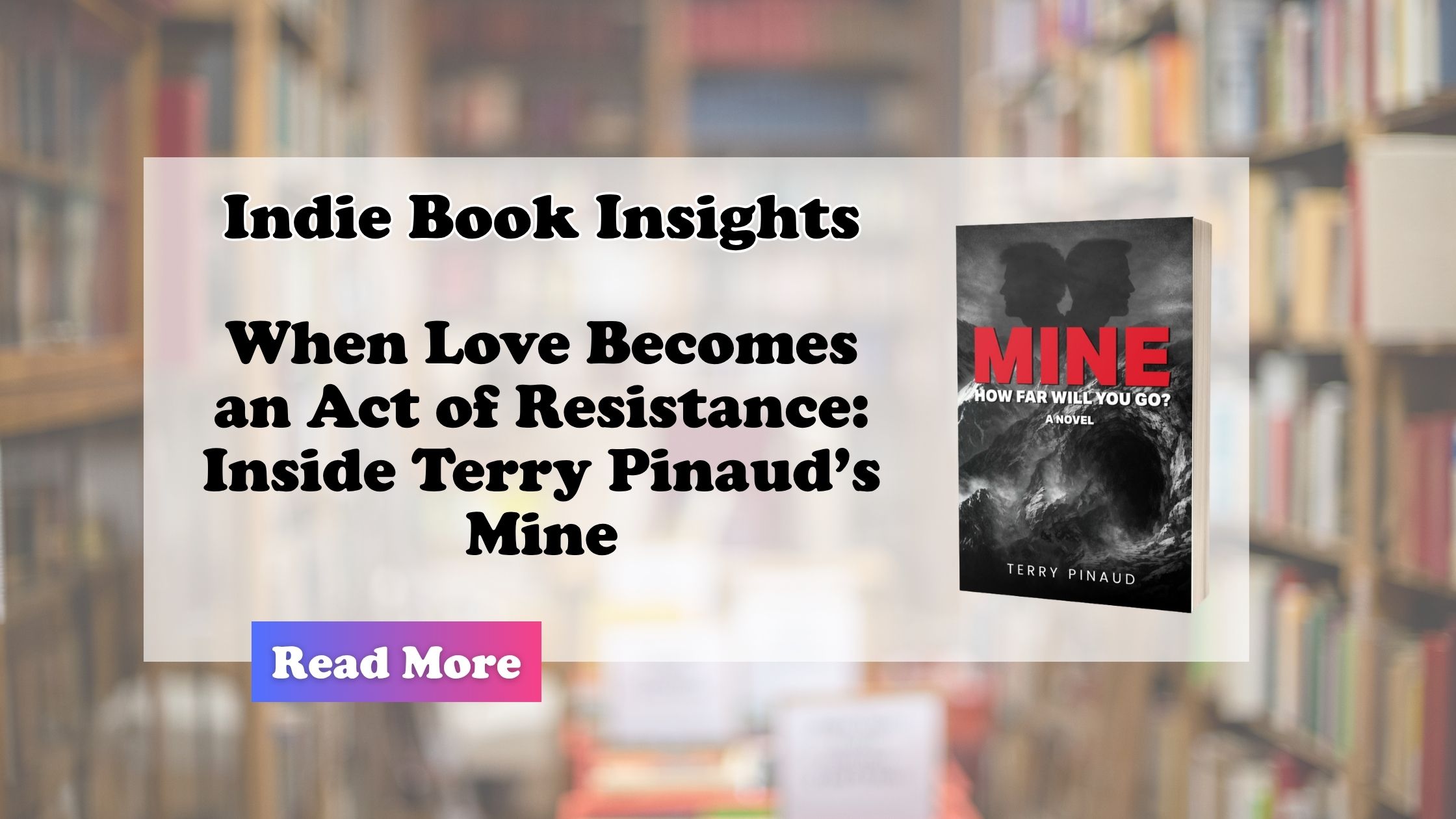
Love stories often celebrate connection, vulnerability and the joy of finding someone who makes life feel complete. However, in Terry Pinaud’s Mine, love carries a much greater weight. It becomes a challenge to prejudice, political control, rigid expectations and a society that demands conformity. Through the relationship between Eldin and Dal, the novel shows how loving another person honestly can become a powerful act of resistance.
Eldin’s journey begins when his family relocates to a western city affected by war. He is accustomed to leaving familiar places behind because of his father’s career but this move feels different. The community bears visible scars of violence, political tension shapes everyday life and military conflict threatens the futures of young men like him.
At his new school, Eldin meets Dal Amitola, a quiet and isolated student surrounded by rumors. Other students judge Dal because of his background, personality and unwillingness to follow their social rules. Eldin is initially curious but curiosity develops into admiration as he discovers Dal’s intelligence, sensitivity, strength and poetic nature.
Their relationship grows through small but meaningful moments. A borrowed pen, help with mathematics, shared conversations and time spent away from judgment gradually bring them closer. As Eldin begins to understand his feelings, he also starts questioning the identity society has created for him. He is expected to behave like a conventional young man, remain obedient and prepare for a respectable future. Loving Dal forces him to choose between performing that role and living truthfully.
That choice gives the novel its emotional and political power.
The society surrounding Eldin and Dal attempts to control more than public behavior. It defines acceptable masculinity, religious devotion, patriotism and sacrifice. As propaganda spreads and recruitment intensifies, young men are expected to surrender their individuality for the war effort. Personal dreams become secondary, while obedience is treated as a virtue.
Eldin and Dal’s love quietly rejects that system. By recognizing each other as individuals rather than symbols, they protect something the surrounding culture tries to erase: their humanity. Their bond declares that their lives have value beyond what the government, school, family or community demands from them.
Resistance in Mine is not always loud or dramatic. Sometimes, it appears in the decision to sit beside someone others avoid. At other times, it means defending a person being bullied, questioning harmful rumors or refusing to deny a relationship. Eldin’s growing courage shows that resistance can begin with one honest choice.
However, the novel does not romanticize the consequences. Eldin and Dal face hostility, family conflict, social rejection and increasing physical danger. Their love gives them strength, but it cannot protect them completely from a world shaped by intolerance and war. This tension makes every tender moment feel urgent and precious.
Terry Pinaud’s Mine is more than an emotional romance. It is a haunting exploration of what happens when love challenges systems built on fear and control. For readers drawn to powerful LGBTQ+ fiction, coming-of-age stories, wartime drama and characters who risk everything to live authentically, Mine offers an unforgettable reading experience.
Get Your Copy On Amazon: https://www.amazon.com/dp/B0GX32SRXZ/