

We have been told that plot is king when it comes to writing crime fiction. But if you look closely at the thrillers that actually keep you up all night or glued to your seats, you will find a different truth. You will get to know that plot is only one aspect of its success. Plot is merely the blueprint of a house. Pacing is the experience of walking through it in the pitch black, unsure of what is waiting around the corner. A brilliant twist means absolutely nothing if the reader is already too bored or too rushed to care. Therefore, in crime fiction, deliberate, human-centric pacing is needed to transform a standard police procedural into an unforgettable psychological experience.
Why, you may ask? Here are five reasons why pacing will always matter more than plot in a crime thriller.
1. The Realism of the Ripple Effect
In a rushed narrative, a body is found, and by the next page, the detective is chasing a suspect down an alleyway. Real life does not work that way, and readers know it. Deliberate pacing allows a story to explore the immediate, heavy shockwave of a crime. It gives us time to see the morning fog rolling over a cordoned-off estate, to smell the damp asphalt, and to feel the collective intake of breath from a neighborhood that suddenly feels unsafe. When you slow down, the crime ceases to be a mere plot point and becomes an anchor of cold, hard reality.
2. Safeguarding Reader Immersion
Rushing the discovery of initial clues is the fastest way to break a reader’s immersion. If a detective walks onto a crime scene and instantly spots the one microscopic piece of evidence that cracks the case wide open, it feels like a setup. It feels like a video game, not a human struggle. Believable criminal investigations are built on frustration, dead ends, and methodical grid searches. By pacing the revelation of clues naturally, the reader is allowed to solve the puzzle alongside the investigator, experiencing the genuine satisfaction of a breakthrough rather than the artificial jolt of a convenient shortcut.
3. Forging Genuine Human Connection
We do not root for plots; we root for people. A fast-paced plot often treats characters like chess pieces, moving them rapidly from one explosive set piece to the next. Slower, intentional pacing creates space for quiet, domestic realism. It allows us to see a detective returning home to a strained marriage, staring at a cold cup of coffee, or dealing with the silent, lingering grief of personal loss. These quiet moments build the emotional capital necessary for the high-stakes climax to actually land with devastating impact.
4. Maximizing the Power of the Twist
A plot twist is only as good as the silence that precedes it. If a thriller is operating at a relentless, exhausting maximum speed from chapter one, a major revelation just feels like more noise. Proper pacing utilizes the concept of contrast. By slowing the narrative down, lowering the reader’s heart rate, and establishing a rhythm of methodical police work, the author creates a false sense of security. When the floor finally drops out, the impact is magnified tenfold because the reader never saw the blow coming.
5. Cultivating Dread Over Shock
Shock is cheap; dread is expensive. Shock happens in an instant when a killer jumps out of a closet, and it dissipates just as fast. Dread is the slow, agonizing realization that the killer is already inside the house, waiting. Deliberate pacing is the only tool that can successfully cultivate dread. It forces the reader to linger in the uncomfortable spaces, to endure the agonizing wait for a forensic report, and to feel the suffocating pressure of a ticking clock.
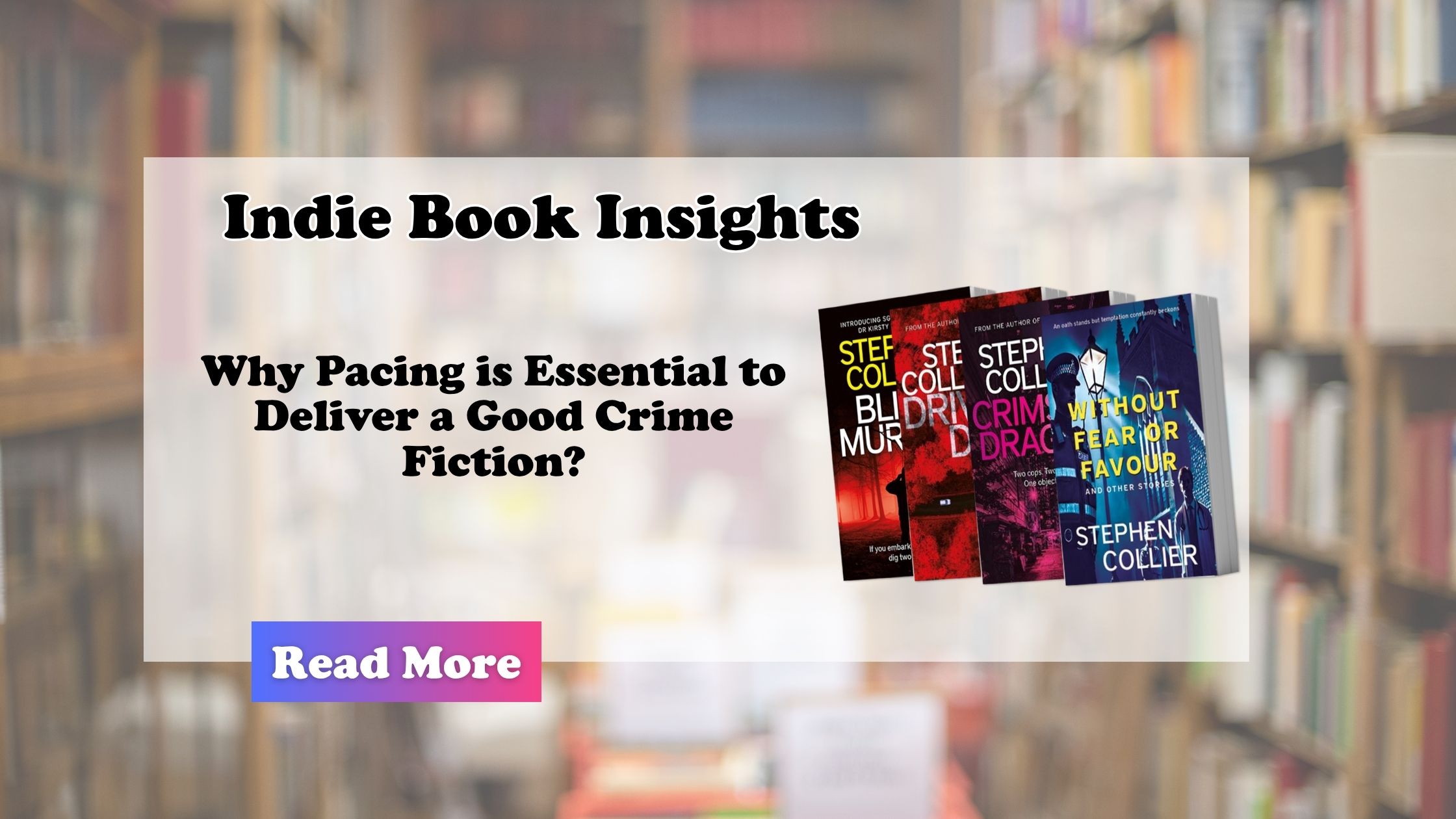
If you want to experience masterclass pacing that honors the true, gritty reality of criminal investigations without ever sacrificing tension, look no further than the work of Stephen Collier. His interconnected titles—Blind Murder, Driving Dead, Crimson Dragon, and Without Fear or Favour—offer a flawless blueprint of how to build suspense through psychological depth and authentic procedural rhythm.
If you want to read some of the greatest crime fiction of this decade, these novels have to be on your reading list.
The book can be purchased from Amazon: https://www.amazon.com/stores/author/B00L4JZ7P4/allbooks