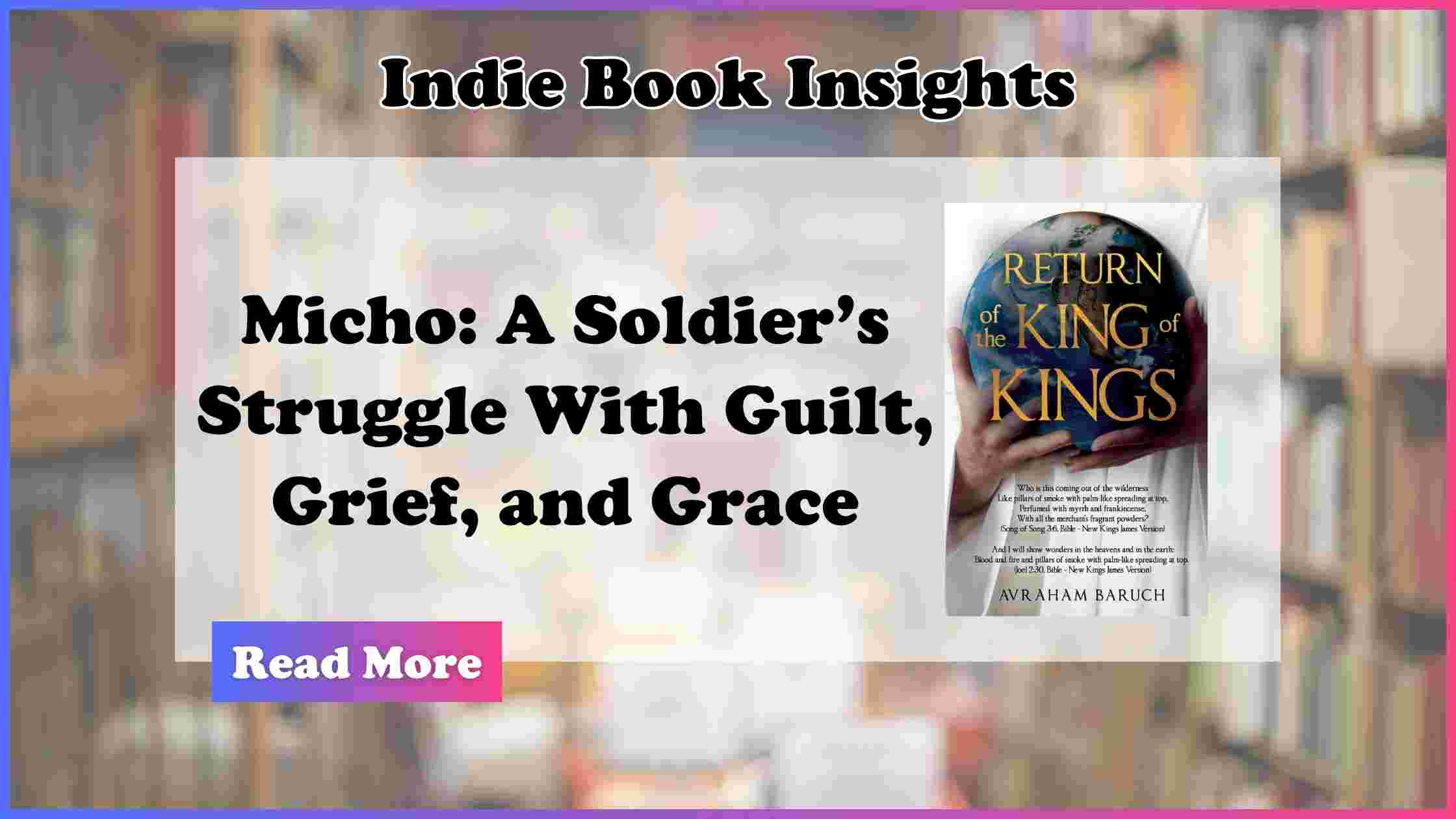
In Return of the King of Kings by Avraham Baruch, the character of Micho stands out as one of the most complex and emotionally compelling figures in the story. Once a soldier hardened by war and disillusioned by the crumbling world around him, Micho’s journey is defined by profound internal conflict—a struggle with guilt, the burden of grief, and the slow, painful path toward grace.
Micho’s early life in the capital city of Temesk is marked by deep friendship and a growing awareness of the moral fractures in society. His bond with Sashi, a quieter, more philosophical classmate, becomes the moral axis around which much of his life spins. Their shared youth is filled with laughter and loyalty, but as the country descends into chaos, their paths diverge.
Drafted into military service, Micho experiences the brutality of war firsthand. What he witnesses and endures leaves permanent scars. He loses loved ones—most notably his beloved partner, whose memory haunts him deeply. His inability to move on, even as the world rebuilds in the wake of the Messiah’s return, speaks volumes about the cost of conflict on the human spirit.
Micho is not just another veteran. He is the soul of the broken generation—the men and women left behind to pick up the pieces of a world torn apart. Despite outward strength and leadership, Micho is tormented by what he couldn’t prevent. His grief runs deep, clinging to the photograph of his lost family like a lifeline. To him, love and loyalty did not end with death. In his heart, his family remains whole, though the world says otherwise.
One of the most pivotal parts of Micho’s story is his involvement with the Armorean Union, a rising political movement disguised in patriotism but rooted in fear and control. Seduced by promises of order, strength, and national pride, Micho sees in the AU a chance to protect others—something he couldn’t do for his own loved ones. Yet it is precisely this choice that reveals his inner conflict.
Through his interactions with Sashi and his own reflections, Micho begins to confront the contradictions in his beliefs. He is torn between justice and mercy, between action and surrender. Sashi reminds him of a greater calling—a spiritual truth that transcends nationalism or ideology. Slowly, the seeds of grace begin to take root.
Avraham Baruch crafts Micho’s arc with both sensitivity and realism. He is not a character of extremes, but of slow evolution. His transformation mirrors that of a world healing after cataclysm—not instantly redeemed, but gradually awakened. His eventual return to faith, hope, and forgiveness is not a sudden epiphany but a lived process. It’s a quiet acknowledgment that the past cannot be changed, but the future can be different.
By the time the Messiah reigns over the new age of peace on Istra, Micho stands not as a man without scars, but as one who has learned to live with them. He carries his grief not as a chain but as a memory that motivates love and protection for others.
In Micho, readers will find a reflection of their own struggles—with regret, with loss, and with the desire for redemption. His story is a reminder that grace often comes not to the perfect, but to the broken who are willing to change. And in the world of Return of the King of Kings, that willingness is the beginning of true transformation.