
Most children go through a phase where fear feels funny, and the best example of it is the Halloween Season… They often jump out from behind doors, telling ghost stories in a whisper, or watching a sibling squeal with fright can feel thrilling. To the child, scaring others seems harmless and even entertaining. What happens when the table turns? Being scared instead of scaring others can feel very different.
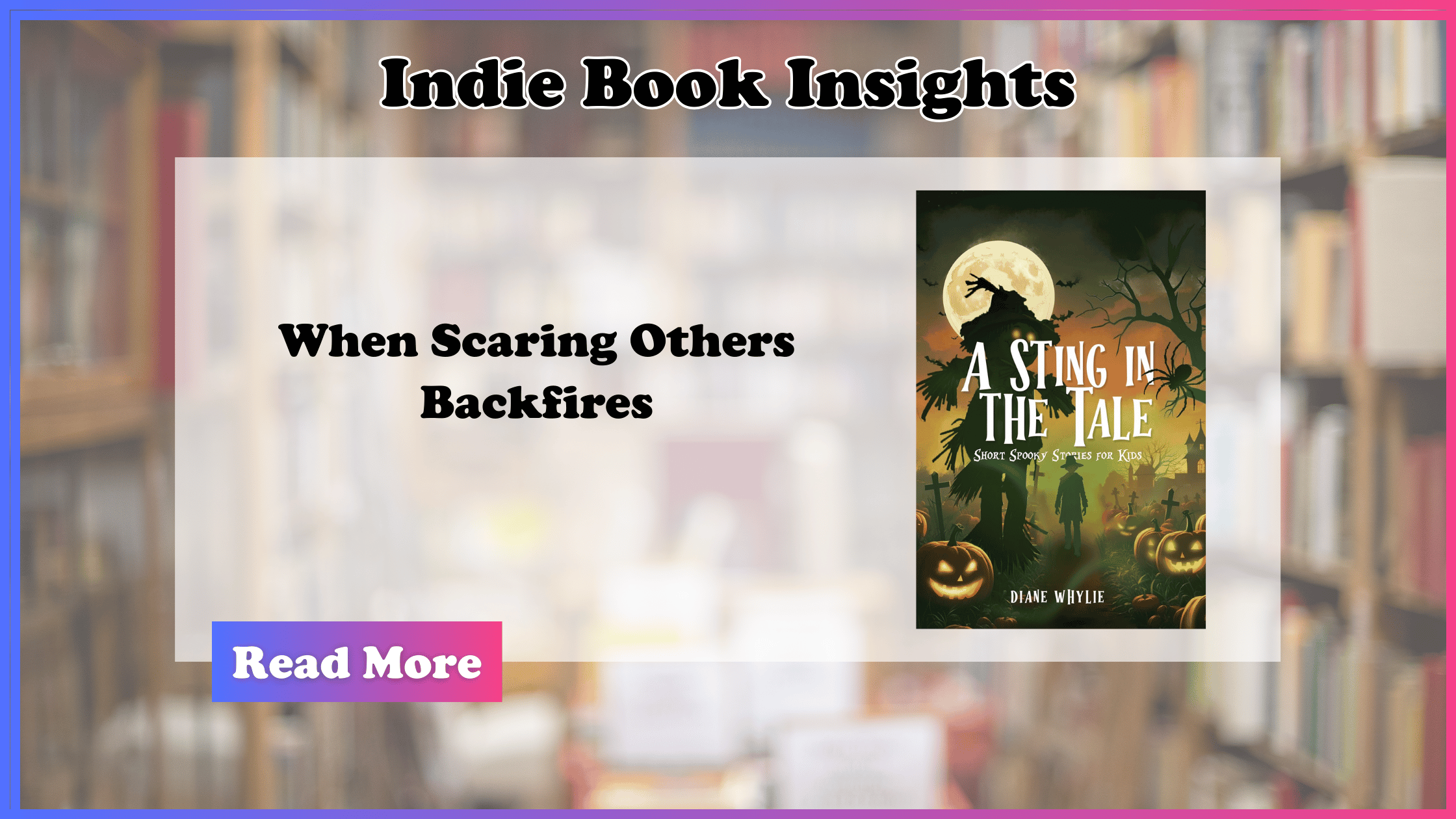
This tension between fun and fear sits at the heart of The Scarecrow, one of the most thought-provoking stories in A Sting in the Tale: Short Spooky Stories for Kids by Diane Whylie. While the story delivers chills and suspense, its deeper message speaks directly to children’s understanding of empathy, power, and consequence.
Why Fear Can Feel Like Fun
Zeb loves frightening people. He enjoys the rush, the excitement, and the sense of control it gives him. Scaring his younger brother makes him feel clever and bold. This behavior will be familiar to many parents and teachers. Children do not always recognize fear as something that lingers. They see the reaction, not the emotional aftermath.
Diane Whylie presents Zeb not as a villain, but as a child who has not yet learned to consider the impact of his actions on others. This lends the story a sense of groundedness and realism. Young readers can recognize themselves or someone they know in Zeb’s confidence and bravado.
When the Joke Turns Serious
The turning point in The Scarecrow occurs when fear is no longer something Zeb controls. The scarecrow, initially dismissed as harmless, becomes a mirror of sorts. It challenges Zeb’s belief that fear is just pretend.
This shift is crucial. The story illustrates how easily power can be lost when fear becomes a reality. Zeb’s confidence erodes as he experiences the very terror he once enjoyed causing. This role reversal is not just frightening. It is instructive.
Understanding Fear From the Other Side
By placing Zeb in the position of the scared rather than the scarer, the story encourages young readers to reflect on how fear feels when it is unavoidable. Being unable to move, unable to escape, and unable to laugh it off transforms fear from entertainment into something deeply personal.
This lesson is delivered through atmosphere rather than instruction. The growing presence of the scarecrow, the isolation of the field, and the loss of control all contribute to an emotional shift that readers feel rather than simply understand.
What makes The Scarecrow especially effective is that the consequence fits the behavior. Zeb wished for the ability to scare people all the time, and that wish is granted in the most literal way. He becomes what he claimed to want.
This reinforces an important idea for children. Words matter. Wishes made in arrogance or cruelty can have lasting effects. The story does not rely on punishment for shock value. Instead, it uses consequences as a teaching tool.
Within A Sting in the Tale, The Scarecrow serves as a reminder that empathy often develops through experience. By walking readers through Zeb’s transformation, Diane Whylie enables children to draw their own conclusions about kindness, responsibility, and the consequences of their actions.
For parents and educators, this story provides an excellent opportunity for discussion. Why did Zeb enjoy scaring others? How did his feelings change? What could he have done differently? These conversations emerge naturally from the narrative.
The Scarecrow remains with readers because it strikes a balance between fear and meaning. It respects children’s intelligence and emotional depth while delivering a memorable and unsettling tale. By embedding its lesson within a spooky framework, the story ensures that its message lingers long after the final page.
To read the entire story, please purchase your copy of A Sting in the Tale: Short Spooky Stories for Kids from Amazon: https://www.amazon.com/dp/B0G36DMKNZ/.