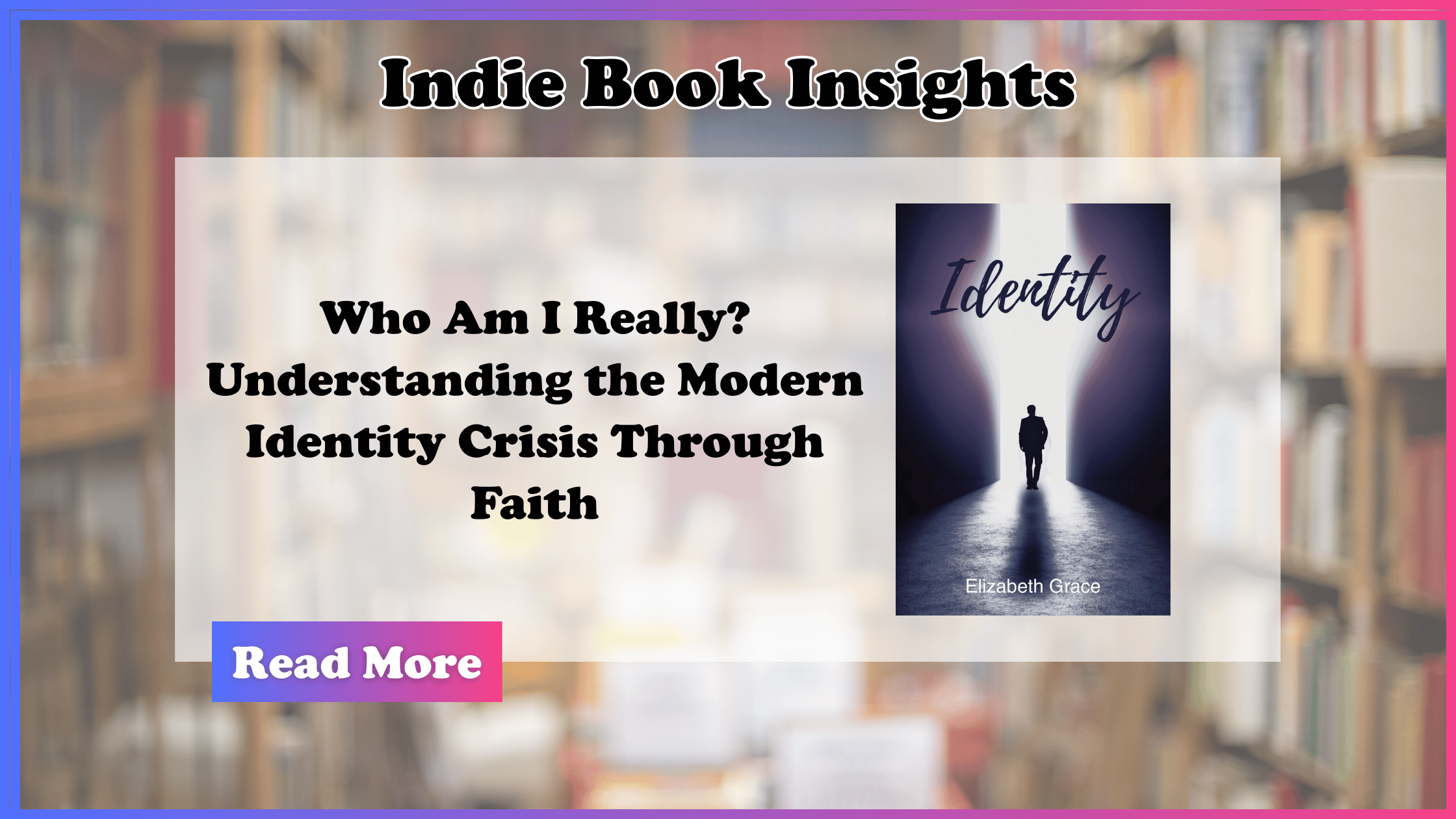
The question “Who am I Really?” sits at the heart of the modern identity crisis, and it is one that Elizabeth Grace explores with clarity and compassion in her book Identity. In a world shaped by constant comparison, shifting values, and growing pressure to self-define, many people struggle to understand who they truly are. Even those who seem confident often wrestle with doubt beneath the surface. This book examines why identity confusion is so widespread today and how faith offers a clearer and steadier answer.

Social pressure plays a major role in shaping how people see themselves. From an early age, identity is often tied to performance, appearance, or acceptance. Children grow up learning to meet expectations rather than understand themselves. As adults, this pressure continues through work, relationships, and social media. People begin to measure their worth by how closely their lives match what society considers successful or normal. Over time, this creates distance between who they truly are and who they feel they must be.
Broken homes also contribute to identity confusion. When family stability is lost through separation, absence, or emotional neglect, many grow up without a clear sense of belonging. A child who feels unwanted or overlooked may carry those feelings into adulthood. It can lead to insecurity, fear of rejection, or the constant need for approval. Even later success cannot fully heal the unanswered question of where one truly belongs.
Culture adds another layer to this struggle. Modern culture encourages self-creation, often suggesting that identity is something to invent rather than discover. People are told to define themselves however they choose, but this freedom often brings confusion instead of clarity. Without a steady foundation, identity becomes fluid and uncertain. What feels right today may feel empty tomorrow.
Modern expectations further deepen the crisis. Many feel pressure to have everything figured out early in life. Career paths, relationships, and personal beliefs are expected to be clear and confident. When life does not follow this timeline, self-doubt sets in. People begin to question their value and direction, believing they have fallen behind or failed in some way.
Faith offers a different and steadier answer to the identity question. Instead of asking people to define themselves through achievement or approval, faith points back to spiritual truth. Identity is not something to earn or perform. It is something given by God. This perspective brings relief to those exhausted by constant comparison and self-doubt.
In Elizabeth Grace’s book, Identity, the modern identity crisis is reframed through Scripture and spiritual understanding. The book explores how social pressure, broken homes, culture, and modern expectations contribute to identity confusion. It also shows how faith restores clarity by anchoring identity in God rather than circumstances. Through biblical insight, readers are guided toward understanding who they are beyond roles, labels, or past experiences.
For example, someone raised in a broken home may struggle with feeling worthy of love. Another person shaped by cultural pressure may feel lost after achieving goals that no longer satisfy. Faith speaks to these experiences by offering a stable foundation that does not change with success or failure.
The question “Who am I Really? does not have to remain unanswered. Understanding identity through faith brings peace, direction, and a renewed sense of purpose.
For readers seeking clarity in a confusing world, Identity by Elizabeth Grace offers thoughtful guidance rooted in spiritual truth and real-life experience.
Discover Identity by Elizabeth Grace now, available on Amazon: https://www.amazon.com/dp/B0FHMG7Q11/.