
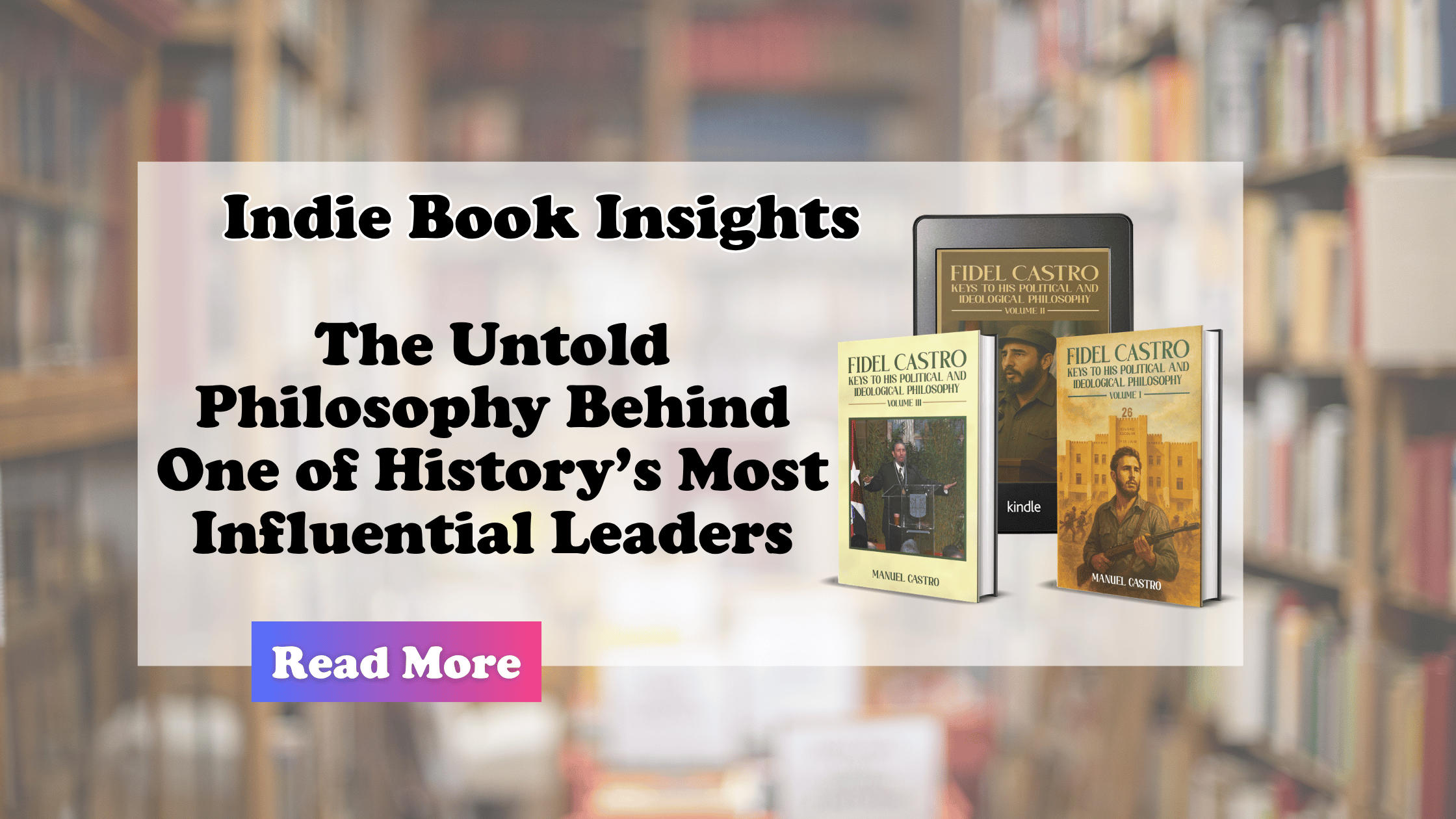
History often remembers leaders through defining moments, revolutions, speeches and turning points that shape nations. Yet behind those moments lies something deeper: a system of ideas that guides decisions, inspires movements and transforms societies. Few leaders illustrate this better than Fidel Castro. While his political journey has been widely discussed, the full depth of his philosophical framework remains less explored. Fidel Castro: Keys to His Political and Ideological Philosophy by Manuel A. Castro brings that hidden intellectual foundation into focus, offering readers a rare opportunity to engage with the ideas that powered one of the most influential leaders of modern history.
This three-volume series goes beyond traditional narratives to uncover the structure behind Castro’s thinking. Rather than presenting isolated theories or fragmented interpretations, the books organize more than 300 key concepts into a cohesive framework. These concepts, drawn from decades of speeches, policies and historical developments, provide a detailed map of how ideology can shape leadership and drive long-term change.
At the heart of this philosophy is the idea of transformation. Castro viewed political change not as a temporary shift in power, but as a comprehensive process that affects every aspect of society. This included economic restructuring, social reform, cultural development and the creation of a shared national identity. By exploring these dimensions, the series helps readers understand how revolutions are built not just on action, but on carefully developed ideas.
Another defining element of his thought is the emphasis on sovereignty and independence. In a world influenced by powerful nations and global economic systems, Castro’s focus on self-determination offers a compelling perspective. His critique of external control and unequal power dynamics extends beyond a single country, addressing challenges faced by developing nations around the globe. This makes the series particularly relevant to readers interested in understanding the broader forces shaping international relations.
The role of people in shaping history is also central to this philosophy. Castro believed that lasting change depends on citizens’ active participation and awareness. Education, political consciousness and unity were not just ideals but essential tools for building a resilient society. The books highlight how these principles were integrated into strategies and policies, offering readers a deeper understanding of how leadership and collective action intersect.
Communication emerges as another powerful theme. Fidel Castro was known for his ability to translate complex ideas into compelling narratives that resonated with the public. His speeches served as instruments of education and mobilization, reinforcing the connection between ideology and action. By analyzing this aspect of his leadership, the series demonstrates how effective communication can amplify ideas and influence large-scale movements.
What truly sets Fidel Castro: Keys to His Political and Ideological Philosophy apart is its ability to connect theory with real-world outcomes. Many works on political philosophy remain abstract, making them difficult to apply. In contrast, this series shows how ideas evolve into policies, shape decisions and influence historical events. For readers seeking a practical understanding of political thought, this connection is invaluable.
The books also encourage critical engagement. Rather than presenting a single perspective, they invite readers to analyze, question and interpret the ideas presented. This makes the series not only informative but intellectually stimulating, appealing to students, researchers and anyone interested in exploring complex political concepts.
In today’s fast-paced world, where information is often simplified and reduced to headlines, there is a growing need for depth and clarity. Fidel Castro: Keys to His Political and Ideological Philosophy meets this need by offering a structured and comprehensive exploration of ideas that continue to shape global discourse.
Ultimately, this series reveals that behind one of history’s most influential leaders lies a rich and complex philosophical system, one that continues to inspire debate, analysis and understanding. For readers ready to look beyond the surface, it offers an essential journey into the untold ideas that shaped a revolution and left a lasting mark on the world.