
For Fidel Castro, revolution was never limited to political change alone. It was also an intellectual transformation. Throughout his leadership, Fidel repeatedly emphasized that education, political awareness and ideological consciousness were essential to the survival of any revolutionary movement. In his view, true social change could not exist without an educated population capable of understanding history, defending sovereignty and participating in national development.
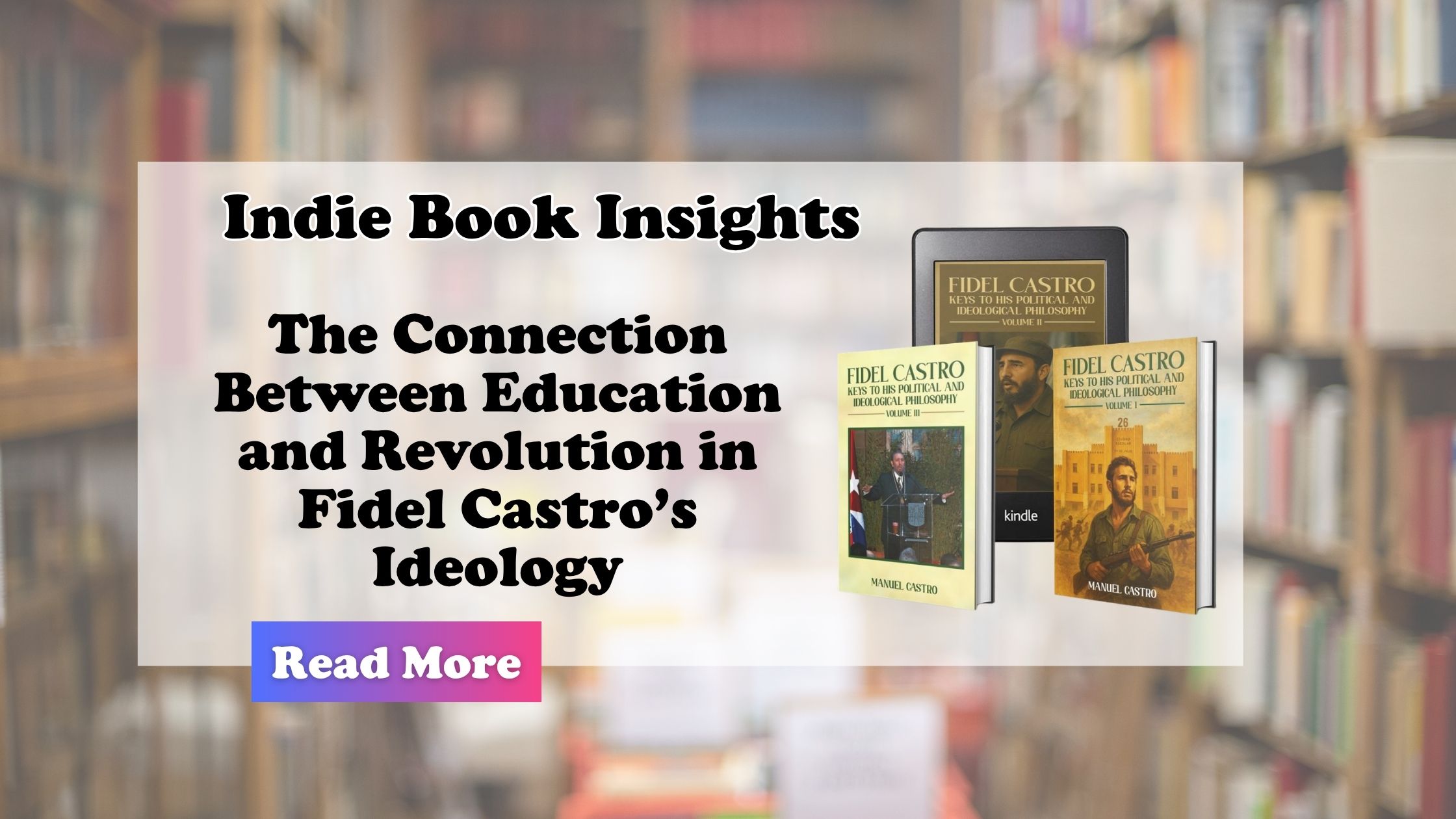
This powerful connection between education and revolution is explored in remarkable depth in Fidel Castro: Keys to His Political and Ideological Philosophy (Volume I), Fidel Castro: Keys to His Political and Ideological Philosophy (Volume II) and Fidel Castro: Keys to His Political and Ideological Philosophy (Volume III) by Manuel A. Castro. Across these three volumes, readers are introduced to a comprehensive analysis of Fidel Castro’s speeches, ideological principles and political philosophy through the lens of revolutionary thought and social transformation.
Rather than presenting Fidel Castro simply as a historical figure, Manuel Castro examines him as a political thinker who viewed knowledge itself as a form of power. The trilogy reveals how Fidel consistently linked education to national independence, political unity and revolutionary survival.
One of the most fascinating themes explored throughout the books is Fidel Castro’s belief that education creates political consciousness. He argued that revolutions could not succeed through military victories or government reforms alone. Citizens needed to understand the ideas, goals and historical struggles behind revolutionary movements in order to protect and sustain them over time.
The trilogy demonstrates how Fidel viewed schools, literacy campaigns, public speeches and cultural programs as essential parts of the revolutionary process. Education was not treated as a secondary social policy but as a strategic foundation for building collective identity and civic participation. Manuel Castro carefully documents how Fidel connected intellectual development to broader goals involving social equality, economic progress and national dignity.
Readers also gain insight into Fidel Castro’s communication style and how it reflected his educational philosophy. His speeches were often lengthy, analytical and historically detailed because he believed political leaders had a responsibility to explain complex issues directly to the public. Rather than relying only on slogans, Fidel used rhetoric as a tool for teaching history, economics, ethics and revolutionary principles.
This emphasis on political education became especially important during periods of international tension and economic difficulty. Fidel believed an informed population would be more capable of resisting external pressure and maintaining unity during times of crisis. The books reveal how he consistently linked knowledge to resistance, portraying education as a defense against political manipulation and foreign domination.
Another important aspect of the trilogy is its exploration of sovereignty and cultural identity. Fidel Castro argued that nations must control not only their economies and political systems but also their intellectual and cultural development. Education, in his view, was deeply connected to preserving national independence and strengthening collective consciousness.
What makes Fidel Castro: Keys to His Political and Ideological Philosophy especially valuable is its thematic structure. Manuel Castro organizes Fidel’s ideas into categories, including revolution, education, ethics, nationalism, media, globalization, culture, democracy and leadership. This allows readers to understand how education fits into Fidel Castro’s broader ideological framework and revolutionary strategy.
For political science students, historians, educators, researchers and readers interested in revolutionary movements, the trilogy provides a unique opportunity to explore how ideas and education can shape political systems and social transformation. The books encourage readers to think critically about the relationship between knowledge, leadership and political power.
In today’s world, where information, media influence and political polarization continue to shape societies, Fidel Castro’s emphasis on education remains highly relevant. Manuel Castro’s trilogy demonstrates that for Fidel, education was never separate from revolution; it was one of its most important and enduring foundations.