
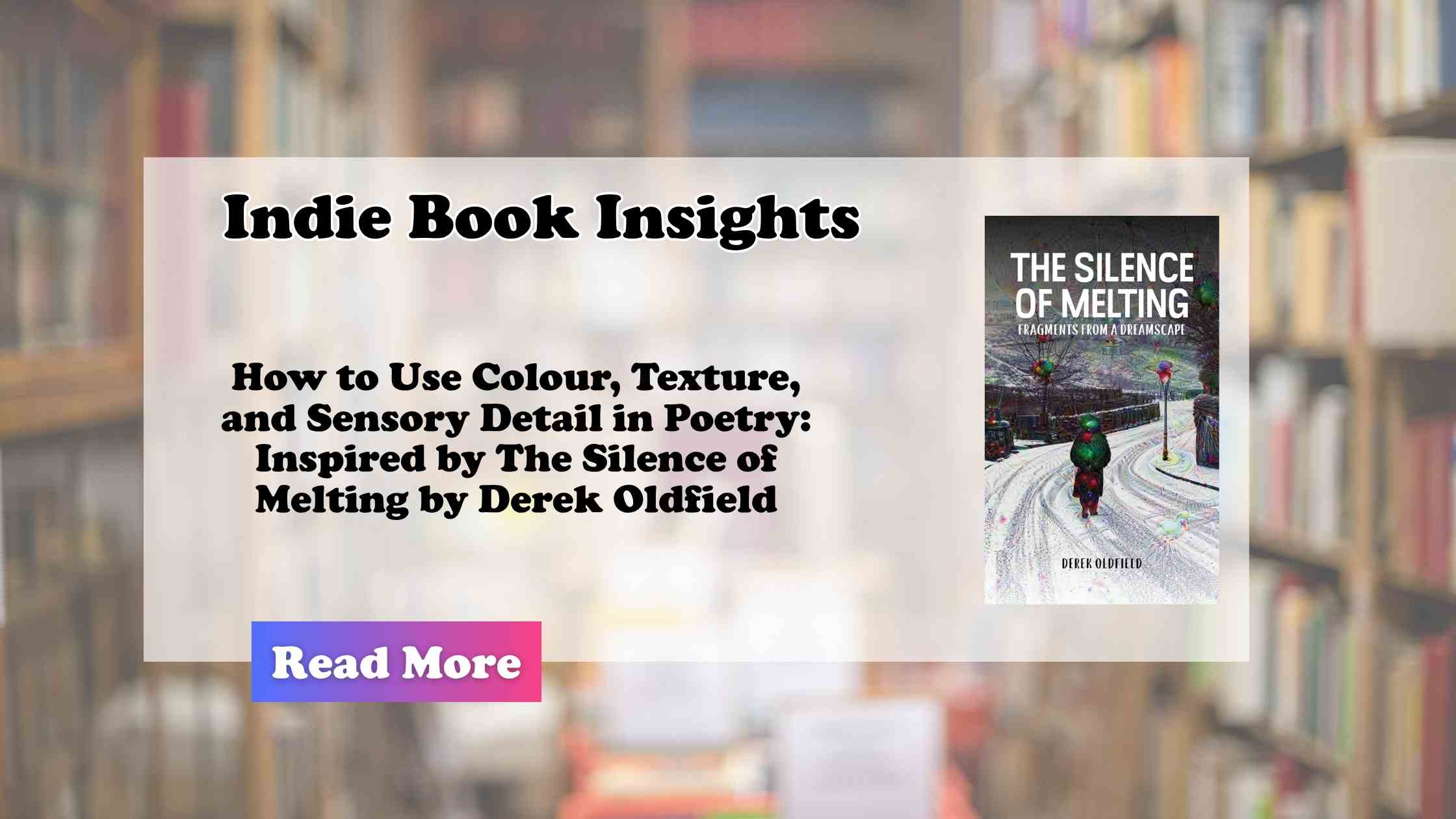
Poetry becomes unforgettable when it moves beyond words and begins to feel like an experience. One of the most powerful ways to achieve this is through the deliberate use of colour, texture, and sensory detail. In The Silence of Melting by Derek Oldfield, each line carries a visual and tactile presence, transforming simple imagery into something immersive and emotionally charged.
Colour is not just descriptive. It is emotional language. Instead of stating a feeling directly, colour allows the reader to sense it. A soft pink can suggest tenderness or nostalgia, while deep black may evoke emptiness or fear. The key is to choose colours that carry emotional weight and place them with intention. Rather than saying “the sky was beautiful,” a poet might describe “a pale gold sky fading into quiet blue,” allowing the reader to feel the atmosphere rather than be told about it.
Texture adds another layer of depth. It gives the reader something to touch, even within imagination. Words such as rough, smooth, brittle, or damp create physical sensations that anchor abstract ideas. In strong poetry, emotions often appear through texture. Loneliness might feel like a cold, hard surface. Love might be described as warm, soft, or flowing. When texture is used effectively, it bridges the gap between emotion and physical experience.
Sensory detail completes the immersion. Sight alone is not enough. The most engaging poems draw on sound, smell, taste, and movement. A scene becomes vivid when the reader can hear the quiet drip of water, feel the weight of humid air, or sense the stillness of a deserted space. Even subtle details, such as the faint rustle of leaves or the distant echo of footsteps, can transform a simple image into something alive.
Balance is essential. Overloading a poem with too many details can weaken its impact. Instead, select a few precise images and allow them to carry the meaning. Each detail should serve a purpose, either enhancing mood or revealing something deeper about the subject. The strength lies in clarity, not excess.
Another effective approach is contrast. Pairing opposing colours or textures can create tension and highlight emotion. A bright colour placed against darkness, or softness interrupted by something harsh, draws attention and adds complexity. These contrasts often mirror internal conflict, making the poem resonate on a deeper level.
What makes The Silence of Melting by Derek Oldfield particularly compelling is its ability to blend these elements seamlessly. Colours shift, textures evolve, and sensory details unfold in a way that feels both dreamlike and precise. The result is poetry that does not simply describe a moment but invites the reader to step inside it.
For poets seeking to refine their craft, the lesson is clear. Write with intention. Let colour speak emotion, let texture shape feeling, and let sensory detail build atmosphere. When these elements work together, poetry moves beyond language and becomes something that can be seen, felt, and remembered.
Discover this book now, available on Amazon: https://www.amazon.com/dp/B0GT8Y5X8B/