

What does it take to build a revolution that not only succeeds but endures? This question sits at the heart of one of the most fascinating political journeys of the modern era. Fidel Castro’s rise to power was not merely the result of circumstance or charisma; it was grounded in a carefully constructed ideological framework, one that continues to provoke debate and inspire analysis decades later.
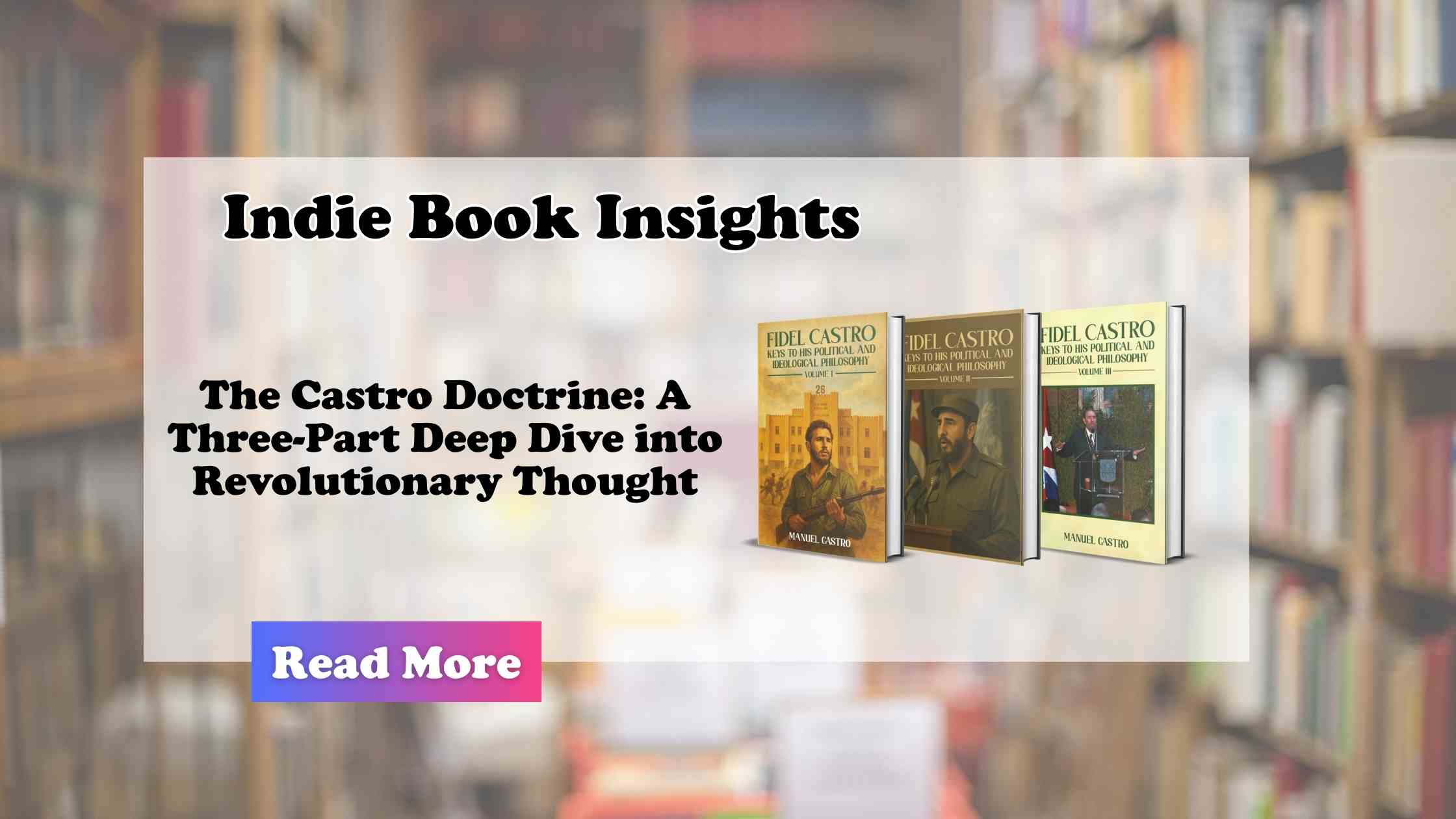
In Fidel Castro: Keys to His Political and Ideological Philosophy (Volumes I, II and III), author Manuel Castro presents a powerful, three-part exploration of what can be called “The Castro Doctrine.” This trilogy offers readers a rare opportunity to go beyond surface-level narratives and step inside the intellectual engine of a revolution that reshaped global politics.
Volume I introduces the origins of Castro’s ideological formation. It situates readers in a Cuba marked by inequality, foreign influence and political unrest, providing the essential backdrop for the revolutionary ideas that took root there. More importantly, it examines how Castro absorbed and reinterpreted major ideological currents, particularly Marxism and anti-imperialism, through the lens of Cuban realities. The result is a compelling look at how theory becomes conviction and conviction becomes action.
In Volume II, the focus shifts from formation to implementation. Here, Manuel Castro dives into the mechanics of revolutionary governance, analyzing how ideology was translated into concrete policies and institutional structures. This is where readers begin to see the true complexity of the Castro Doctrine: not as a rigid set of beliefs, but as a dynamic system that evolved in response to both internal pressures and global challenges. The volume offers valuable insights into leadership, strategy and the delicate balance between idealism and pragmatism.
Volume III completes the journey by examining the doctrine’s longevity and global resonance. How did Castro’s ideological framework withstand decades of geopolitical tension, economic hardship and shifting international alliances? What elements of his philosophy proved most resilient and why? This final installment also explores the broader implications of Castro’s ideas, tracing their influence on political movements beyond Cuba and into the wider world.
What sets this trilogy apart is its depth and balance. Manuel Castro does not seek to simplify or sensationalize. Instead, he invites readers into a thoughtful and nuanced examination of revolutionary thought. By breaking down complex ideas into clear, engaging analysis, the series becomes accessible to a wide audience, from students and scholars to anyone curious about the forces that shape political change.
“The Castro Doctrine” is not just a historical case study; it is a lens through which we can better understand the nature of power, resistance and ideological transformation. In an era of polarized, oversimplified political discourse, this trilogy offers a refreshing alternative: a space for critical thinking, informed debate and deeper insight.
For those looking to truly understand the intellectual foundations of one of the 20th century’s most influential leaders, Fidel Castro: Keys to His Political and Ideological Philosophy offers an essential guide. This three-part deep dive doesn’t just tell the story of a revolution; it reveals the ideas that made it possible.
Step into the doctrine. Discover the philosophy. And explore the revolutionary thought that continues to echo across history.