

How does an idea born on a small island end up influencing conversations across the globe?
It is easy to think of revolutions as isolated events confined to a specific country, culture or moment in time. But history tells a different story. Some revolutions don’t stay local. Their ideas travel, adapt and take on new life in places far removed from where they began.
Fidel Castro’s revolution is one of those stories.
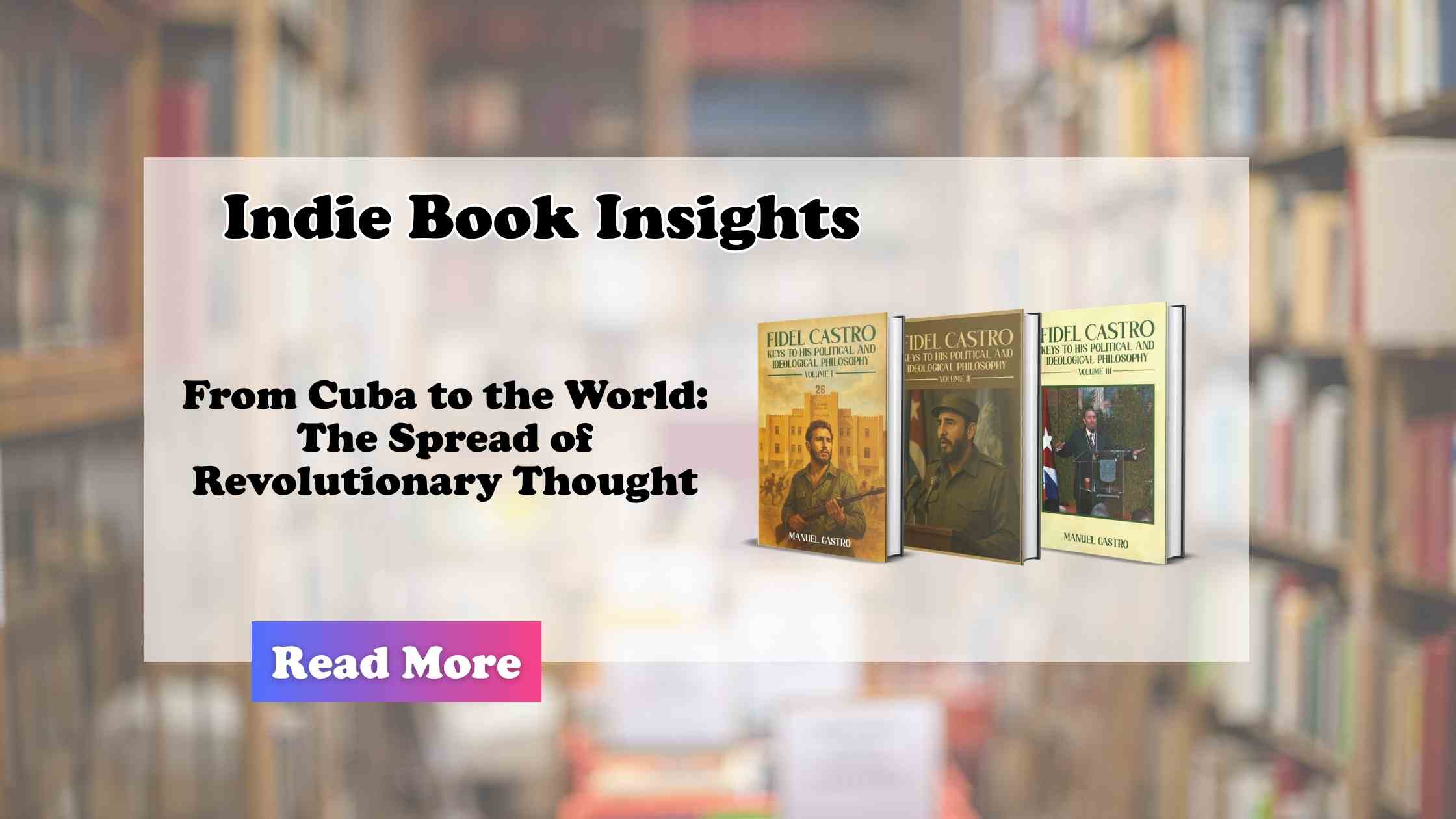
What started in Cuba didn’t just reshape a nation; it sparked a wave of ideological curiosity and political reflection worldwide. And if you really want to understand how that happened, Fidel Castro: Keys to His Political and Ideological Philosophy (Volumes I, II and III) by Manuel Castro offers a deep and engaging exploration.
Let’s begin with the obvious question: why did these ideas travel so far?
Part of the answer lies in how they were framed. Castro didn’t present his revolution as a purely Cuban experience. Instead, he spoke about broader themes of independence, justice, dignity and resistance to external control. As Volume I highlights, these ideas weren’t locked into one geography. They were universal enough that people in very different contexts could see their own struggles reflected in them.
And when people see themselves in an idea, they carry it forward.
But ideas don’t spread on their own. They need a voice.
Castro’s speeches played a major role here. They were not just political addresses; they were narratives stories that connected past struggles with present realities and future possibilities. In Volume II, Manuel Castro examines how these speeches helped bridge cultural and political gaps, making complex ideologies accessible to a wide audience. The result? A message that didn’t just inform, but also inspired.
As these ideas moved beyond Cuba, something interesting happened.
They began to change.
Different regions interpreted Castro’s philosophy through their own lenses. In some places, it became a symbol of anti-imperialism. In others, it represented social reform or national identity. The core ideas remained recognizable, but their applications varied widely. This adaptability is one of the key reasons revolutionary thought can cross borders; it’s not rigid; it evolves.
Volume III explores this evolution in detail.
It shows how Castro’s ideological framework has been revisited and reinterpreted over time. Some elements feel timeless, continuing to resonate in discussions about power and inequality. Others are more closely tied to the specific historical conditions in which they emerged. And that tension between what endures and what changes is exactly what keeps the conversation alive.
What makes Manuel Castro’s trilogy so compelling is that it doesn’t just tell you that these ideas spread; it shows you how and why.
You start to see patterns. Ideas gain traction when they connect to real experiences. They endure when they are communicated clearly and consistently. And they expand when people adapt them to their own realities.
It’s not just a story about one revolution.
It’s a story about how ideas move.
And once you start thinking about it that way, you realize this isn’t just history, it’s something that’s still happening today. Movements, messages and ideologies continue to cross borders, shaped by the same forces that carried Castro’s ideas beyond Cuba.
So whether you are interested in political philosophy, global movements or simply how powerful ideas take root, Fidel Castro: Keys to His Political and Ideological Philosophy offers a thought-provoking journey.
Because in the end, revolutions don’t just change countries.
They change conversations.
And sometimes, those conversations echo around the world.