

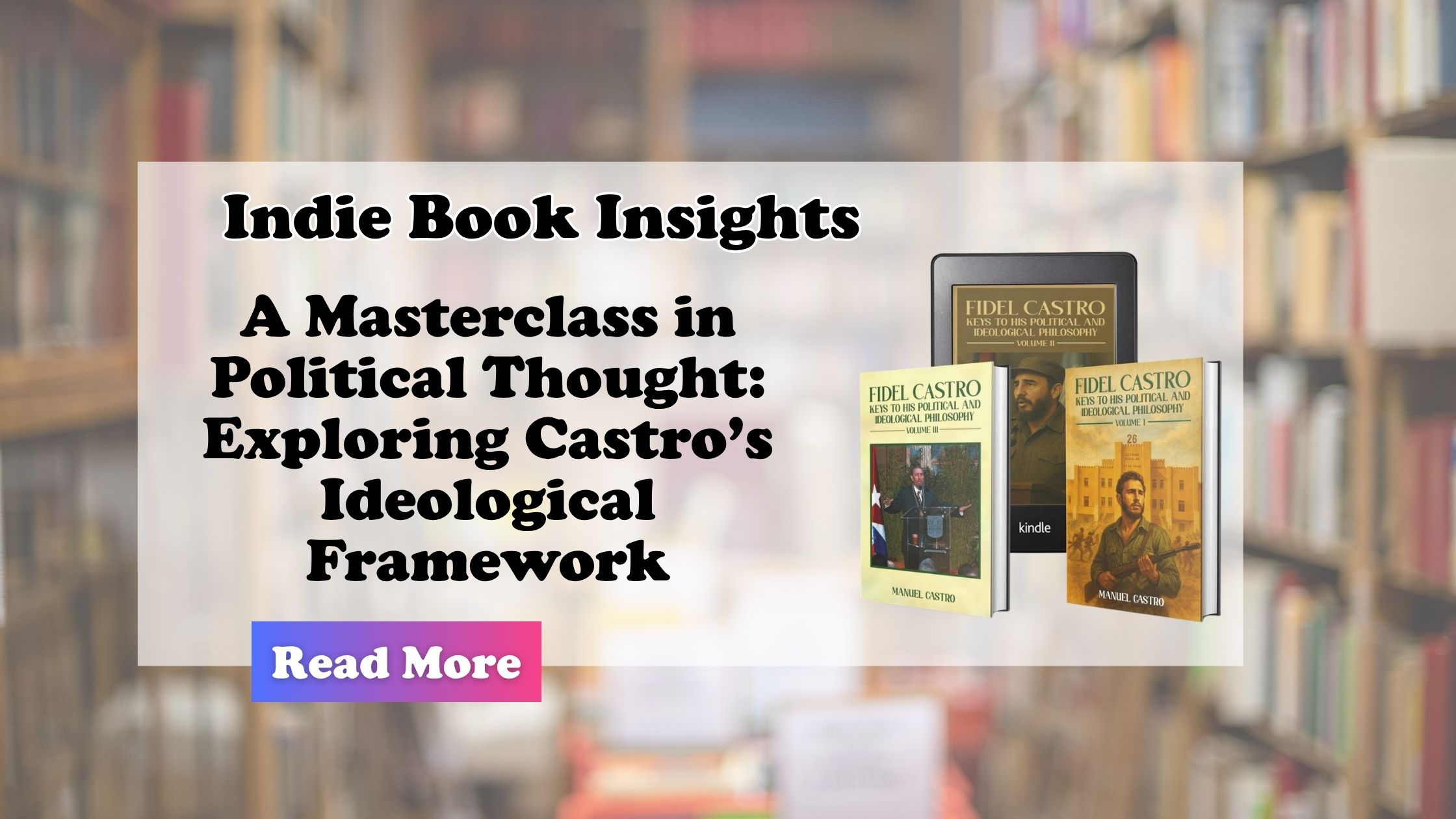
What does it take to build an ideology powerful enough to mobilize millions, withstand global pressure and shape the identity of a nation for decades? The answer lies not just in events or leadership decisions, but in the depth of political thought behind them. That is exactly what Fidel Castro: Keys to His Political and Ideological Philosophy (Volumes I–III) by Manuel A. Castro brings to light, a comprehensive and compelling exploration of the ideological framework of Fidel Castro.
This three-volume series is best understood as a masterclass in political thinking. It goes beyond surface-level interpretations and dives into the intellectual structure that guided one of the most influential and debated leaders of the 20th century. Instead of presenting a simple narrative of historical events, the books dissect the ideas that powered those events, offering readers a rare opportunity to engage with the mechanics of ideology itself.
At the core of this trilogy is a unique analytical approach often described as a “philosophy of variables.” Rather than reducing Castro’s ideology to a single doctrine, the author organizes it into hundreds of interconnected concepts. These include themes such as revolution, sovereignty, social justice, education, economic systems, media influence and global relations. Each concept is treated as a vital component of a larger system, allowing readers to see how political thought operates not in isolation, but as an integrated and evolving framework.
This structure makes the series particularly engaging because it mirrors the complexity of real-world politics. Readers are not just absorbing information; they are actively connecting ideas, tracing relationships and building a deeper understanding of how ideology functions in practice. It transforms the reading experience into something closer to intellectual exploration than passive consumption.
One of the most striking lessons throughout the trilogy is the role of ideas as instruments of power. In Castro’s framework, power is not limited to control over institutions or resources; it is rooted in the ability to shape consciousness. The books highlight how speeches, narratives and communication strategies were used not just to inform, but to inspire, mobilize and unify. Long before the rise of digital media, this approach demonstrated how influential well-crafted ideas can be when they resonate with collective aspirations.
The trilogy also emphasizes the dynamic nature of ideology. Castro’s political thought was not static; it evolved in response to changing circumstances, internal challenges and global pressures. This adaptability is explored in depth across the three volumes, showing how a flexible yet coherent framework can sustain relevance over time. For readers interested in leadership and strategy, this offers valuable insight into how enduring influence is built and maintained.
Beyond its focus on Cuba, the series places Castro’s ideas within a broader global context. Themes such as inequality, imperialism, development and sovereignty are examined not as isolated issues, but as interconnected challenges that affect nations worldwide. By doing so, the books extend their relevance far beyond one country or one historical period. They provide a lens through which readers can better understand contemporary global dynamics and the ongoing debates surrounding power and governance.
What makes this work particularly compelling is its ability to engage readers on multiple levels. For students and scholars, it offers depth and structure. For general readers, it provides clarity and accessibility. And for anyone interested in political thought, it delivers a nuanced perspective that encourages critical thinking rather than passive acceptance. The trilogy doesn’t tell readers what to think; it equips them with the tools to think more deeply.
In a world where complex ideas are often simplified into quick headlines and short narratives, Fidel Castro: Keys to His Political and Ideological Philosophy (Volumes I–III) stands out as a work that invites deeper engagement. It challenges readers to move beyond assumptions and explore the intellectual foundations of leadership and change.
If you are looking for more than just history, if you want to understand how ideas shape power, influence societies and drive transformation, this trilogy offers exactly that. It is not just a study of one leader’s philosophy; it is a masterclass in how political thought can leave a lasting mark on the world.