
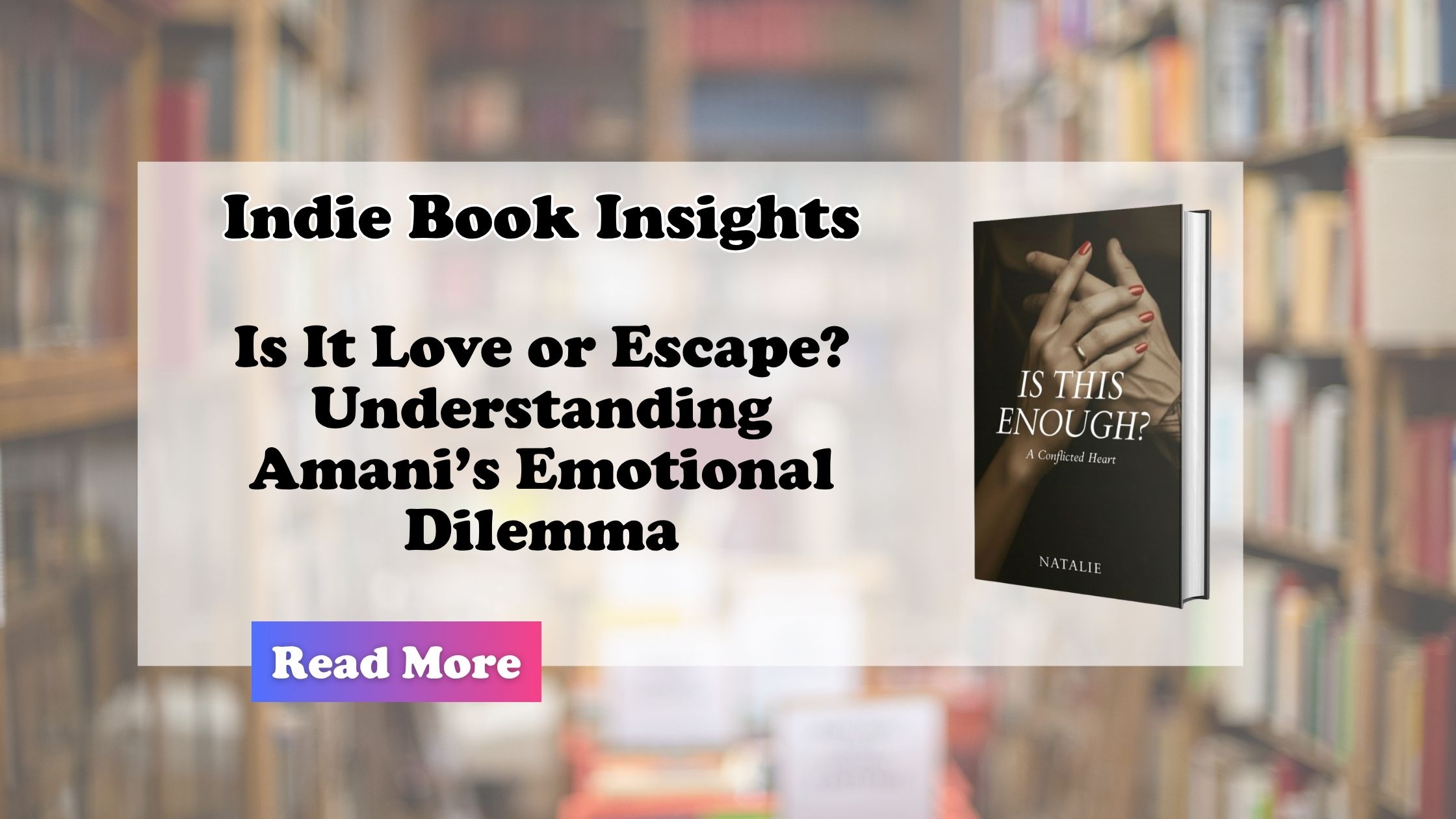
In Natalie’s compelling novel, Is This Enough? A Conflicted Heart, readers are drawn into the emotional turbulence of Amani, a woman standing at the crossroads of love, identity and self-discovery. On the surface, her life appears stable. She is a devoted mother, a committed wife to Miles and a woman who has spent years holding her family together. But beneath that stability lies an emotional question that slowly consumes her: Is what she feels real love or is it escape from a life that no longer feels like her own?
Natalie constructs Amani’s world with emotional precision, showing how easily a life built on responsibility can begin to feel emotionally distant. Her marriage to Miles is not defined by conflict or cruelty, but by quiet erosion. Miles is dependable, present and committed to their family. He represents security and history, the life they built through shared effort and years of sacrifice. Yet somewhere along the way, emotional intimacy fades into routine and connection becomes obligation.
This is where Amani’s internal dilemma begins to take shape. She is not escaping a toxic marriage; she is escaping emotional invisibility. And that distinction is what makes her journey so complex. Natalie refuses to simplify Amani’s experience into right or wrong. Instead, she explores the uncomfortable truth that sometimes people do not leave because something is broken; they leave because something inside them is awakening.
When Grayson enters Amani’s life, he does not simply represent temptation. He represents emotional recognition. With him, Amani feels seen again, not just as a wife or mother, but as a woman with desires, emotions and individuality. Their connection becomes intense and consuming, but also confusing. Is this love or is it the emotional contrast she has been starving for?
Natalie carefully blurs the line between love and escape. Grayson offers what feels like emotional freedom, but that freedom comes at a cost: it forces Amani to confront truths she has long suppressed. Her feelings for him are real, yet they are also intertwined with exhaustion, longing and unmet emotional needs. This is where her dilemma deepens.
Amani begins to question not only her marriage, but her own emotional instincts. If she feels alive with Grayson, does that mean she is truly in love or simply reacting to emotional deprivation? If she feels guilt with Miles, does that mean her marriage is wrong or simply incomplete in ways she cannot ignore anymore? Natalie uses this tension to explore a universal emotional conflict: the difference between what we feel and what those feelings actually mean.
Miles, in contrast, represents stability and responsibility. He is not an obstacle to happiness but a symbol of continuity. Yet continuity alone is not enough to sustain emotional fulfillment. As Amani becomes more self-aware, she realizes that love without emotional presence can still feel like loneliness. This realization intensifies her internal conflict, pulling her between loyalty and self-recognition.
What makes Is This Enough? A Conflicted Heart is especially powerful in that it does not rush toward resolution. Natalie allows Amani’s emotional confusion to exist fully, without judgment or simplification. Amani is not portrayed as reckless or ungrateful; she is portrayed as human. Torn between duty and desire, she becomes a reflection of the many silent emotional battles people face in long-term relationships.
Her dilemma is not just about two men; it is about two emotional realities. One is rooted in responsibility, history and sacrifice. The other is rooted in awakening, visibility and emotional truth. Neither is entirely right nor wrong, but both demand something different from her identity.
As Amani navigates this emotional landscape, the question of escape versus love becomes more urgent. Is she running toward Grayson or running away from a version of herself that no longer fits? Is she seeking true connection or relief from emotional suppression? Natalie does not offer simple answers because Amani’s experience is not simple; it is layered, contradictory and deeply real.
Ultimately, the novel suggests that emotional dilemmas like Amani’s are not about choosing the “correct” person, but about understanding the self more honestly. Love, in Natalie’s storytelling, is never separate from identity. It reflects who we are, who we were and who we are becoming.
Is This Enough? A Conflicted Heart becomes more than a love story; it becomes an exploration of emotional truth. Through Amani’s journey, Natalie invites readers to confront a difficult question: when we seek connection outside our established lives, are we finding love or finally acknowledging what we have been missing within ourselves all along?
Get Your Copy On Amazon Today: https://www.amazon.com/dp/1971002666/.