
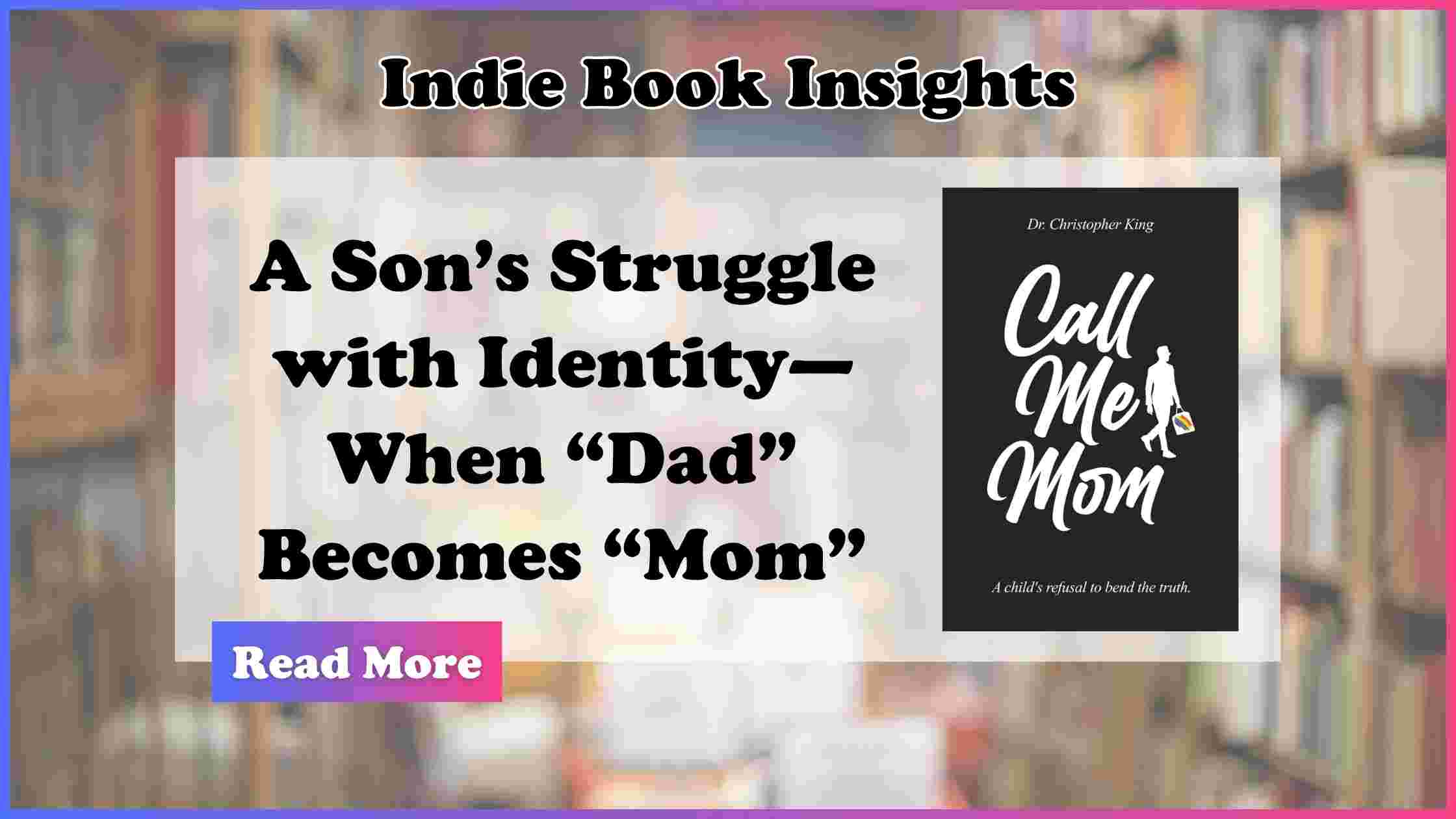
Imagine being a young boy navigating school, friends, and football practice, only to have your entire world shift because of one life-altering truth: your father no longer identifies as a man. This would give chills to the child dealing with such a parent in public spaces.
In Call Me Mom by Dr. Christopher King, this startling reality isn’t just a subplot—it’s the core of his lived experience.
Christopher’s recollection begins with what appeared to be a typical family rupture: a divorce. But beneath the surface was something far more disorienting. As he later discovered, his father’s desire to live authentically as a woman was the silent force pulling the family apart. One can only imagine the mental chaos a child might endure in such a situation. Divorce itself is traumatic for most children, but to learn that your father wants to be called “Mom”? That’s a twist few can emotionally or socially prepare for.
It began subtly. A softened voice here. Fake fingernails there. The changes were incremental but undeniable. These weren’t isolated quirks—they were breadcrumbs leading Christopher to a new version of the person he once knew simply as “Dad.” But nothing could have prepared him for the moment his father, donning a blonde wig, pink blouse, and slacks, showed up at his football practice.
That sight was more than confusing. It was paralyzing.
Imagine playing on a team with your peers, your identity largely defined by how you fit in. Then, suddenly, your most visible family member becomes an emblem of your deepest insecurity. Did his friends recognize his father? Did they realize that the woman standing by the sidelines was once his dad? The anxiety of those unanswered questions must have been unbearable.
Christopher’s account isn’t just about gender identity. It’s about the disorientation of a child asked to reinterpret everything he once knew. It’s about feeling ashamed, confused, even betrayed, not necessarily by the transition itself, but by the seismic emotional aftermath that followed.
In Call Me Mom, Dr. King doesn’t present his experience with anger or resentment. Rather, he opens a vulnerable space for readers to examine how children perceive identity, love, and the burden of societal judgment. The most jarring shift wasn’t simply the wardrobe change; it was being asked to redefine a parent—emotionally and linguistically.
To call someone “Mom” is to give them an identity filled with emotional weight. For Christopher, that was a complex request—one that carried with it memories of football games, bedtime stories, and the once-familiar voice of a father.
All in all, this book is a deeply human story of transformation, yes, but also of grief, acceptance, and the painful recalibration of love. Christopher’s journey is not just about understanding someone else’s truth—it’s also about navigating his own.