
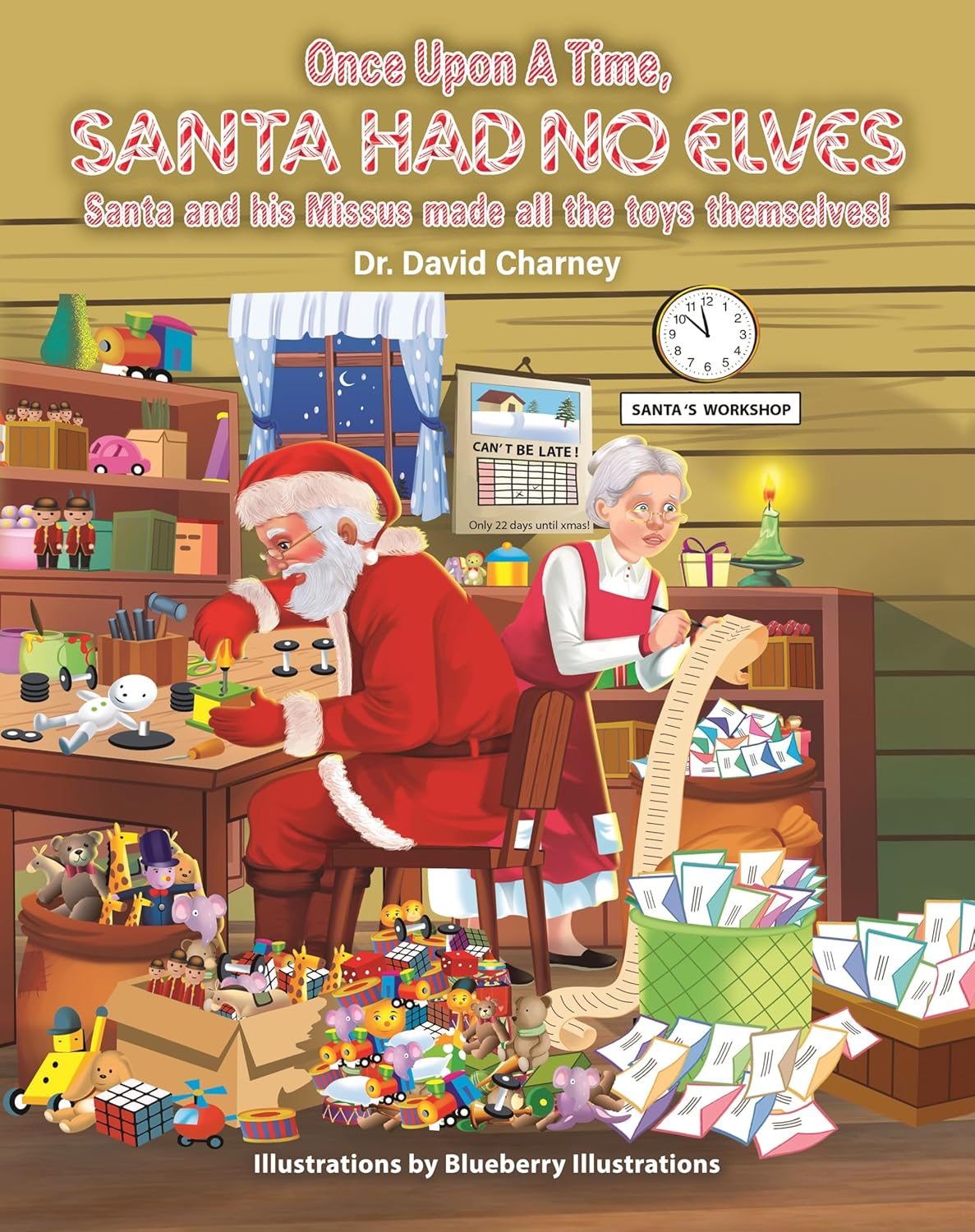
When we think of Santa Claus, it’s easy to picture a jolly man in red surrounded by a bustling workshop of cheerful elves. But what if that image didn’t exist? In Once Upon A Time, Santa Had No Elves by Dr. David Charney, readers are taken back to a time when Santa and his wife, Mrs. Claus, handled the monumental task of Christmas on their own. This heartwarming tale reveals a little-known chapter of Santa’s story, one that is filled with perseverance, teamwork, and a relentless dedication to bringing joy to children everywhere.
Before the elves arrived to help, Santa and Mrs. Claus faced seemingly insurmountable challenges. The North Pole workshop was a cold and lonely place, and every toy had to be handcrafted with care. Imagine the hours spent carving wooden dolls, painting toy trains, and stuffing teddy bears—all while keeping track of the ever-growing list of children around the world.
The story from Charney’s book gives us a glimpse into this demanding period, showcasing the humanity of Santa and Mrs. Claus. They weren’t magical beings immune to fatigue or stress; they were two individuals driven by love and a sense of purpose. Mrs. Claus, often sidelined in Christmas lore, takes center stage here as Santa’s steadfast partner. Her baked goods, warm tea, and unwavering support kept Santa going through sleepless nights and long, cold days.
The challenges weren’t just physical; they were emotional as well. The pressure of meeting every child’s expectations weighed heavily on Santa’s broad shoulders. For him, the thought of disappointing even one child was unbearable. This emotional burden is beautifully illustrated in the poem as Santa exclaims, “No disappointing children! For Christmas, they must find gifts of toys beneath their trees!” It’s a line that encapsulates the very heart of his mission.
Beyond the workshop, Santa’s challenges extended to logistics. The thought of flying across the globe in one night, delivering thousands of gifts without any assistance, is mind-boggling. Without elves to help organize and prepare, Santa relied solely on his memory and determination. It’s a testament to his resilience and resourcefulness that he managed to keep Christmas alive year after year.
But as the poem unfolds, we see the toll this relentless effort takes on him. Late one snowy night, Santa steps away from the workshop, seeking solace in the frosty silence of the North Pole. It’s during this quiet moment that he stumbles upon a tiny figure buried in the snow—the Elfen King, Sig. This encounter marks a turning point, transforming Santa’s solitary struggle into a collaborative effort that changes Christmas forever.
What makes this story so touching is how it humanizes Santa. He is not a larger-than-life figure immune to hardship, but a relatable character who shows us the power of perseverance and kindness. His willingness to stop and help the Tiny Man, despite his own challenges, is a reminder that even in the busiest and most stressful times, acts of compassion can lead to unexpected blessings.
The arrival of the elves represents more than just a solution to Santa’s challenges—it’s a symbol of community and teamwork. Santa and Mrs. Claus no longer had to shoulder the burden alone. With the help of Sig and his elves, Christmas evolved into the magical celebration we know today, complete with a vibrant workshop where dreams come to life.
Dr. David Charney’s Once Upon A Time, Santa Had No Elves captures this transformative period with charm and warmth. It reminds us that even legends like Santa need help sometimes, and that it’s okay to lean on others. Santa’s journey before the elves isn’t just a tale of struggle; it’s a celebration of resilience, partnership, and the belief that anything is possible with a little help.
So, the next time you see a picture of Santa surrounded by his elves, take a moment to appreciate the journey it took to get there. Behind every cheerful “Ho, ho, ho!” is a story of hard work, love, and the magic of coming together to create something extraordinary.