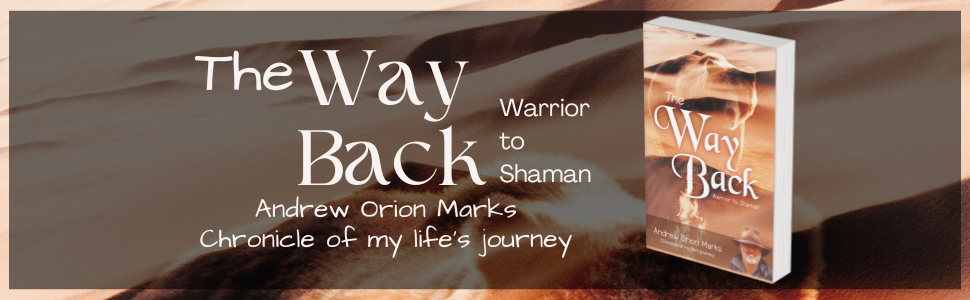
Andrew Orion Marks’s The Way Back: Warrior to Shaman offers a raw and honest exploration of how childhood trauma shapes lives and perpetuates cycles of pain. By sharing his journey from trauma to healing, Marks provides hope for breaking free from intergenerational patterns of abuse.
Marks’s early life was marked by adversity. His father’s absence and his mother’s struggles as a single parent created an unstable foundation. Compounding this was the abuse he endured in school, including harsh punishment from Catholic teachers and, most devastatingly, sexual assault by a trusted priest. This experience left deep scars, manifesting as anger, shame, and a profound distrust of authority figures.
What sets Marks’s narrative apart is his willingness to confront the long-term effects of these experiences. He acknowledges how unhealed trauma can be passed down unintentionally, shaping behaviors and relationships in the next generation. His strained relationship with his own father, for instance, influenced his struggles to connect emotionally with his children and wife.
The turning point in Marks’s journey came when he chose to face his pain head-on. Through practices like meditation and shamanic rituals, he began unraveling the layers of trauma embedded in his subconscious. Meditation helped him quiet his mind and access the root of his pain, while rituals like the sweat lodge provided a space to release pent-up emotions.
One of the most powerful insights Marks shares is the idea that healing is not just personal but generational. By confronting and addressing his trauma, he broke the cycle of emotional abandonment and anger that had defined his family’s history. Marks’s newfound emotional clarity allowed him to build stronger, more authentic connections with his children, ensuring that his pain did not become theirs.
Marks also emphasizes the importance of forgiveness—not as a way to absolve others of wrongdoing but as a means to liberate oneself. His journey to forgive his absent father and the priest who abused him was long and fraught with resistance. However, this act of forgiveness became a cornerstone of his healing, allowing him to reclaim his power and move forward unburdened by resentment.
The book underscores that healing intergenerational trauma requires courage and intentionality. It involves recognizing patterns, seeking support, and embracing tools like therapy, meditation, and community. Marks’s story serves as a testament to the transformative power of these efforts.
Ultimately, The Way Back: Warrior to Shaman reminds us that while we cannot change the past, we have the power to rewrite the narrative for future generations. By confronting our pain and choosing to heal, we not only free ourselves but create a legacy of resilience and love for those who come after us.