
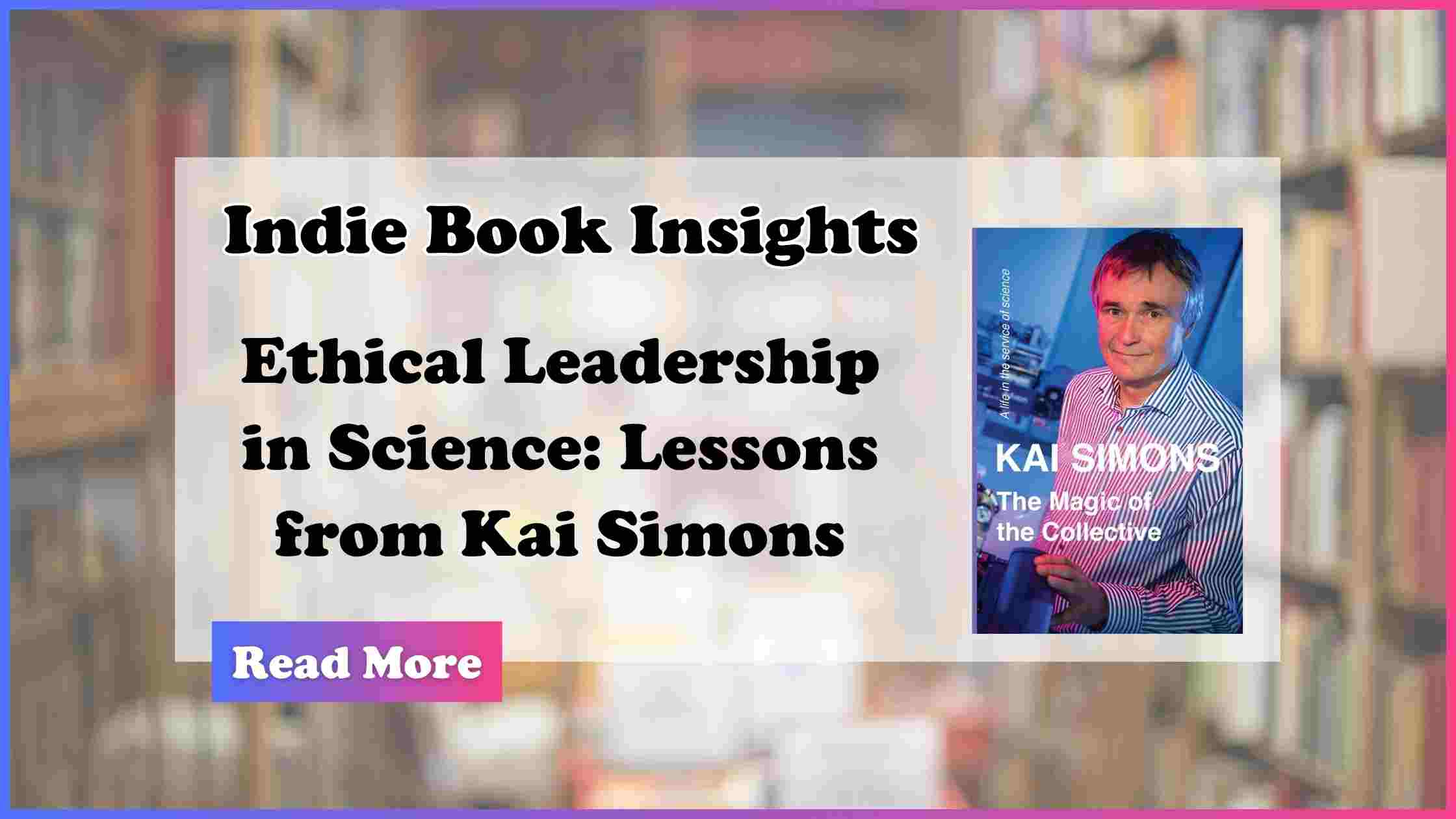
The Magic of the Collective: A Life in the Service of Science, by Kai Simons, presents an interesting narrative on ethical leadership for scientific research. Through a long and distinguished career, Simons shows how ethical considerations and responsible leadership can nudge scientific progress toward a more just and equitable scientific community.
Throughout his career, Simons has shown a deep commitment to strong ethical principles from his early research days in Helsinki to his leadership positions at the EMBL and the Max Planck Institute of Molecular Cell Biology and Genetics. His book is about his various challenges and dilemmas and how staying ethical guided his decisions and actions.
One of the overarching messages behind Simons’ book revolves around intellectual humility where the scientists do not perceive knowledge but the limitations of their knowledge that require remaining receptive to changing views or knowledge. Indeed, only that kind of atmosphere where research can be unfettered would be born – egoistic and person-driven constraints, free. Citing some anecdotes from his career, Simons illustrates how intellectual humility broke open breakthroughs and collaborations otherwise impossible in a more competitive and ego-driven environment.
The talk continues with scientific misconduct and a culture of honesty and integrity, in which he talks about instances he had witnessed unethical behavior. He tells stories about his experience in standing against that, even when it became unpopular and difficult. Through those stories, Simons insists that the scientific community should hold itself to ethical standards if it is to retain credibility and trustworthiness.
He maintains that scientists are also responsible for considering the society-wide implications of their endeavors. Simons argues, on the other hand, that technical success must be taken to assess the scientific benefits in the service of contributing well-being of society’s population concerning factors like the stainability of natural environments, the health of the population, and justice in its general society. For example, it is through Simons’ contribution to the development of COVID-19 vaccines that one can prove the impact of ethical leadership on health in the world.
Simons further stresses the point of mentorship in building ethical standards. He feels that the mentors have the duty of making values in their protégés and, as such, should be examples themselves. A culture of integrity and responsibility would shape the next generation of scientists who would be committed to ethical principles in their work.
His undertones the need to build transparent research practices, promote accountability for one’s actions, and advocate for policies that guarantee ethical behavior. He further calls on scientists to reach out to the public and policymakers so that scientific research benefits society.
The Magic of the Collective: A Life in the Service of Science by Kai Simons is a powerful exploration of ethical leadership in scientific research. Lessons are given through his personal experience and professional insight on integrity, transparency, and accountability as drivers of scientific progress and a more just and equitable scientific community. For anyone interested in where science and ethics meet, this book by Simons is the must-read literature inspiration. It inspires scientists to take on leadership roles as ethical leaders and further do their work for societal contributions.