

Artificial Intelligence is no longer a future initiative; it is a present-day business imperative.
Across industries, CEOs are investing billions in AI-powered technologies to improve productivity, automate workflows, reduce costs and gain competitive advantages. From predictive analytics and intelligent automation to generative AI and robotics, organizations are racing to integrate AI into every corner of their operations.
Yet amid this excitement, most leaders are asking the wrong questions.
They ask:
How much will AI save us?
How fast can we implement it?
How many jobs can we automate?
But there is one question every CEO should ask before deploying AI:
What impact will this technology have on the people who work here?
That question may ultimately determine whether an AI initiative succeeds or fails.
The Overlooked Risk in AI Adoption
Most AI strategies focus on technology, efficiency and return on investment. Few focus on human risk.
However, AI doesn’t simply transform processes; it transforms people’s experiences at work.
Employees may face increased stress from algorithmic monitoring, uncertainty about job security, reduced autonomy and growing concerns about privacy. AI-powered decision systems can influence hiring, promotions, performance evaluations and daily workflows. Without careful oversight, these systems can create unintended consequences that affect morale, trust and workplace culture.
The reality is simple: organizations can successfully deploy AI and still damage employee well-being.
And when that happens, productivity gains often come at a hidden cost.
The Human Side of AI
Throughout history, every major industrial revolution has created new workplace risks.
The steam engine introduced mechanical hazards. Industrial manufacturing brought chemical exposures and ergonomic challenges. The digital age created concerns around sedentary work and information overload.
Now, AI is introducing an entirely new category of risk: psychological, cognitive, social and ethical.
Workers increasingly report concerns about surveillance, burnout, automation anxiety and the feeling of being managed by algorithms rather than leaders. These challenges are often invisible until they begin affecting engagement, retention and organizational performance.
For CEOs, this creates a new leadership responsibility: ensuring that innovation strengthens the workforce instead of undermining it.
A New Framework for the AI Era
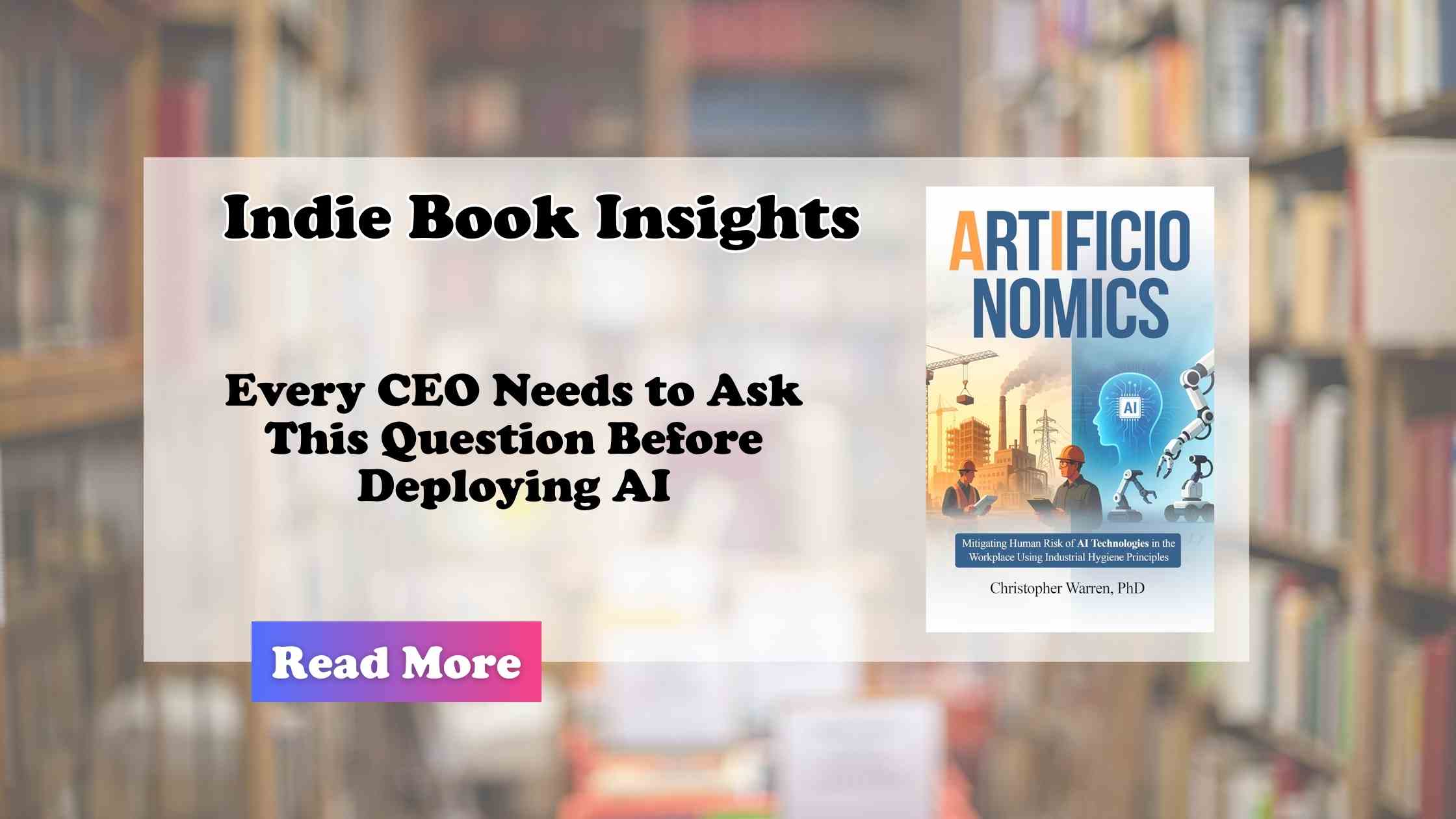
This challenge inspired Christopher Warren, PhD, to develop a groundbreaking discipline known as Artificionomics.
In his book, Artificionomics: Mitigating Human Risk of AI Technologies in the Workplace Using Industrial Hygiene Principles, Warren introduces a practical framework for identifying, evaluating and controlling the human risks associated with AI and robotics.
Rather than focusing solely on technological performance, Artificionomics applies proven industrial hygiene principles to the modern workplace, helping organizations assess how AI affects employee health, well-being, trust and productivity.
The framework encourages leaders to view AI deployment through a broader lens, one that includes psychological safety, ethical governance, workforce adaptation and long-term organizational resilience.
The Question That Defines the Future
The companies that thrive in the age of AI will not necessarily be the ones that automate the most.
They will be the ones that balance innovation with responsibility.
Before deploying any AI system, every CEO should pause and ask:
How will this technology affect the people who make our business successful?
That single question shifts the conversation from automation to leadership, from efficiency to sustainability and from technology alone to the human experience behind it.
AI may shape the future of business.
But the organizations that succeed will be those that remember that every technological decision is ultimately a human one.
Artificionomics provides the roadmap for leaders who want to ensure that progress and people move forward together.