
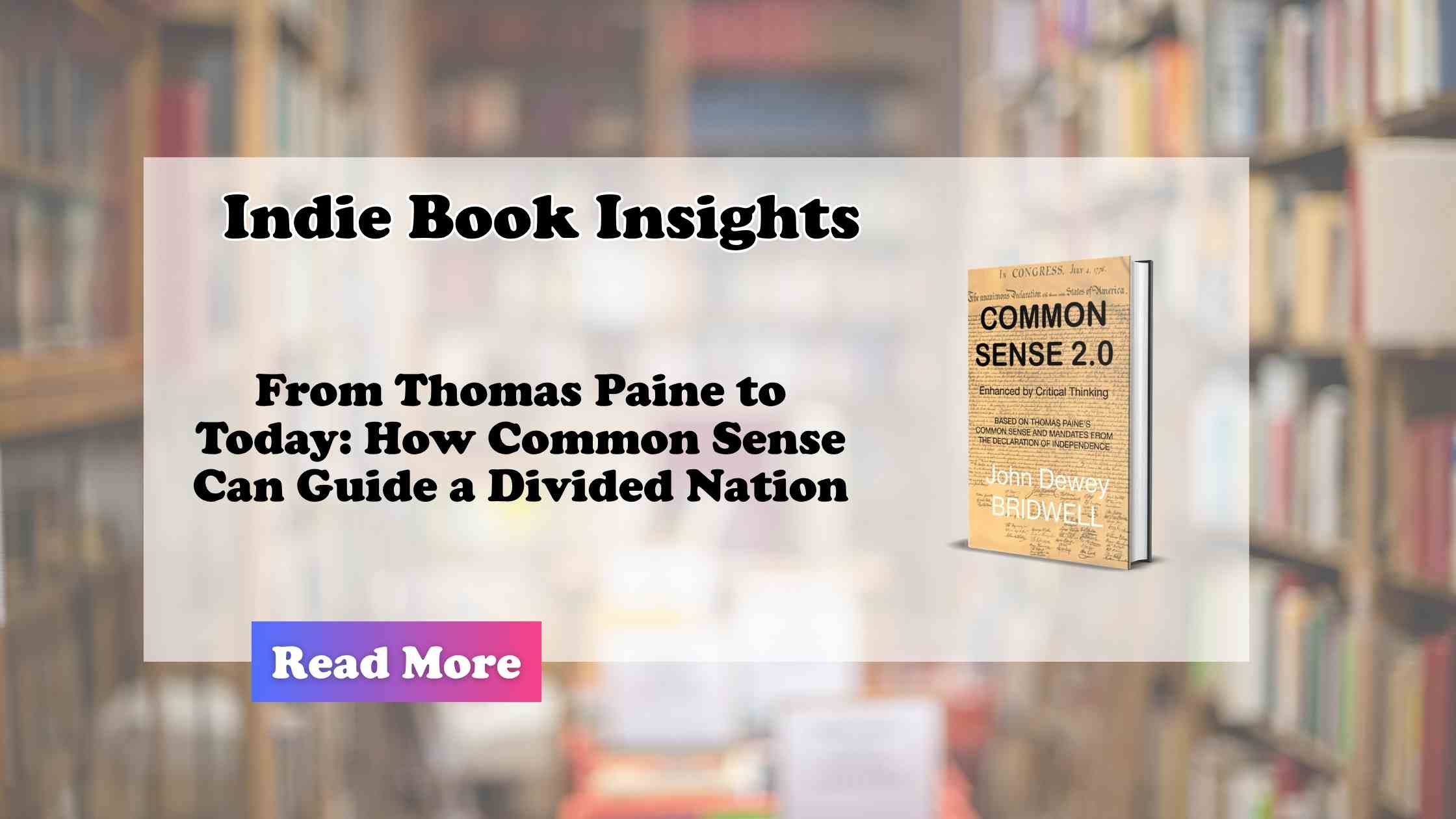
When Thomas Paine wrote Common Sense, he gave ordinary people a clear way to understand an extraordinary moment. The colonies were uncertain, divided, and pressured by fear, loyalty, habit, and political confusion. Paine cut through that confusion with plain reasoning. He asked people to look honestly at power, freedom, and the kind of government they deserved. Common Sense 2.0: Enhanced by Critical Thinking brings that same spirit into modern America.
The book argues that the United States is again facing a defining moment. The issues are different from those of 1776, but the need for clear thinking is just as urgent. America is divided over rights, representation, wealth, liberty, civic responsibility, public trust, and the role of government. In such a climate, emotion often replaces judgment, party loyalty can overpower principle, and many citizens lose sight of the founding promise that was meant to guide the nation.
Common Sense 2.0 returns readers to the Declaration of Independence as the moral center of American democracy. It reminds us that the country was founded on the rights to equality, life, liberty, and the pursuit of happiness, and that government exists to protect those rights through the consent of the governed. These ideas are not merely historical phrases. They remain a standard for judging whether America is moving toward its promise or away from it.
What makes this book timely is its call to pair common sense with critical thinking. Common sense asks simple but necessary questions. Does government serve the people? Are rights protected equally? Does liberty strengthen life, or place others at risk? Are citizens truly represented? Critical thinking pushes those questions further by examining systems, history, consequences, and responsibility.
The book challenges readers to consider whether America’s current political structures still serve democratic values. It explores concerns about the Constitution, the Electoral College, voting rights, wealth inequality, gun rights, civic education, church and state, and the weakening of public trust. These subjects are not treated as separate arguments, but as parts of one larger question: what kind of country should America be?
Like Paine’s original work, Common Sense 2.0 does not ask readers to remain passive. It invites them to think, question, and measure leadership against founding principles. It speaks to citizens who believe democracy requires more than ceremony. It requires awareness, courage, reform, and a serious commitment to the common good.
For readers concerned about the direction of the United States, Common Sense 2.0: Enhanced by Critical Thinking offers a forceful and relevant message. A divided nation cannot heal through noise, denial, or blind loyalty. It must return to reason, rights, and responsibility. From Thomas Paine to today, common sense remains one of democracy’s most powerful tools.
Discover this book now, available on Amazon: https://www.amazon.com/dp/B0GNCKMC5H/