
Honestly, And Then There Were None is hailed as one of the most masterful mysteries ever written—which, according to Agatha Christie, was the most daunting task of her career.
Be it its meticulously crafted plot, it’s setting on a desolate island, or the unique and relatable characters, the book was able to deliver a chilling reality where strangers are systematically killed according to the verses of a nursery rhyme.
But what if the plot of And Then There Were None changed? What if the story had a different ending? If so, how could the ending have been altered while preserving the suspense and complexity of the narrative?
In the original story, the guests’ distrust of one another leads to their downfall. What if, instead of descending into paranoia, the 10 strangers had chosen collaboration? What if they had pooled their skills and resources? Could they uncover the identity of their host, “Mr. U.N. Owen,” and his motives?
And Then There Were None also hosts justice, where the victims are chosen for crimes they committed but escaped punishment for. What if the story ended with redemption? Rather than retribution, perhaps the judge, consumed by guilt and a sense of moral superiority, could have orchestrated a scenario where the guests were forced to confront their sins and seek forgiveness rather than face death.
Another intriguing twist that can end in a different ending could involve a survivor taking up the mantle of the murderer. For example, after learning the judge’s identity and motives, what if one of the final characters decided to adopt his role, driven by a newfound desire for vigilante justice? This ending would have maintained the bleak tone of Christie’s novel while exploring themes of moral corruption and the thin line between victim and perpetrator.
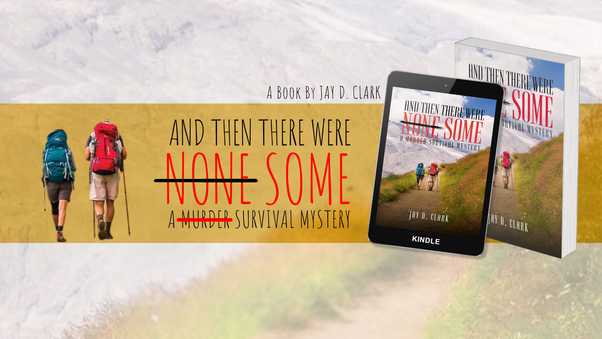
Moreover, what if external forces intervened? Be it the arrival of a rescue team or an outsider discovering the island’s secrets? This could provide a dramatic shift in the story’s trajectory—right? Also, this intervention might save some of the guests, but at the cost of leaving the mystery unsolved. It would introduce an element of uncertainty that references And Then There Were Some, an amazing book that thrives on unanswered questions that compel us to reflect on our beliefs about life, death, and survival.
For those searching for truth in a skeptical world, And Then There Were Some: A Survival Mystery is a roadmap to survival, that explores the compatibility of science and faith, particularly Christianity, through an evidence-based approach. Drawing from science, history, philosophy, and scripture, Clark challenges the notion that faith and reason are incompatible. The book examines key Christian doctrines, refutes atheism, and presents historical and scientific evidence to support belief in God. It offers readers a thoughtful exploration of the relationship between science and religion, empowering us to defend our faith with rational, evidence-based arguments while providing reassurance that belief in God aligns with modern scientific understanding.
Get your copy on Amazon: https://www.amazon.com/dp/1917505191/.
That being said, a final alternative could involve forgiveness instead of vengeance. The judge might have been swayed by a confession or act of genuine remorse from one of the guests. This sort of ending could break the monstrous cycle of murder, allowing some characters to escape and transform their lives—for the cause of good.
The beauty of both Christie’s And Then There Were None and Clark’s And Then There Were Some lies in their ability to explore human nature under extreme circumstances. By reading these books, we can gain new perspectives on how choices, morality, and collaboration can shape the outcome of even the most desperate situations.