

For centuries, Christian theology has explored the meaning of the imago Dei, the belief that human beings are created in the image and likeness of God. Traditionally rooted in Western philosophical and theological frameworks, this concept has shaped conversations about dignity, morality, freedom and human identity. But what happens when this theological idea enters into dialogue with African understandings of personhood?
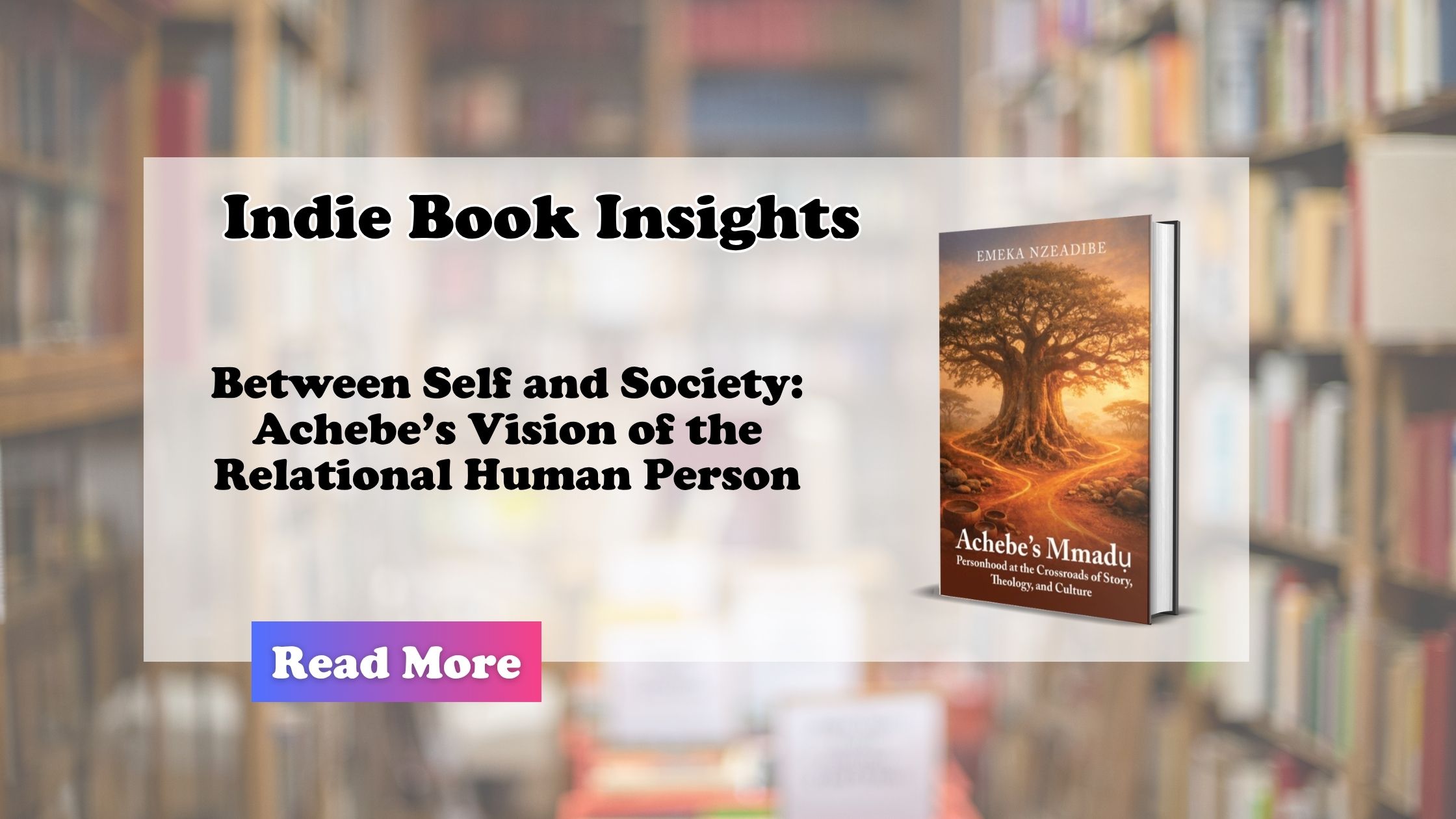
In Achebe’s Mmadụ: Personhood at the Crossroads of Story, Theology, and Culture, Emeka Nzeadibe opens an important new conversation between Christianity and African cosmology through the Igbo concept of Mmadụ.
Mmadụ, a central idea within Igbo thought and prominently reflected in the works of Chinua Achebe, means more than simply “human being.” It carries a deeper understanding of personhood that includes relationality, dignity, spirituality, destiny and communal belonging. In Achebe’s literary world, a person is never isolated or self-sufficient. Human existence is always connected to family, society, ancestors, the spiritual realm and the broader mystery of life itself.
This understanding creates a fascinating point of dialogue with the Christian concept of imago Dei. In Christian theology, being created in God’s image means that every human being possesses inherent worth and dignity. Human identity is not earned through power, intelligence or achievement; it is rooted in divine creation itself. Likewise, the Igbo understanding of Mmadụ affirms that every person possesses an ontological value that cannot be reduced or erased.
Nzeadibe’s work argues that these two traditions, African cosmology and Christian theology, are not opposites. Instead, they can illuminate one another in powerful ways.
Achebe’s stories vividly portray this relational understanding of humanity. In novels such as Things Fall Apart and Arrow of God, individuals exist within intricate webs of responsibility, tradition, spirituality and communal identity. The famous Igbo expression “Ife kwụrụ, ife akwụdebe ya” “Where something stands, something else stands beside it” reflects the belief that nothing exists alone. Human beings become fully themselves through relationships.
This resonates strongly with modern Christian theological discussions, especially those centered on relational personhood and Trinitarian theology. Thinkers such as John Zizioulas and Joseph Ratzinger have emphasized that personhood is fundamentally relational, mirroring the communion found within the Trinity itself. In this sense, Igbo cosmology and Christian theology converge on a profound truth: to be human is to exist in communion.
What makes this dialogue especially important today is its challenge to hyper-individualistic understandings of identity. Modern culture often treats human beings as isolated individuals defined by personal success, social status or economic value. The combined vision of Mmadụ and imago Dei offers a radically different perspective. It reminds us that dignity is inherent, relationships are foundational and humanity cannot flourish apart from community and spiritual meaning.
Beyond theology, this conversation also represents a significant cultural shift. African intellectual traditions have too often been excluded from mainstream theological discourse or treated as secondary to Western frameworks. Nzeadibe’s work powerfully demonstrates that African philosophy and cosmology are not merely cultural artifacts; they are rich sources of wisdom capable of shaping global conversations about humanity, ethics and faith.
In bringing Mmadụ and imago Dei into dialogue, Achebe’s Mmadụ does more than interpret literature. It invites readers to rethink what it truly means to be human, not as isolated individuals, but as persons created for relationship, dignity and shared existence.
Available On Amazon: https://www.amazon.com/dp/B0GZV57B1G/