
Modern slavery is often imagined as something belonging to another age. The uncomfortable reality is that exploitation has never disappeared. It has changed its methods, adapted to modern economies, and learned how to survive behind legitimate businesses, private networks, technology, and international movement.
People can live and work beside victims without ever recognising what is happening. Exploitation may exist behind ordinary doors, inside respectable industries, across supply chains, or within relationships controlled by fear, debt, threats, and manipulation. The absence of visible chains does not mean the absence of slavery.
One reason modern slavery remains difficult to identify is that control can take many forms. A person may technically be free to move, yet have no realistic means of escaping an employer, trafficker, criminal organisation, or individual who controls money, identification, accommodation, communication, or access to family members. Fear often becomes the restraint.
Globalisation has also made exploitation harder to trace. Money, people, information, and goods can cross borders quickly. Criminal groups understand this environment and can operate through several countries while keeping individual activities separated. What appears to be an isolated case may form part of a much larger structure.
Technology adds another layer. Digital communication can connect victims with false employment opportunities, allow criminals to coordinate activities across borders, and make financial transactions harder for ordinary people to follow. At the same time, technology can help investigators uncover patterns, connect information, and expose networks that once depended on secrecy.
The greatest protection for exploitation is often public distance from the subject. People may believe slavery happens somewhere else, to someone else, under circumstances completely removed from everyday life. That belief creates exactly the kind of environment in which abuse can remain unnoticed.
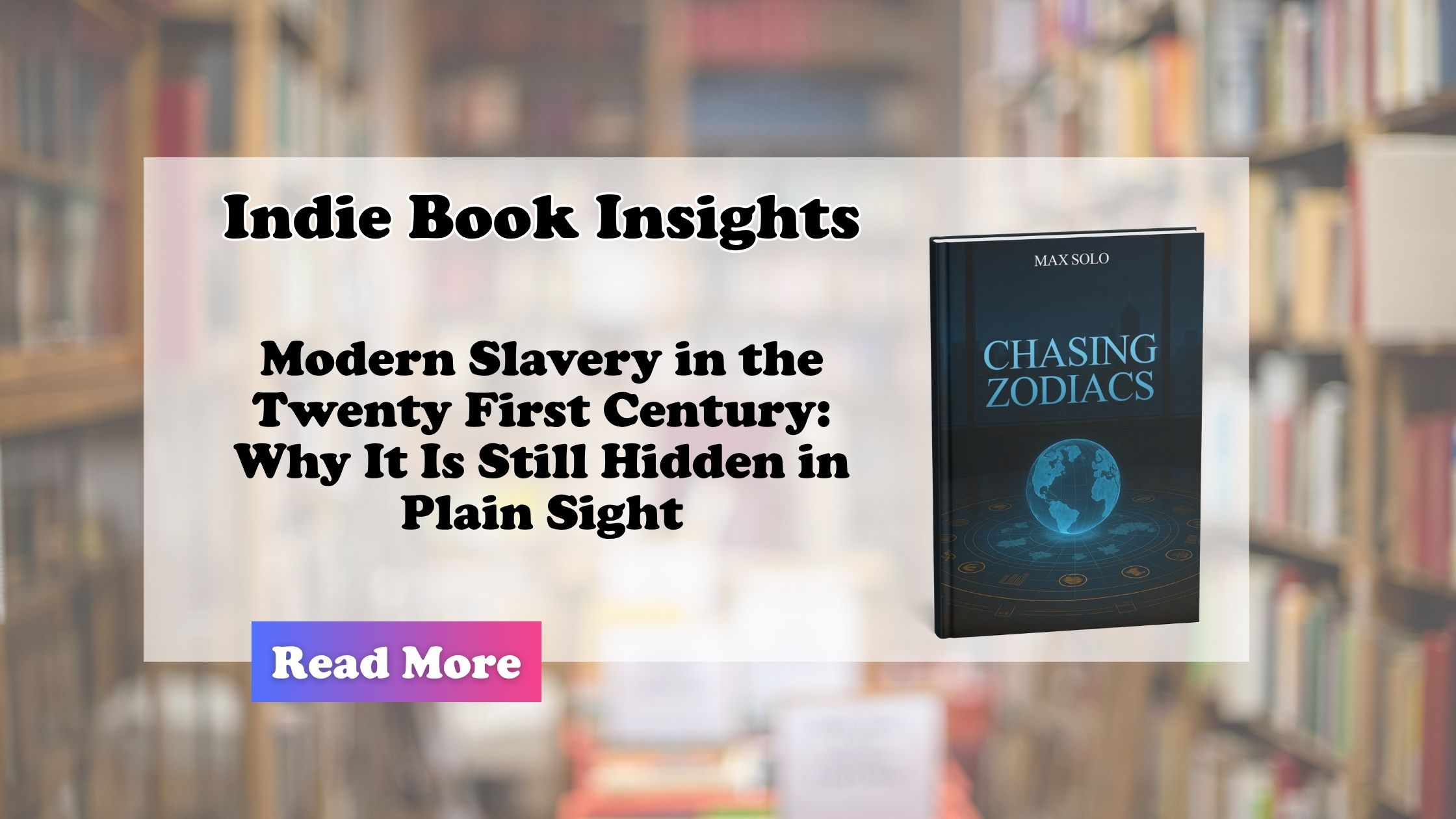
This disturbing gap between what society sees and what may be happening underneath the surface sits at the heart of Chasing Zodiacs: To Repair the Soul of Humanity by Max Solo.
The novel follows Max into a world of international crime, hidden influence, artificial intelligence, security operations, corruption, and powerful individuals who understand how easily wealth and secrecy can protect wrongdoing. What begins as an investigation into the Zodiac Programme grows into something far more dangerous, forcing questions about who controls information, who benefits from silence, and how far people will go to protect profitable systems.
Chasing Zodiacs is not simply a story about criminals hiding in shadows. It explores the more unsettling possibility that some of the darkest activities can exist beside ordinary life, protected by money, organisation, technology, and the assumption that someone else must surely be watching.
Sometimes the greatest danger is not what remains invisible. It is what has been visible for so long that people have stopped looking.