
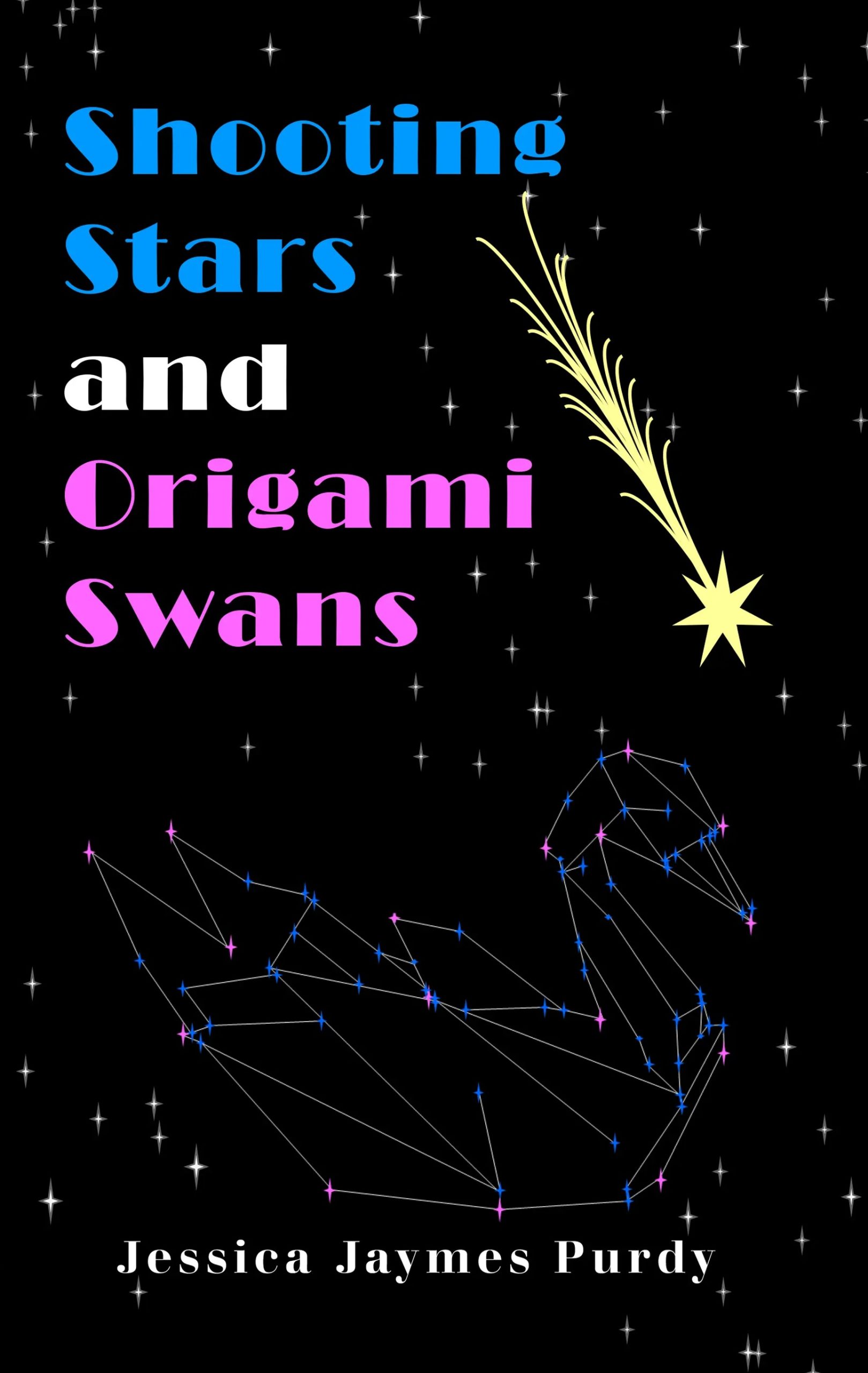
In her collection Shooting Stars and Origami Swans, Jessica Jaymes Purdy explores the emotional and psychological journey of transitioning [JP1] and finding joy in the process of self-discovery. Through her poetry, Purdy addresses the often painful experience of dysphoria — the disconnect between the gender one feels internally and the gender assigned by society — and the eventual release that comes from embracing one’s true identity.
Dysphoria can be a crippling experience, especially for transgender individuals. It is not just a physical sense of discomfort with one’s body but also a deep emotional turmoil that impacts one’s mental health, relationships, and sense of self-worth. In Purdy’s work, readers are invited to witness her battles with dysphoria, expressed poignantly through her poems. The rawness with which she writes about these feelings creates a powerful connection with those who share similar struggles. The pain of feeling misaligned with one’s body, of being unable to fully express one’s identity, is beautifully captured in her verses, offering a form of validation for those who may feel isolated in their experiences.
However, Purdy’s poetry does not stop at portraying the anguish of dysphoria. It also explores the possibility of transformation and healing. Through her words, Purdy reveals how art can serve as a tool for overcoming emotional pain, providing not only a means of expression but also a path to understanding and acceptance. For Purdy, poetry becomes a lifeline — a way to reframe her experience and transform it into something beautiful, something meaningful. Her ability to use words to express her pain and joy is a testament to the healing potential of creative expression.
In Shooting Stars and Origami Swans, Purdy’s journey from dysphoria to joy is portrayed as a process — one that involves patience, self-compassion, and the gradual acceptance of her identity. The joy she discovers is not one of instant resolution but of small, everyday victories. As she navigates the complexities of being a transgender woman, she finds moments of beauty and connection that allow her to heal. Through these moments, Purdy demonstrates that joy is not the absence of struggle, but the ability to find peace and satisfaction despite it.
By sharing her personal experience with dysphoria, the search for joy, and transitioning, [JP2] Purdy opens a conversation about mental health and healing within the transgender community. Her poetry speaks to the therapeutic power of art, offering a roadmap for others who are struggling with similar feelings. Her poems encourage readers to find their own voice, to express their pain, and ultimately, to embrace the joy that comes with accepting oneself.
In the end, Shooting Stars and Origami Swans offers a profound [JP3] message of hope and resilience. It reminds us that while dysphoria can be an overwhelming part of the transgender experience, there is always a path forward — a path filled with discovery, self-empowerment, and the eventual embrace of joy. Through her powerful poetry, Jessica Jaymes Purdy shows that even in the most difficult times, there is the possibility of healing and the opportunity to rediscover one’s own happiness.