
In the Blue Ridge Mountains of nineteenth-century North Carolina, a woman’s life was often expected to follow a familiar path: marry, raise children, keep a household and support her husband.
Polly Justice was never going to be satisfied with only that.
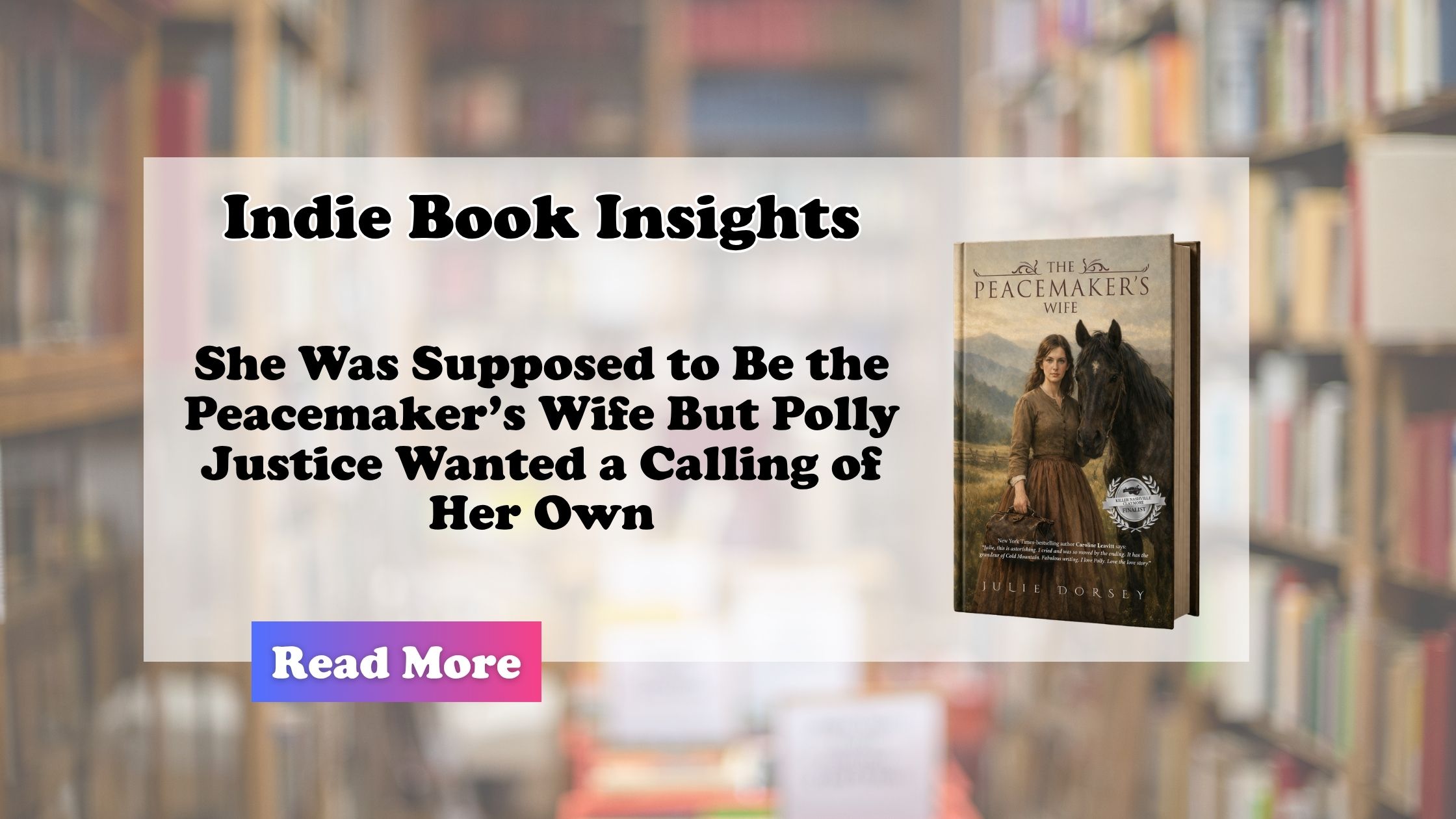
In Julie Dorsey’s historical novel The Peacemaker’s Wife, Polly is married to John Justice, a man admired throughout Blue Ridge for his ability to settle disputes. His reputation grows because he can calm quarrels, uncover the truth and reach decisions people respect. To the community, he is “The Peacemaker.”
That title gives Polly a role of her own in the eyes of others: the peacemaker’s wife.
But Polly wants something much more personal.
She wants to heal.
Her calling grows from one of the most painful moments of her childhood. While helping during the birth of her twin sisters, Polly watches one of the babies, Lucindy, die. The experience leaves her carrying years of guilt and a deep fear that her lack of knowledge contributed to the tragedy.
Instead of allowing that memory to silence her, Polly eventually turns it into purpose.
She begins studying. She practices reading and writing. She works through medical books. Most importantly, she learns from Nan Clark, the experienced “granny woman” of Blue Ridge who understands herbs, remedies, childbirth, injuries and the practical medicine families depend upon.
Polly becomes determined to master that knowledge.
And she decides she will not simply be known as someone’s wife.
She will become Doctor Polly.
That ambition creates tension in her marriage. John may be respected for his work outside the home, but he does not always extend the same freedom to Polly. He expects her to prioritize her duties as a wife and mother, while Polly believes caring for the sick and delivering babies is a responsibility placed upon her by God.
The conflict raises one of the novel’s strongest questions: Why should a man’s calling be treated as important while a woman’s calling is treated as an inconvenience?
Polly refuses to accept that double standard.
As the story unfolds, she treats wounds, illnesses, broken bones and difficult births. People begin coming to her because they trust her. Every patient adds to her confidence but also to the weight of responsibility she carries.
Her journey becomes even more complicated as her marriage deteriorates. John’s drinking, jealousy and violence reveal a side of “The Peacemaker” that the rest of Blue Ridge rarely sees. At the same time, Polly continues to wrestle with her feelings for Sam Edney, the man she once loved and never fully forgot.
Then there is the danger spreading through the community itself. Mysterious deaths, black feathers, suspicious clues and eventually the Civil War push Polly into circumstances far beyond anything she imagined when she first dreamed of becoming a healer.
Through it all, she keeps choosing her own purpose.
That is what makes Polly Justice such a compelling historical heroine.
She is not fearless. She is not perfect. She makes difficult choices, carries painful secrets and sometimes questions herself. But she keeps learning. She keeps healing. And she keeps refusing to disappear inside someone else’s identity.
In The Peacemaker’s Wife, Julie Dorsey gives readers more than a story about marriage or medicine. She gives them the story of a woman discovering that a meaningful life may require the courage to claim a calling of her own.