

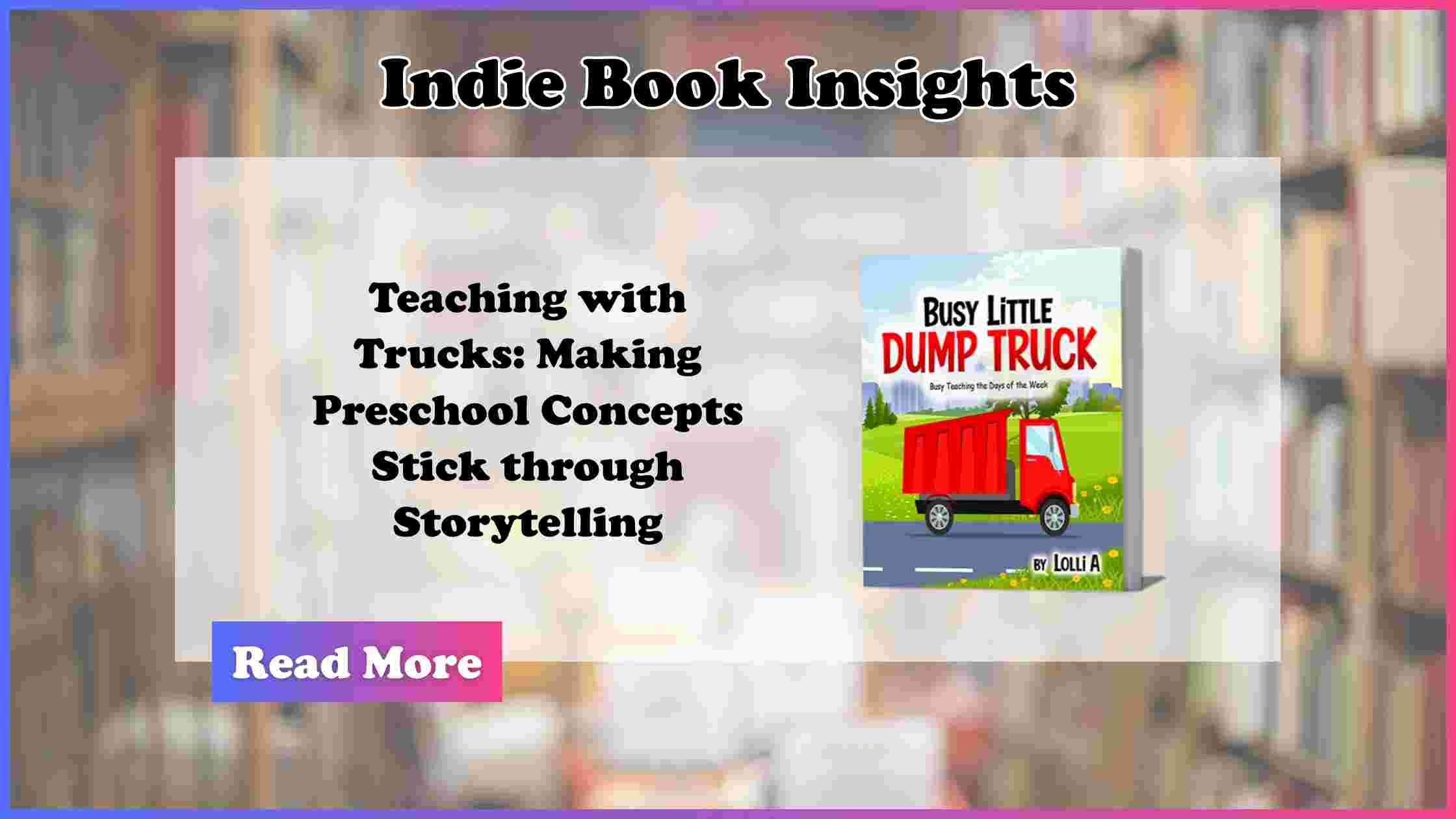
In the imaginative world of preschoolers, everything has a personality. Animals talk, the moon smiles, and trucks—well, trucks become heroes. This playful view of the world makes storytelling one of the most effective teaching tools available for early education. And when the star of the story is a lovable, hardworking vehicle, like in Busy Little Dump Truck: Busy Teaching the Days of the Week by Lolli A, the learning becomes even more memorable.
Children are naturally drawn to things that move, make noise, and spark curiosity. Trucks check all those boxes. But more than being fun, trucks also represent responsibility, purpose, and teamwork—concepts that are easy to model and reinforce through storytelling. In Lolli A’s book, a busy dump truck carries out a different task each day of the week. This clever structure not only introduces children to the days of the week but also connects each day with a specific activity, making abstract ideas easier to grasp.
Preschool concepts like sequencing, routines, and time recognition are foundational for young learners, yet they can be difficult to explain directly. That’s where storytelling shines. By following a truck’s schedule over the course of a week, children begin to internalize the pattern: Monday comes before Tuesday, work leads to accomplishment, and each day has its own rhythm. The dump truck, through its daily routine, models consistency, responsibility, and pride in one’s work—powerful lessons for growing minds.
But the real magic happens when learning feels like play. Storytelling lowers the pressure of performance. Instead of being drilled with flashcards, children are swept into a world where they want to know what happens next. They start to recite the days in order, anticipate the truck’s next job, and even create their own versions of the story. That’s when you know the concept has stuck—not just in the mind, but in the heart.
Lolli A brings authenticity to her storytelling, shaped by years of experience in education and the personal joy of reading to her grandchildren. She knows that teaching isn’t just about delivering facts—it’s about connecting with young minds in a way that feels warm, safe, and inspiring. Her use of rhyme, repetition, and relatable characters taps into how children naturally absorb information.
And it’s not just about days of the week. Through the simple structure of a story, children also begin to understand the value of hard work, the importance of showing up, and the joy of helping others. These life skills, wrapped in the comforting cadence of rhyme and the charm of a dump truck, plant seeds that grow far beyond the preschool years.
Teaching with trucks may sound playful, but it’s powerful. It’s a reminder that education doesn’t always have to come from a whiteboard or a worksheet. Sometimes, all it takes is a good story, a dependable dump truck, and a child ready to listen.