
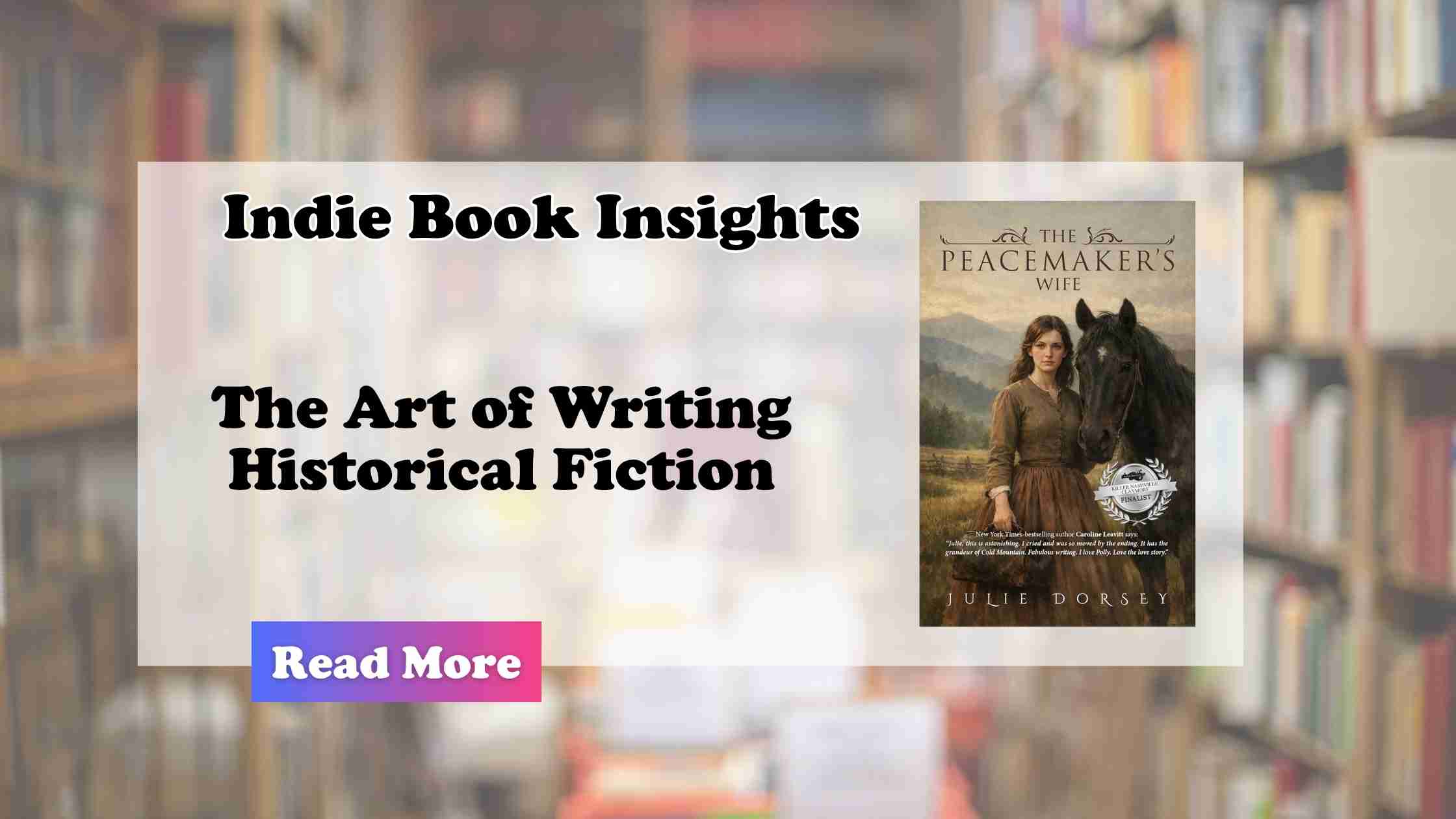
Writing historical fiction is a delicate balancing act, where the sole motive is to capturing the authenticity of a particular time while also crafting a story that resonates with modern readers. Julie Dorsey’s The Peacemaker’s Wife is a shining example of how historical fiction can come to life with depth and heart. Set in the 19th century, the novel not only transports readers to the Blue Ridge Mountains but also brings to light the characters’ emotional struggles and triumphs within this richly crafted historical context.
In her writing, Dorsey embraces the challenges of historical fiction with grace and confidence. “The key is to stay true to the period while ensuring that the characters’ emotional journeys are universal,” she says. The Peacemaker’s Wife does just that, offering readers an intimate look into the life of a woman struggling with the societal and personal constraints of her time. By grounding the novel in the era’s authenticity, Dorsey makes the characters’ experiences feel both true to history and profoundly relatable.
One of the biggest challenges in writing historical fiction, Dorsey explains, is getting the details right. From the language the characters speak to the customs they observe, every aspect of the world they inhabit must accurately reflect the period. “You want your reader to feel like they’re living in the past, not just reading about it,” she says. For Dorsey, this meant diving deep into the history of her great-great-grandmother, whose life inspired The Peacemaker’s Wife. The result is a novel that feels lived-in, a world that pulses with the rhythm of its time, from the sounds of nature in the Blue Ridge Mountains to the characters’ mannerisms.
But historical accuracy alone isn’t enough. For Dorsey, the emotional depth of her characters is just as important as the historical setting. “The story must come from the heart,” she shares. “I wanted my readers to connect with the characters on a deeply emotional level. The themes of love, loss, and personal growth are timeless, and even though the story is rooted in history, those themes are what make it resonate.” By focusing on the emotional journeys of her characters, Dorsey ensures that The Peacemaker’s Wife isn’t just a tale of the past—it’s a story that speaks to readers today.
Research plays a pivotal role in creating a believable historical world, but Dorsey also emphasizes the importance of imagination in crafting the narrative. “You can only learn so much from books and records. At some point, you have to bring the history to life through your own creative lens,” she says. This blend of research and imagination is what gives The Peacemaker’s Wife its power. Dorsey doesn’t just recount events; she invites readers into a world where they can experience the characters’ struggles firsthand.
Ultimately, writing historical fiction is about finding that perfect balance between accuracy and storytelling. The Peacemaker’s Wife stands as a testament to Julie Dorsey’s skill in navigating these challenges, offering readers an unforgettable journey through both history and the heart. For fans of historical fiction that blends rich detail with emotional resonance, The Peacemaker’s Wife is an essential read.
Discover Polly’s journey today.