

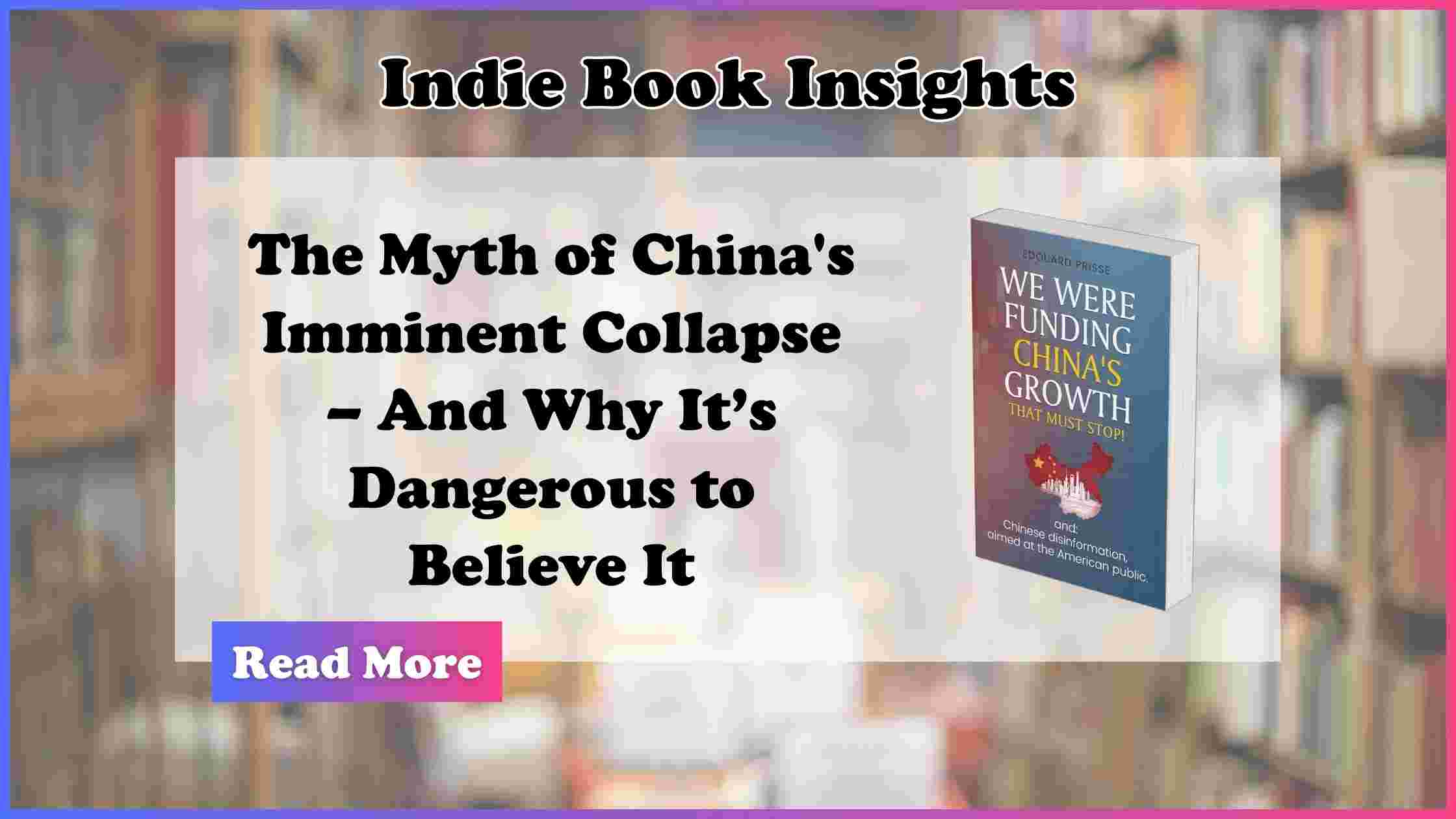
For over two decades, Western commentators have been confidently predicting the imminent collapse of China. Yet the Chinese economy continues to grow, its influence continues to expand, and its authoritarian grip remains firm. In We Are Funding China’s Growth That Must Stop!, author Edouard Prisse challenges this persistent myth, arguing that such misguided optimism only weakens the West’s ability to respond to a very real and growing threat.
One of the most well-known voices in this space is Gordon Chang, whose 2001 book The Coming Collapse of China predicted that China’s communist regime would fall by 2011. When that didn’t happen, he revised the collapse date to 2012. Two decades later, China remains a global superpower. Despite his record of inaccuracy, Chang continues to make similar claims, often published in major Western outlets. Prisse singles out Chang in his book not just to discredit his analysis, but to demonstrate how wishful thinking has infiltrated American policy conversations.
Another frequently cited argument comes from Dinny McMahon’s China’s Great Wall of Debt, which outlines systemic weaknesses in China’s economy—bad loans, corruption, overbuilt cities, and a shrinking workforce. These issues are real, Prisse acknowledges, but he stresses that they have not yet translated into collapse because of one overlooked factor: China’s massive trade surplus.
Every year, China receives hundreds of billions of dollars from the West, mostly from the United States, in exchange for its low-cost manufactured goods. That money gives Beijing the liquidity it needs to cover its internal inefficiencies, prop up failing state-run companies, and maintain a steady rate of international investment. As Prisse explains in Chapter 4, China’s $870 billion annual trade surplus functions like a pressure release valve for its flawed economic system. Without it, the cracks might actually widen. With it, collapse remains unlikely.
The real danger lies in how the collapse narrative dulls Western vigilance. If people believe that China will soon implode on its own, they are far less likely to support difficult or unpopular policy changes—like ending free trade, relocating manufacturing, or regulating imports. Believing the myth of collapse leads to paralysis, inaction, and a dangerous underestimation of an adversary that continues to rise.
Prisse emphasizes that it is not China’s GDP or headlines that should command our attention, but its liquidity. China holds over $3 trillion in usable foreign exchange reserves. That money is available for immediate use—unlike assets tied up in land, infrastructure, or future growth. In Prisse’s words, power today is not defined by total economic size, but by liquid spending power. And China has more of it than any other nation.
While many of China’s internal problems are serious, they are not fatal as long as the West continues to fund its economy. Instead of betting on Beijing’s self-destruction, Prisse argues, the United States must act strategically to stop the flow of money. That means replacing the current free trade model with a balanced approach—what he calls “Equal Trade”—where the value of imports and exports are matched.
China is not on the verge of collapse. It is being sustained, quietly and continuously, by American dollars and European complacency. As long as that continues, China will remain stable, powerful, and increasingly assertive. Believing otherwise is not just naive. It’s dangerous.