
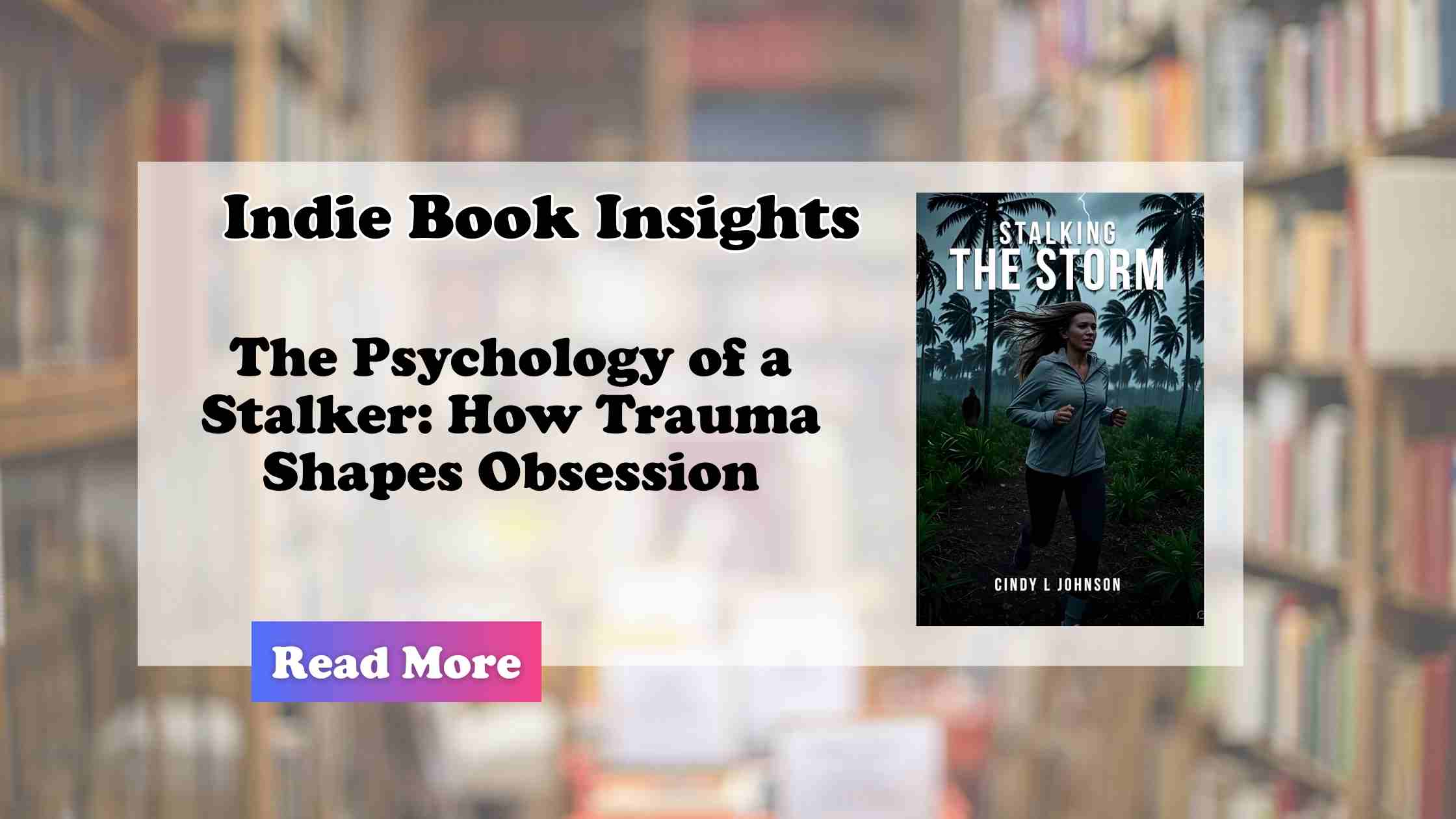
In Stalking the Storm by Cindy L. Johnson obsession is not portrayed as sudden madness. It is shown as something constructed slowly, layer by layer, from untreated trauma, emotional deprivation, and distorted attachment. The novel presents a chilling but psychologically grounded portrait of how a stalker can be formed long before the first threatening act ever occurs.
Early exposure to instability, violence, and emotional neglect alters the way the brain processes safety and connection. Children raised in chaotic homes often develop hypervigilance. They learn to scan environments for threat. They become experts at anticipating mood shifts. Over time, this constant alertness reshapes neural pathways. The nervous system adapts to survive unpredictability.
When affection is inconsistent or conditional during formative years, attachment patterns can become disorganized. A child may associate love with fear, approval with performance, and security with control. As an adult, this can manifest as extreme sensitivity to perceived rejection and an overwhelming need for reassurance.
In Brett’s case, addiction compounds these vulnerabilities. Substance dependence disrupts impulse control, emotional regulation, and executive functioning. Alcohol and other depressants dull pain temporarily but amplify instability long term. Once sobriety begins, the individual must confront unresolved trauma without the chemical buffer that once muted it.
During detox, Brett experiences profound physical and emotional vulnerability. Withdrawal strips away defenses. Shame surfaces. Fear intensifies. In this fragile state, the presence of a calm, competent nurse feels monumental. Camille’s steady voice and structured guidance provide something Brett has rarely known: reliable safety.
The human brain is wired to bond with those who relieve distress. In healthy contexts, this mechanism supports trust and attachment. In damaged contexts, it can create dependency and misinterpretation. Brett does not simply appreciate the care. He internalizes Camille as the source of his stabilization. Her compassion becomes fused with his survival.
Trauma survivors often struggle with boundaries because early relationships blurred them. When Brett interprets professional kindness as personal connection, it reflects a distorted attachment template. He does not consciously decide to become obsessed. Instead, he builds a narrative in which Camille represents redemption, belonging, and identity.
For individuals who grew up powerless, regaining control can feel like reclaiming dignity. Stalking behaviors frequently emerge from a desire to eliminate uncertainty. Monitoring, collecting information, and invading privacy create an illusion of mastery. The stalker reframes intrusion as vigilance and surveillance as devotion.
Brett’s fixation escalates from admiration to monitoring. The more distance Camille establishes, the more his internal alarm activates. Rejection, even implied rejection, can feel catastrophic to someone whose early life was marked by abandonment or humiliation. In that state, obsession becomes a coping mechanism. It reduces anxiety by narrowing focus to a single objective.
Psychologically, obsession provides structure. It organizes chaotic emotion into a singular mission.
There is also a cognitive distortion at play. Trauma can impair the ability to accurately interpret social cues. Neutral behavior may be read as intimacy. Professional boundaries may be seen as temporary barriers rather than permanent limits. This distortion is not an excuse, but it explains how a stalker can sincerely believe in a bond that does not exist.
Importantly, obsession is rarely about love. It is about unmet needs. It is about filling a void with a person rather than developing internal resilience. When identity feels fractured, attaching to someone else’s perceived strength can feel like survival.
Stalking the Storm does not present stalking as random villainy. It reveals it as the endpoint of compounded psychological injury left untreated. Trauma shapes perception. Addiction destabilizes regulation. Misinterpreted compassion fuels fantasy. And without intervention, fantasy hardens into fixation.
Available On Amazon: https://www.amazon.com/dp/B0FWHXLXYV