When people experience fear or trauma, one of the hardest parts is finding a way to live with what happened. Memory does not simply fade because the experience is over. It stays, often returning at unexpected times. But one of the most powerful tools for survival can be art. Art gives people a way to take what is painful and transform it into something that can be understood, shared, and even healed.
In horror fiction, this theme often begins in surprising ways. Survivors do not only fight monsters or escape haunted houses. They also have to carry the memories of what they endured. By emphasizing art and memory, stories show that survival is not just about getting out alive. It is about learning how to live with the past. It makes the story not only frightening but also deeply human.
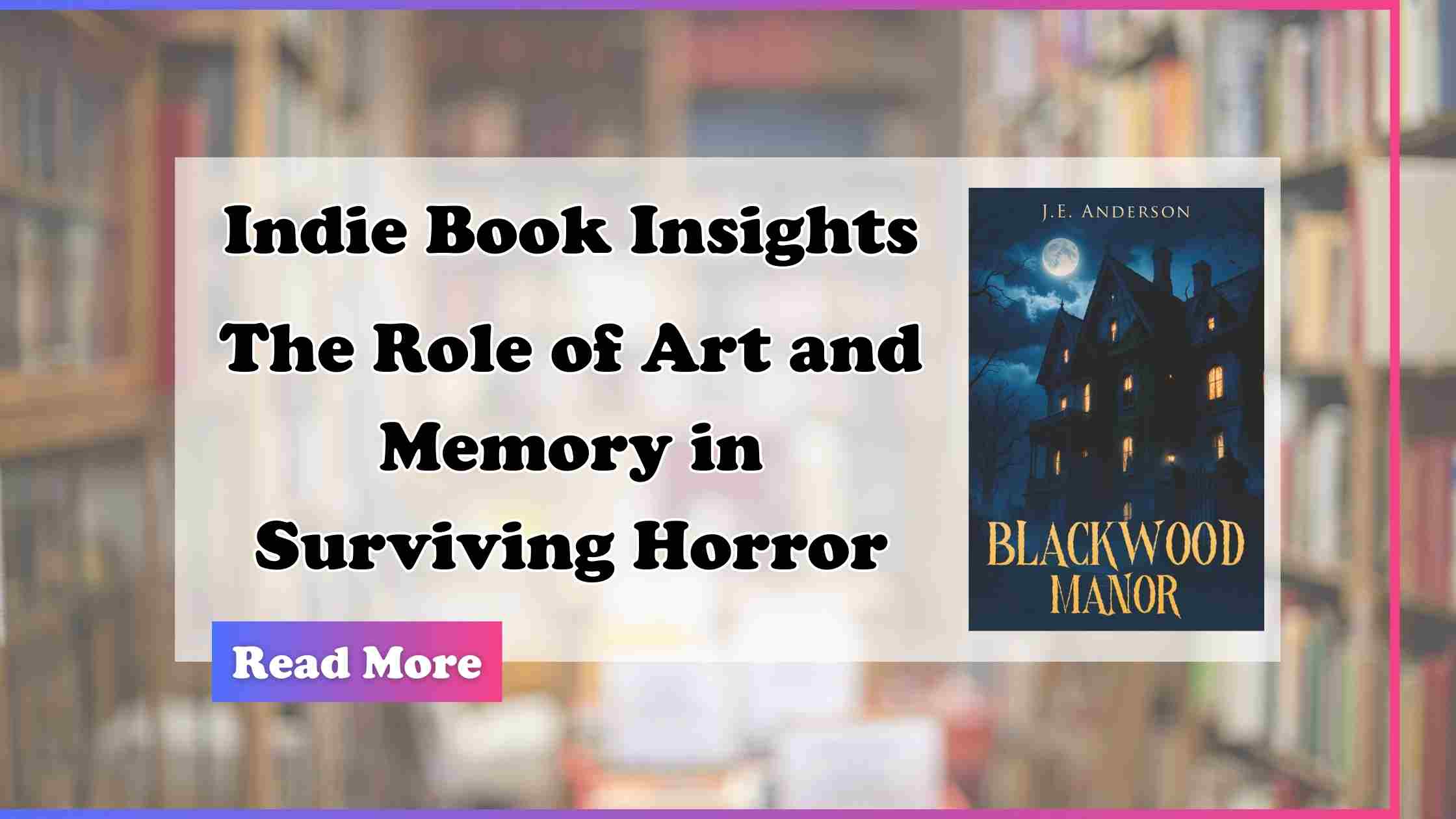
In J. E. Anderson’s Blackwood Manor, Emily begins by drawing haunting images of the house that consumed her family’s peace. At first, the pictures are filled with shadows and sadness, echoing the weight of what she experienced. But slowly, her art changes. The colors soften, the landscapes open up, and her drawings begin to show healing. Tom also turns to painting, transforming his fear into creative expression. His work moves from dark and oppressive images to scenes that capture hope and survival. These examples show that art is more than expression. It is a bridge from trauma toward recovery.
Art has long played this role in real life as well. Soldiers returning from war have written poetry or created music to process what they saw. Survivors of personal tragedies often turn to painting, journaling, or storytelling as a way to make sense of events that feel too big to carry alone. In this way, horror fiction reflects the truth of human resilience. It reminds readers that memory can wound, but it can also inspire strength when paired with creativity.
The link between art and memory is important because memory itself can be overwhelming. For characters in Blackwood Manor, the past is not just remembered, it is alive in the walls of the house. The weight of history presses in through whispers, visions, and shadows. Confronting that kind of memory requires more than logic. It requires a way to reshape the story so that it does not have complete control. Art becomes a means of taking power back. By putting fear into lines, colors, or words, the characters create a space where they can see the trauma clearly and begin to move forward.
This approach also develops the horror genre as a whole. Instead of ending with destruction, the story offers a path toward survival that feels real and relatable. Readers see that while the supernatural elements might be exaggerated, the emotional truth is not. People really do use art to survive. They really do carry memories that change how they live, and they really do need ways to transform darkness into something meaningful.
For those who want a gothic horror story that explores not just fear but also resilience, Blackwood Manor by J. E. Anderson offers a powerful experience. It shows that even in the face of overwhelming terror, art and memory can become tools for survival.
Discover Blackwood Manor by J. E. Anderson now, available on Amazon: https://www.amazon.com/dp/B0FCDM1PJX.