
Artificial Intelligence is no longer a distant concept reserved for research labs or science fiction. It is already transforming workplaces across manufacturing, healthcare, construction, logistics, finance, emergency response and countless other industries. From predictive analytics and automated decision-making to humanoid robots and AI-powered monitoring systems, intelligent technologies are reshaping how people work.
But as AI becomes more powerful, one question becomes increasingly urgent:
Who is protecting the humans working alongside it?
This is where ArtificIonomics enters the conversation.
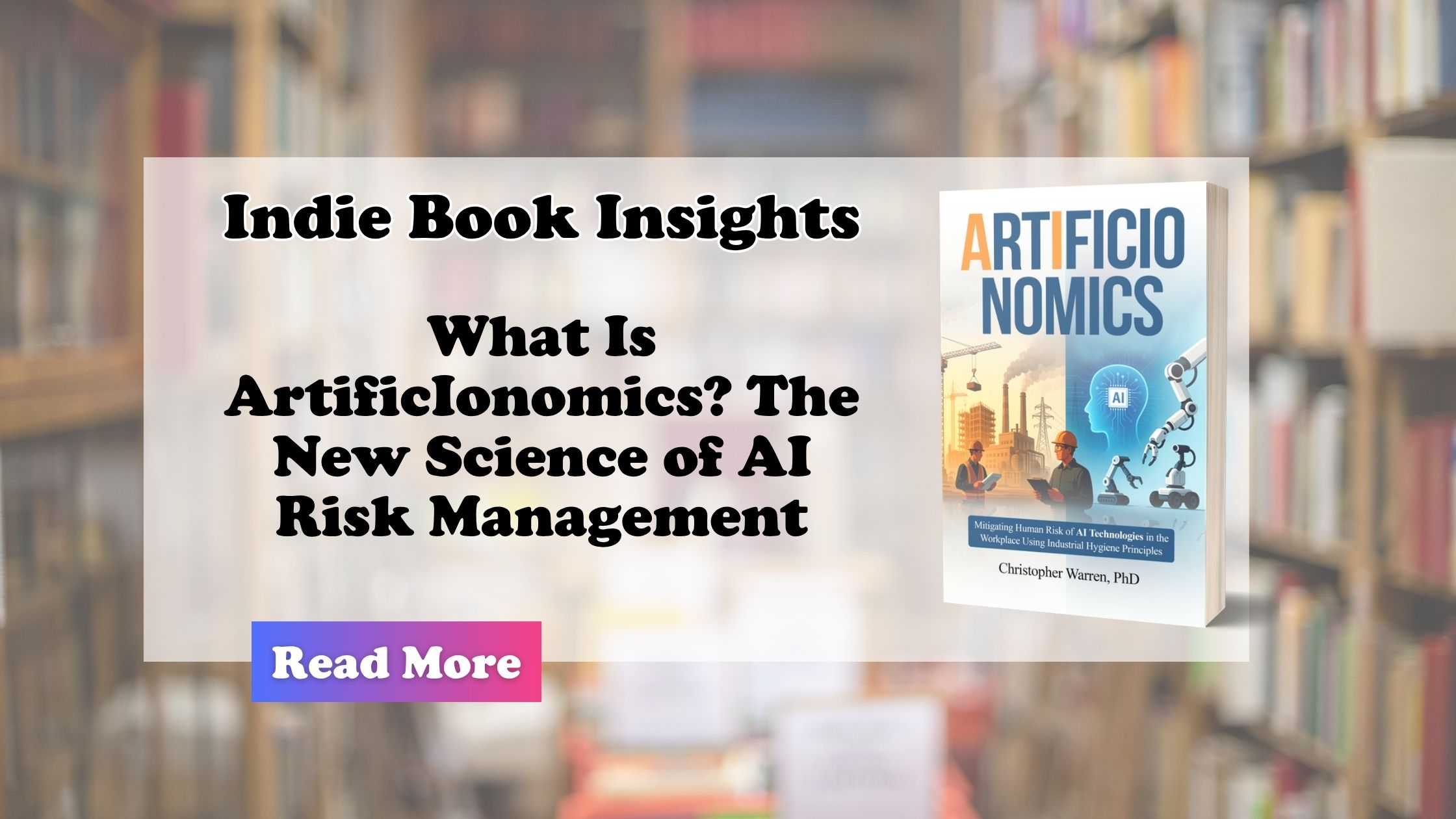
Introduced by Christopher Warren, PhD, in his groundbreaking book ArtificIonomics: Mitigating Human Risk of AI Technologies in the Workplace Using Industrial Hygiene Principles, ArtificIonomics is a new approach to understanding and managing the human risks created by artificial intelligence and robotics in the workplace.
At its core, ArtificIonomics asks leaders to look beyond productivity, automation and efficiency. It challenges organizations to examine how AI affects worker health, safety, dignity, autonomy and well-being.
Traditional workplace safety programs have long relied on industrial hygiene principles to protect employees from hazards such as chemicals, noise, heat, radiation, ergonomic strain and unsafe machinery. These principles are built around a proven process: identify hazards, evaluate exposure and control risk.
ArtificIonomics applies this same disciplined framework to the AI age.
Instead of focusing only on physical hazards, it expands risk management to include cognitive, emotional, psychological, social and ethical risks. These may include stress from constant AI surveillance, anxiety about job displacement, cognitive overload from automated systems, reduced human judgment, algorithmic bias, privacy concerns and unsafe human-robot interaction.
These risks are often invisible at first. There may be no chemical spill, no broken machine and no immediate injury. Yet the impact can still be serious. Workers may feel monitored, pressured, replaceable or disconnected from meaningful decision-making. Over time, these conditions can contribute to burnout, disengagement, mistrust and declining workplace morale.
That is why ArtificIonomics is so timely.
Organizations are adopting AI faster than many safety, HR and governance systems can adapt. Too often, AI is deployed as a business tool without being treated as a workplace exposure. Christopher Warren, PhD, argues that this must change.
If AI changes how people work, think, move, decide and interact, then AI must be part of workplace risk management.
ArtificIonomics provides a practical roadmap for doing exactly that. It encourages organizations to assess AI systems before deployment, involve workers in the process, evaluate both physical and psychosocial impacts, create transparent governance policies and apply controls that protect human well-being.
The goal is not to resist innovation. The goal is to make innovation safer, more ethical and more sustainable.
In a world where machines are becoming more intelligent, human-centered leadership becomes even more important. The most successful organizations will not be those that simply automate the fastest. They will be the ones that deploy AI responsibly, protect their people and build trust into every stage of technological change.
ArtificIonomics is more than a concept. It is a call to action for executives, safety professionals, HR leaders, policymakers and technology teams.
AI is changing the future of work.
ArtificIonomics helps ensure that the future remains human.