

Artificial Intelligence is advancing at a remarkable pace.
Every day, organizations invest in new AI systems designed to improve efficiency, automate processes, reduce costs and enhance decision-making. Leaders are eager to unlock the competitive advantages these technologies promise and for good reason. AI has the potential to transform industries in ways comparable to the Industrial Revolution or the rise of the internet.
Yet despite all the innovation, many AI initiatives face a challenge that technology alone cannot solve.
That challenge is trust.
Organizations often assume that if an AI system performs well technically, employees will naturally embrace it. But history tells a different story. People do not automatically trust a system simply because it is intelligent, fast or accurate. Trust must be earned.
And in the workplace, trust is often the deciding factor between successful AI adoption and organizational resistance.
Consider what happens when employees are asked to work alongside AI systems that influence hiring decisions, productivity targets, scheduling, performance evaluations or operational recommendations. Even when those systems are technically sound, workers may still ask important questions:
Why did the AI make that decision?
How is my performance being evaluated?
Who is accountable if the system makes a mistake?
Will this technology eventually replace me?
These questions are not technical concerns.
They are human concerns.
Unfortunately, many organizations focus heavily on AI implementation while paying far less attention to how employees experience that implementation. As a result, workers may perceive AI as a source of uncertainty rather than support. They may feel monitored rather than empowered. They may view automation as a threat rather than a tool.
Over time, this lack of trust can create resistance, anxiety, reduced engagement and lower acceptance of even the most sophisticated technologies.
The irony is that AI’s greatest challenge is often not the technology itself.
It is the human response to it.
Trust becomes especially important when AI systems operate as “black boxes.” If employees cannot understand how decisions are made, they are less likely to accept those decisions. Transparency, communication and human oversight become essential components of successful AI deployment.
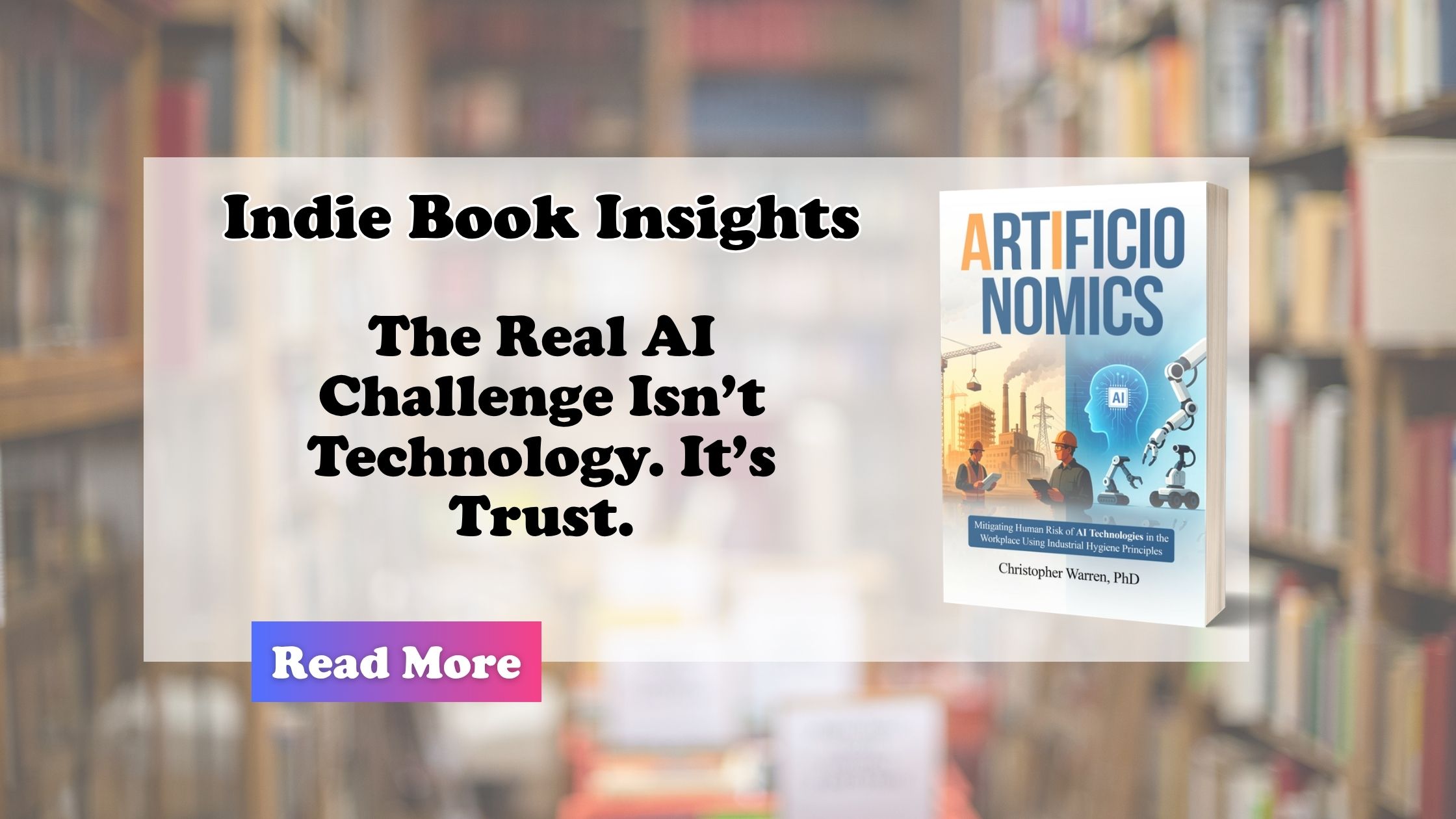
This reality is explored in depth in ArtificIonomics: Mitigating Human Risk of AI Technologies in the Workplace Using Industrial Hygiene Principles by Christopher Warren, PhD.
The book introduces ArtificIonomics, a groundbreaking framework that examines AI through the lens of human health, safety and well-being. Rather than focusing solely on technical performance, ArtificIonomics asks a broader question:
How does AI affect the people who must work with it?
Drawing upon industrial hygiene principles, the framework encourages organizations to identify, evaluate and control the human risks associated with artificial intelligence. These risks include psychological stress, workplace surveillance concerns, automation anxiety, cognitive overload, algorithmic bias and diminished worker autonomy, all factors that directly influence trust.
The book argues that trust is not a soft issue.
It is a risk management issue.
When employees trust AI systems, organizations benefit from higher engagement, smoother adoption, stronger collaboration and better outcomes. When trust is absent, even the most advanced technologies can struggle to deliver their intended value.
The future of work will undoubtedly include more intelligent systems.
But successful organizations will recognize that technology alone is not enough.
People must trust the systems they use.
People must trust the organizations deploying them.
And perhaps most importantly, people must trust that innovation is being implemented with their well-being in mind.
Because in the age of AI, trust is not a byproduct of success.
It is the foundation of it.
That is the central lesson of ArtificIonomics and one that every leader should understand before deploying the next generation of intelligent technologies.