
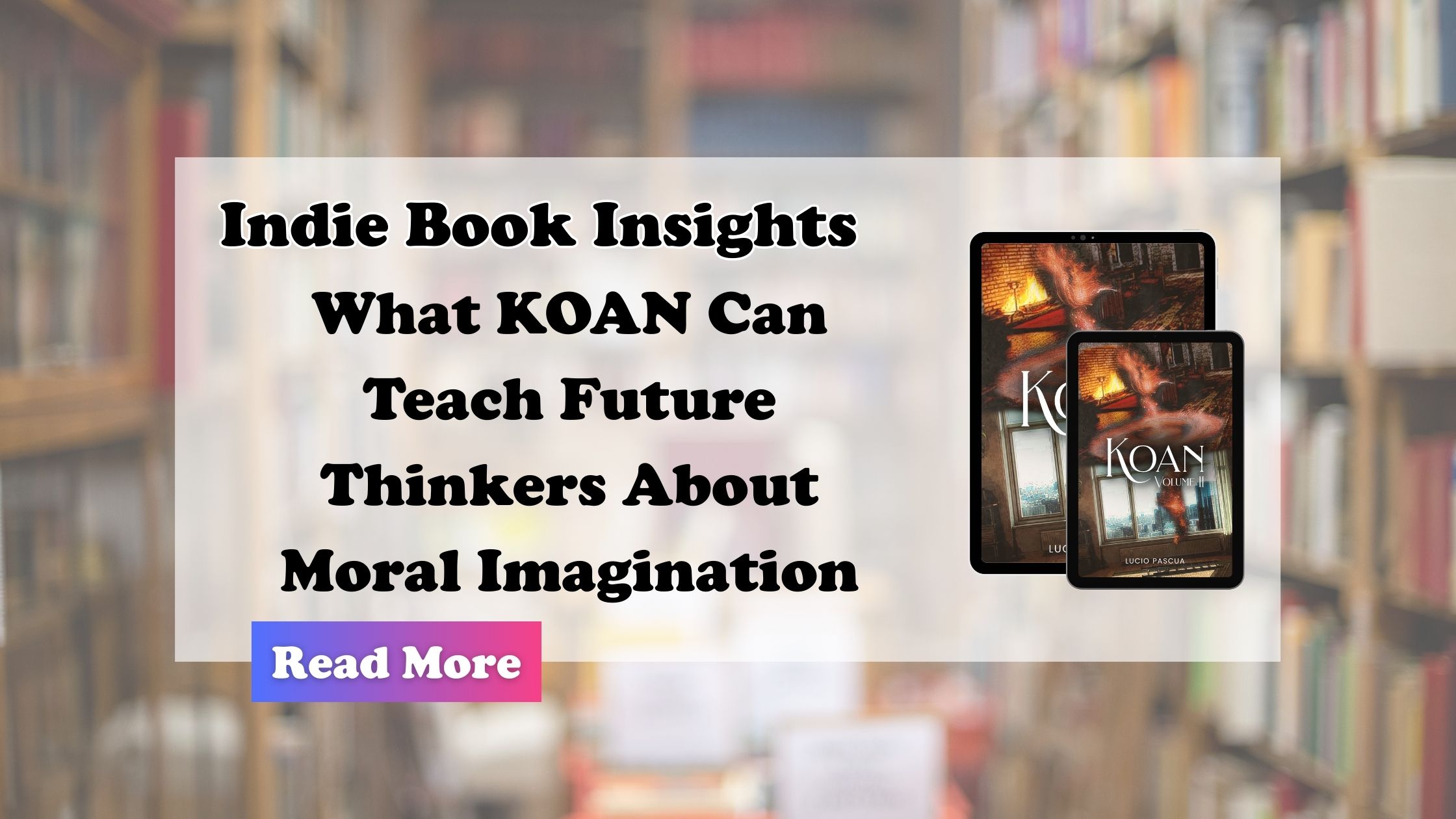
In a world that often rewards speed over depth and reaction over reflection, books that ask us to pause and think critically are rare. Lucio Pascua’s KOAN is one of those rare works. It is not a story about heroes saving the world, but about individuals learning how to understand it. Beneath its layers of myth, philosophy, and allegory lies a quiet message about how to think, feel, and imagine a better future. It is a book that speaks directly to the next generation of thinkers, those who will need both intellect and empathy to navigate the challenges of an increasingly complex world.
At its core, KOAN is a meditation on moral imagination, the ability to see beyond one’s own perspective and understand the ethical implications of one’s choices. Pascua’s universe is not divided into clear lines of good and evil. Instead, it is filled with characters who must think deeply about their actions and their consequences. The Guardians, such as the Northern Tortoise and Eastern Dragon, are not simply symbols of wisdom and power; they are teachers of balance, reminding readers that morality is rarely simple. Through them, the novel explores the idea that doing what is right often requires patience, awareness, and compassion.
One of the book’s most compelling figures, El-Javaz, governs with the belief that peace cannot be imposed; it must be cultivated. His philosophy of nonviolence challenges the reader to consider what leadership looks like when it is rooted in empathy rather than dominance. In a world obsessed with quick victories, El-Javaz’s calm persistence reminds us that lasting progress often comes from understanding, not control. His story invites readers to imagine new ways of thinking about power, not as a force to be wielded, but as a responsibility to be shared.
What makes KOAN especially valuable for future thinkers is how it encourages critical reflection without preaching. Pascua does not tell readers what to believe. Instead, he asks them to question: What is justice? What does peace require? How do we live ethically in a world where every action affects others? This approach mirrors the kind of thinking that will shape the leaders, scientists, artists, and educators of tomorrow, people who must navigate moral and practical dilemmas with clarity and care.
Books like KOAN foster this kind of moral imagination by blending storytelling with thought. It’s a world filled with mythic guardians and human struggle, becomes a stage where complex ideas about morality, choice, and consequence play out in ways that feel deeply relevant. In this way, Pascua’s novel belongs to the same tradition as works like Cloud Atlas or The Green Knight, which also employ allegory to challenge our understanding of morality and destiny. Like those stories, KOAN reminds us that wisdom is not found in certainty, but in the courage to keep questioning.
For young readers and lifelong learners alike, KOAN offers more than a story. It offers a practice in empathy and ethical thinking. It shows that imagination is not only for creating new worlds, but for understanding the one we live in. Pascua’s thoughtful, balanced storytelling invites readers to look inward before looking outward and to remember that true intelligence encompasses kindness.
Ultimately, KOAN is a book for those who seek to think differently about what it means to be wise. It teaches that moral imagination is not an abstract idea, but a daily choice to reflect, care, and create a more compassionate world. For anyone seeking a story that challenges both the heart and the mind, KOAN is a worthy and inspiring read.
Head to Amazon to purchase your copy of KOAN.
Koan: Volume l (The Koan Saga Book 1): https://www.amazon.com/dp/1968615466
Koan: Volume ll (The Koan Saga Book 2): https://www.amazon.com/dp/1968615474