
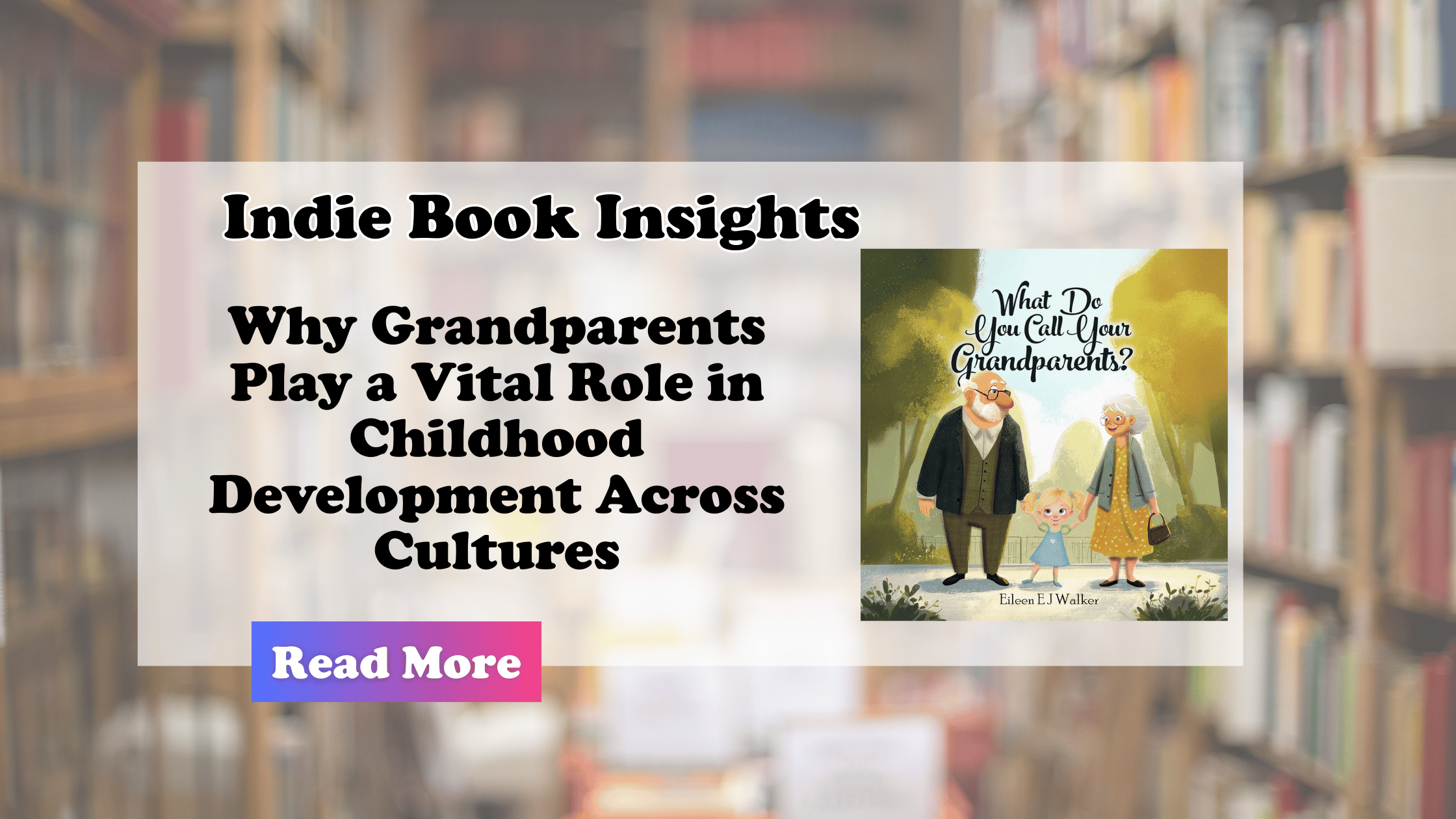
Grandparents often hold a special place in a child’s life. They offer comfort, guidance, and stories that shape childhood in meaningful ways. Around the world, grandparents play a crucial role in helping children grow, learn, and discover who they are. This idea is clearly conveyed in What Do You Call Your Grandparent by Eileen E. J. Walker, a picture book that highlights the many names children use for their grandparents and the strong connections behind those names.
The book follows Lily as she spends a day at the park with her grandparents. What seems like a simple outing becomes a look at the many ways grandparents support and influence children. Lily plays, explores, and talks with her Grammie and Grandpa Rick, showing how ordinary moments help children feel secure and loved. At the same time, the park is full of other children spending time with their own grandparents. Each family brings a different cultural background, making the park a lively place where global traditions quietly come together.
The story introduces readers to names such as Yiayia and Papou from Greek families, Nana and Papa from North American homes, Nonna and Nonno from Italian families, and Oma and Opa from German backgrounds. The book also reflects the diversity of Canada by including Kôhkom and Mosum from First Nations communities. Other families use “Savta” and “Saba,” names often spoken in Hebrew. These examples help children see that while the words vary, the presence of grandparents remains constant across cultures.
Grandparents contribute to childhood development in practical and emotional ways. They often provide childcare, teach skills, and share cultural traditions. In the book, Papou helps Alexander fly a kite, Nonno gives twins a coin for a small shopping trip, and Kôhkom shares life stories long ago. These scenes show how grandparents pass down knowledge and experiences that children cannot find anywhere else.
These moments also encourage curiosity and confidence. When Milan helps his Deda fix a car, he is learning by doing. When Sylvie paints with her Mémé, she is exploring creativity. When Arjan walks proudly beside his Dada Ji, he is learning about respect and heritage. These interactions build emotional strength and help children understand their place within their family and culture.
Cultural diversity plays a crucial role in both the book and in real life. Children who hear different languages or learn different names for grandparents gain a broader understanding of the world. They see that families may look or sound different but share the same dedication to nurturing young minds. It helps children grow more accepting of others and more confident in their own identity.
The presence of grandparents also brings stability. Whether they live nearby or far away, regular contact offers reassurance. In the book, Noah talks to his grandparents through video calls, showing that distance does not weaken the relationship.
Grandparents are valuable figures in childhood because they offer time, wisdom, and love. Their influence crosses borders and languages, making their role universal.
For families who want to explore these ideas further, What Do You Call Your Grandparents by Eileen E. J. Walker is a warm and thoughtful book to read and enjoy together, available on Amazon: https://www.amazon.com/dp/B0G2N54HS4/.