People want to believe the system works.
They want to believe that if someone is arrested, tried, convicted, and sent to prison, then the evidence must have been strong. They want to believe that judges, lawyers, police officers, and witnesses all did their jobs. They want to believe that innocent people do not end up on death row.
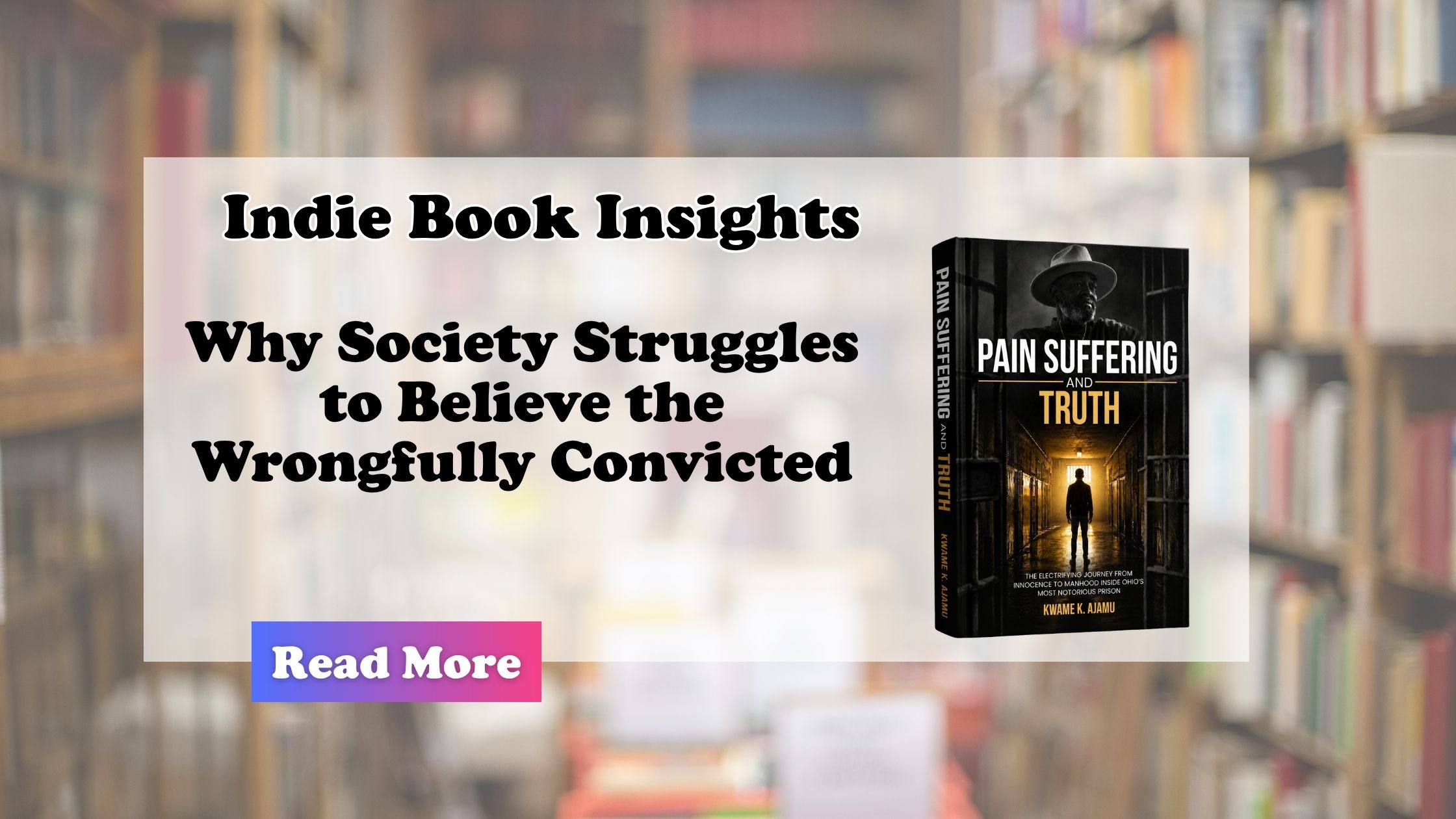
Pain, Suffering and Truth challenges that belief.
Kwame K. Ajamu, born Ronnie Bridgeman, was only seventeen when he was convicted and sentenced to die for a crime he says he did not commit. His story forces readers to face an uncomfortable truth: sometimes the system gets it wrong, and when it does, society often looks away.
One reason people struggle to believe the wrongfully convicted is fear. If Kwame’s story is true, then any person could be trapped by a bad investigation, weak defense, pressured testimony, racial bias, or a court determined to convict. That possibility is frightening, so many people choose the easier answer. They assume the convicted person must have done something.
Another reason is judgment. Once a person is labeled a criminal, the label follows them everywhere. It can erase their childhood, their family, their character, and their humanity. People stop asking what really happened and start trusting the conviction more than the person.
Pain, Suffering and Truth shows how damaging that can be. Kwame had to survive not only prison, but disbelief. He had to carry the weight of being seen as guilty while knowing the truth inside himself. He had to keep living while the world moved on, while his mother suffered, while his brothers endured their own pain, and while freedom became something he had to fight for again and again.
This book matters because it does not ask readers to think about wrongful conviction as an abstract issue. It puts a human being at the center of it. A boy. A son. A brother. A man forced to grow up under the threat of execution.
Kwame’s voice is raw, direct, and unforgettable. He tells the story with anger, grief, faith, humor, and memory. He does not polish the pain to make it easier to accept. He gives readers the truth as he lived it.
For anyone interested in justice, prison life, race, faith, family, survival, and the long road toward exoneration, Pain, Suffering and Truth is a necessary read.
Society struggles to believe the wrongfully convicted because believing them means admitting something painful.
The system can fail.
Innocent people can be condemned.
And the truth can spend decades waiting to be heard.